






The dance teacher salary is one of the most important questions for anyone pursuing a career in dance or already working as an instructor. Whether ballroom, salsa, hip-hop or ballet – earning potential varies considerably. While salary portals often cite only averages, this article reveals the full picture: from entry-level pay to regional differences and concrete strategies to boost your income as a dance teacher.
One thing upfront: there is no collective bargaining agreement for dance teachers in Germany. This means salaries depend heavily on factors like location, employer, dance style, and above all whether you work as an employee or freelancer. We break down each of these factors below.
How Much Do Dance Teachers Earn in Germany?
The average dance teacher salary in Germany ranges between 2,600 and 3,500 euros gross per month. The exact amount depends on numerous factors that we examine in detail.
Average Salary Overview
Different salary portals provide slightly varying figures, as they rely on different data sources. The range extends from approximately 31,000 to 47,000 euros gross per year, with the median sitting at around 37,000 to 42,000 euros. Converted to monthly pay, this equates to a gross salary of 2,600 to 3,500 euros for a 40-hour week.
These figures refer to employed dance teachers. Self-employed instructors can earn significantly more or less depending on their client base and hourly rates – more on that later.
Gross vs. Net – What Do You Actually Take Home?
With a gross salary of 3,000 euros per month, a single dance teacher in tax class I takes home approximately 1,900 to 2,050 euros net after income tax, solidarity surcharge, and social insurance contributions. At 3,500 euros gross, the net amount is around 2,200 to 2,350 euros.
Entry-Level Salary for Dance Teachers
Career starters should expect a lower salary. The entry-level salary typically ranges between 2,000 and 2,400 euros gross per month. After three to five years of experience, dance teachers can expect 2,500 to 2,800 euros, while experienced professionals with over ten years of experience reach 3,500 euros and above.
Factors That Influence Dance Teacher Salaries
Beyond location, several other factors significantly influence salary. Understanding these allows you to strategically work on the right levers.
Professional Experience and Qualifications
Professional experience is one of the most important salary drivers. With each year, salary increases by an average of 50 to 150 euros gross per month. Additionally, formal qualifications make a difference: dance teachers with completed training at a dance academy or a degree in dance or sports pedagogy typically earn more than career changers without formal qualifications.
Particularly valuable are additional qualifications such as dance therapy, children's dance pedagogy, or certifications in specialised dance styles. These open up new target groups and justify higher hourly rates.
Dance Style and Specialisation
Not every dance style pays equally. Classical styles like ballroom and Latin are frequently in demand at dance schools and provide a stable income base. Trending styles like salsa, bachata or hip-hop can generate high demand, particularly in major cities. Niche offerings like contemporary, pole dance or dance fitness address specific target groups and often enable higher hourly rates.
Those who can teach multiple dance styles have a clear advantage: more teaching opportunities mean more hours and thus a higher total income.
Employer and Company Size
Large dance schools with multiple locations generally pay better than small one-person operations. The type of employer also matters: municipal institutions and adult education centres often follow public sector pay scales, meaning salaries between 2,000 and 2,800 euros but offering great job security. Private dance schools pay very differently depending on success and location.
Employed vs. Self-Employed: Two Paths, Two Salaries
The decision between permanent employment and self-employment has the greatest impact on a dance teacher's income. Both models have advantages and disadvantages.
Salary as an Employed Dance Teacher
As an employee, dance teachers receive a fixed monthly salary, paid holiday and social insurance coverage. The salary ranges, as described, between 2,000 and 3,500 euros gross. The biggest advantage is planning security: the same salary arrives every month, regardless of utilisation. However, the income potential is capped.
Hourly Rate as a Freelance Dance Teacher
Self-employed dance teachers work on a fee basis and charge an hourly rate. This typically ranges between 30 and 80 euros per teaching hour. The specific rate depends on region, dance style, target group and reputation. Private lessons are generally charged higher than group classes, although group classes can be more lucrative overall due to participant numbers.
A calculation example: a dance teacher giving 20 group hours per week at 50 euros earns a gross turnover of 4,000 euros monthly. Room rental, insurance, taxes and social contributions must be deducted. The bottom line is often 2,000 to 2,500 euros net – comparable to an employee salary but with more flexibility and risk.
Running Your Own Dance School: Opportunities and Risks
Those who run their own dance school have the highest income potential but also bear the greatest entrepreneurial risk. Successful dance school owners can earn 4,000 to 8,000 euros monthly. Prerequisites include a good location, a broad course offering and efficient dance school software for administration. However, investments in premises, equipment and marketing are considerable.
How to Increase Your Income as a Dance Teacher
Regardless of whether you work as an employee or freelancer, there are several proven strategies to earn more as a dance teacher.
Additional Qualifications and Further Training
Investing in further training pays off in the long run. Dance teachers with additional qualifications earn on average 15 to 25 percent more than colleagues without additional certifications. Particularly rewarding are:
- Dance therapy certification – opens access to the health market
- Children's dance pedagogy – children's classes are highly sought after
- Dance fitness licences (e.g. Zumba, Barre) – complement the course offering
- First aid and prevention certificates – enable cooperations with health insurers
Additional Income Sources
Smart dance teachers don't rely solely on traditional lessons. These additional income sources can significantly boost earnings:
- Wedding dance courses – seasonal demand with premium pricing (80–150 euros per hour)
- Workshops and intensive courses – on weekends or during holidays, higher hourly rates possible
- Online courses and video tutorials – passive income after one-time creation
- Corporate events and team building – companies pay day rates of 500 to 1,500 euros
- Choreography commissions – for theatre, musicals or events
Digital Course Management for Greater Efficiency
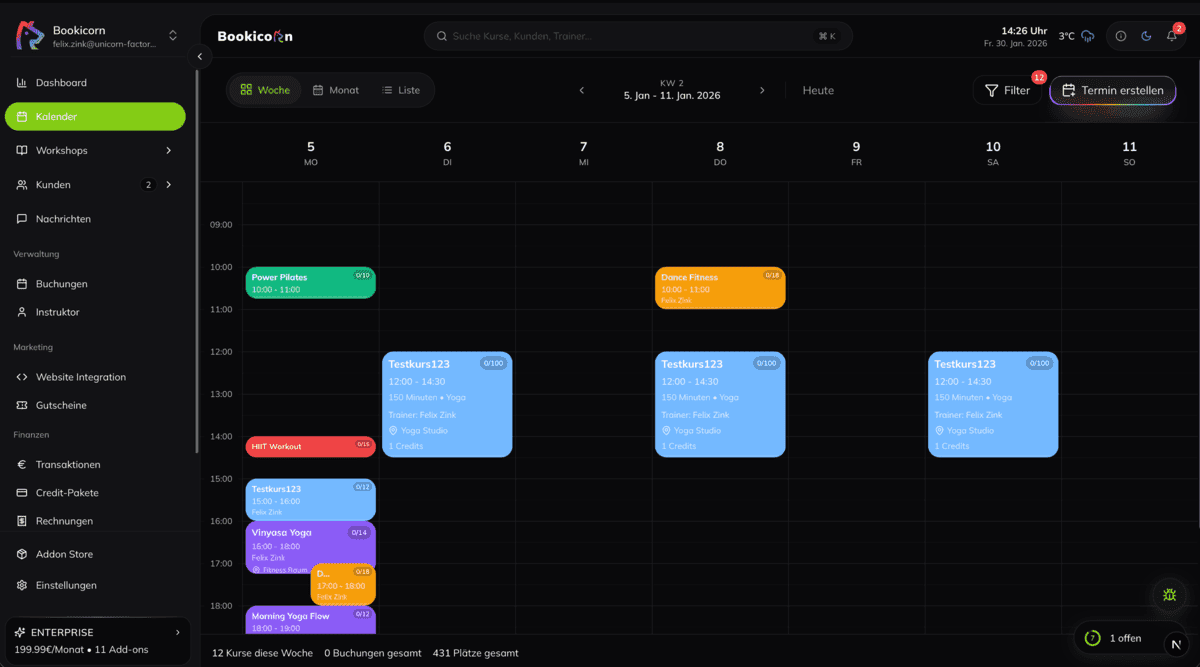
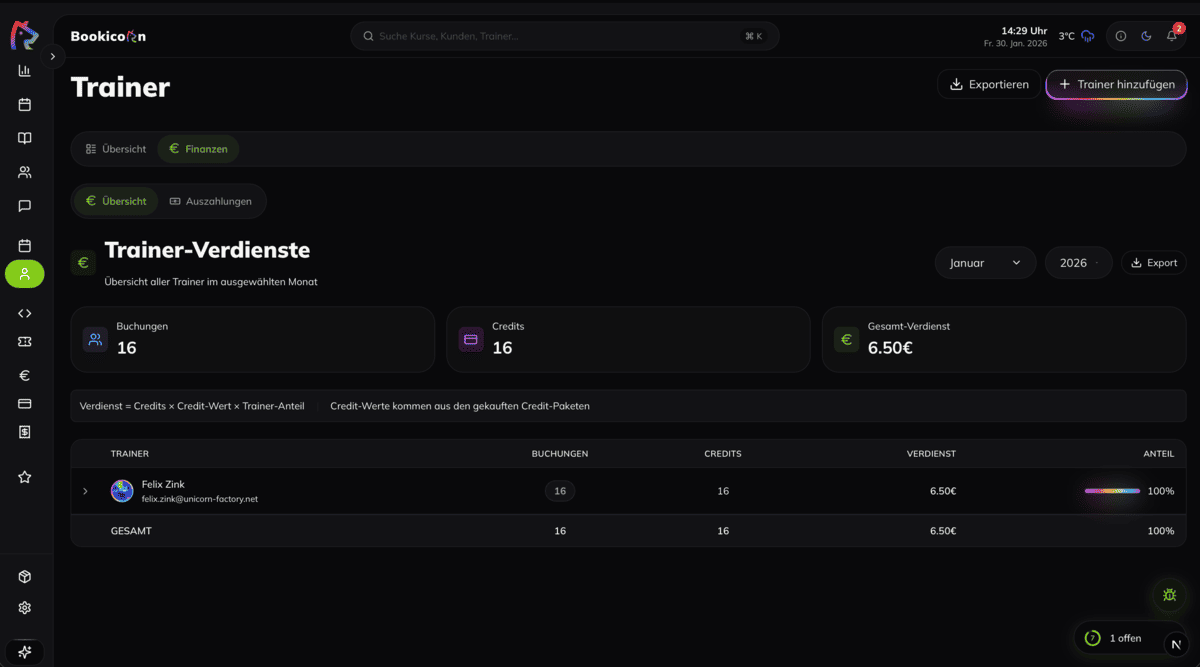
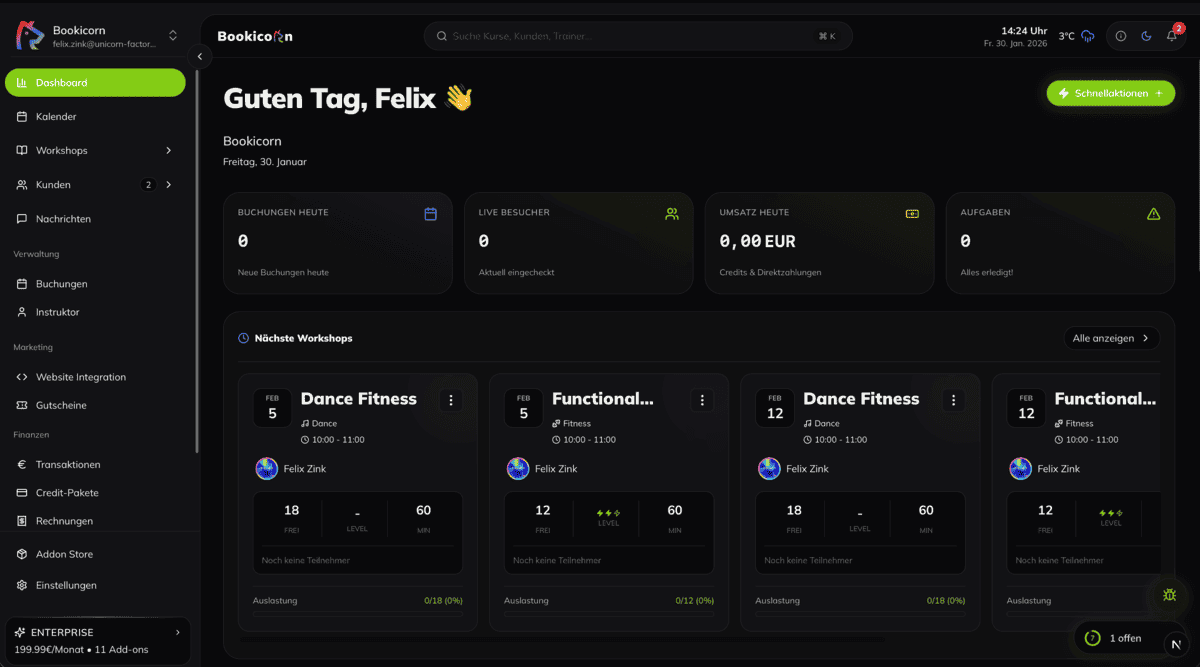
One of the biggest time drains in a dance teacher's daily routine is administration: course bookings, payment reminders, attendance lists, student communication. Those who automate these tasks gain valuable hours that can be invested in additional teaching or further training. Modern booking systems like Bookicorn handle exactly these tasks and noticeably relieve dance teachers.
Frequently Asked Questions About Dance Teacher Salaries
The most important questions and answers about earnings, hourly rates and career opportunities as a dance teacher at a glance.
Conclusion
The dance teacher salary ranges broadly from 2,000 to 3,500 euros gross in employment. The most important levers for higher income are location, specialisation and the decision between employment and self-employment.
Self-employed dance teachers with a broad course offering, additional qualifications and a combination of group classes, private lessons and special programmes such as wedding dance or corporate events can significantly increase their income above the industry average. Those who dare to open their own dance school have the highest income potential with good planning and efficient administration.
Regardless of the path chosen: investing in further training, developing multiple income sources and automating administrative processes creates the best foundation for a satisfying income as a dance teacher.

Written by
Felix Zink
Felix built Bookicorn from the ground up – from the booking system and credit system to trainer payouts. As a full-stack developer at Unicorn Factory Media GmbH, he builds software that makes everyday life easier for studios.
Was this article helpful?
Rate this post