






Becoming a dance teacher is the dream of many people who want to turn their passion for music and movement into a profession. Whether ballroom, hip-hop or children’s dance: the paths into this creative career are diverse. But what training do you need, how much does it cost, and what are the career prospects? This guide gives you a complete overview of everything you need to know – from training programmes and costs to salary expectations and career tips.
What Does a Dance Teacher Do? – Tasks at a Glance
A dance teacher does far more than teach step sequences. The profession combines pedagogical, choreographic and organisational tasks and requires a broad range of skills. Depending on employment and specialisation, day-to-day work varies considerably.
Planning and Delivering Lessons
The core task is teaching various dance styles and skill levels. This includes preparing choreographies, selecting suitable music and providing individual feedback to participants. Dance teachers work with beginners as well as advanced students and prepare couples for wedding dances or competitions. A good dance teacher recognises the strengths and weaknesses of their students and adapts their lessons accordingly.
Administration and Organisation
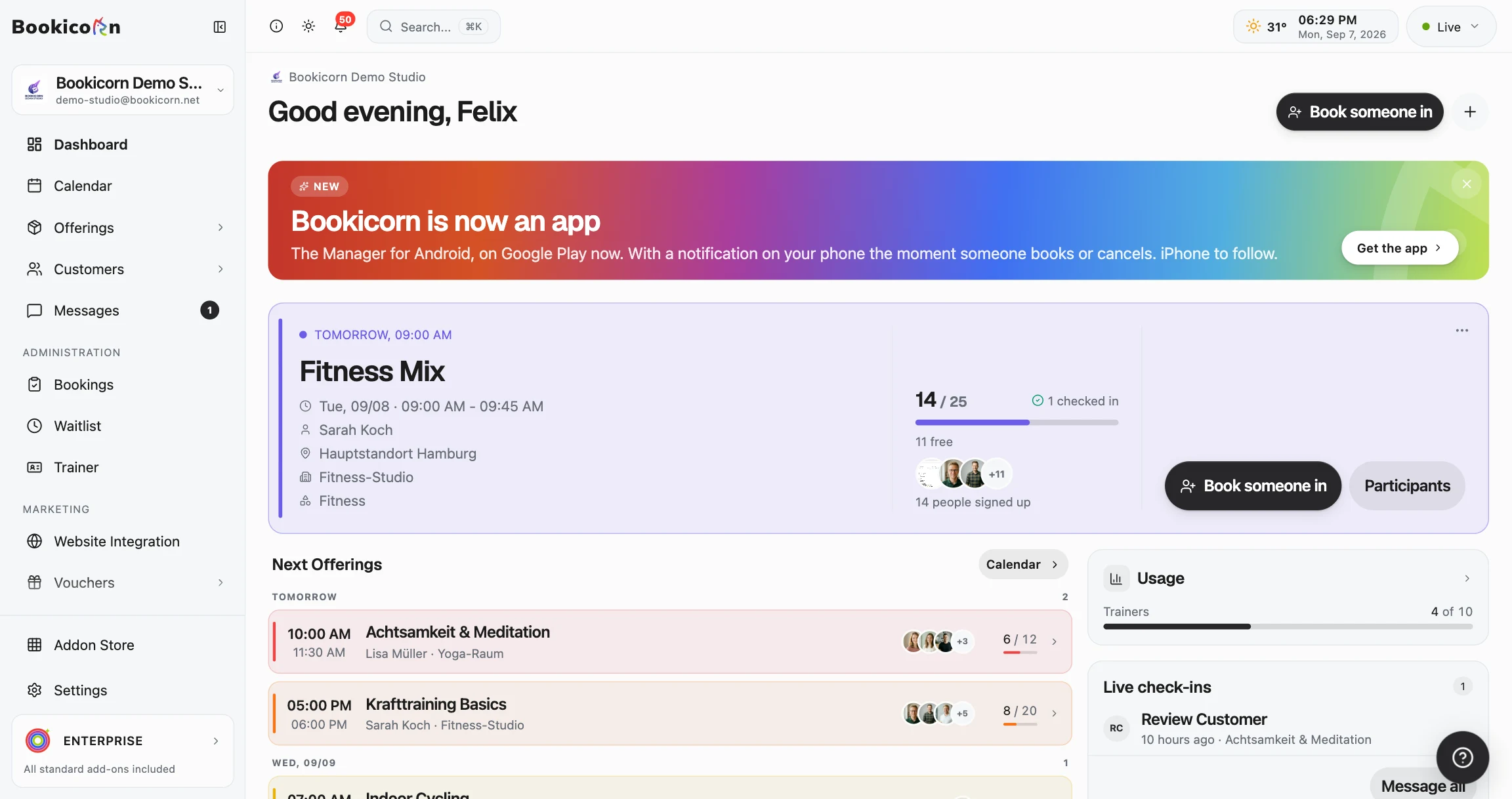
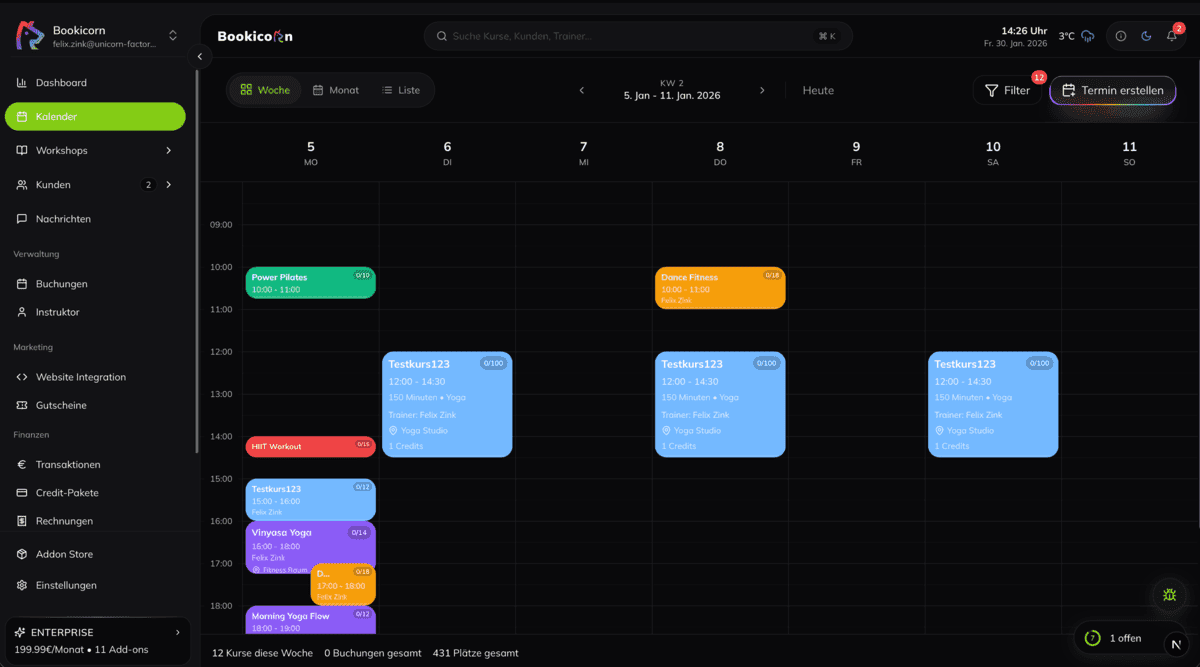
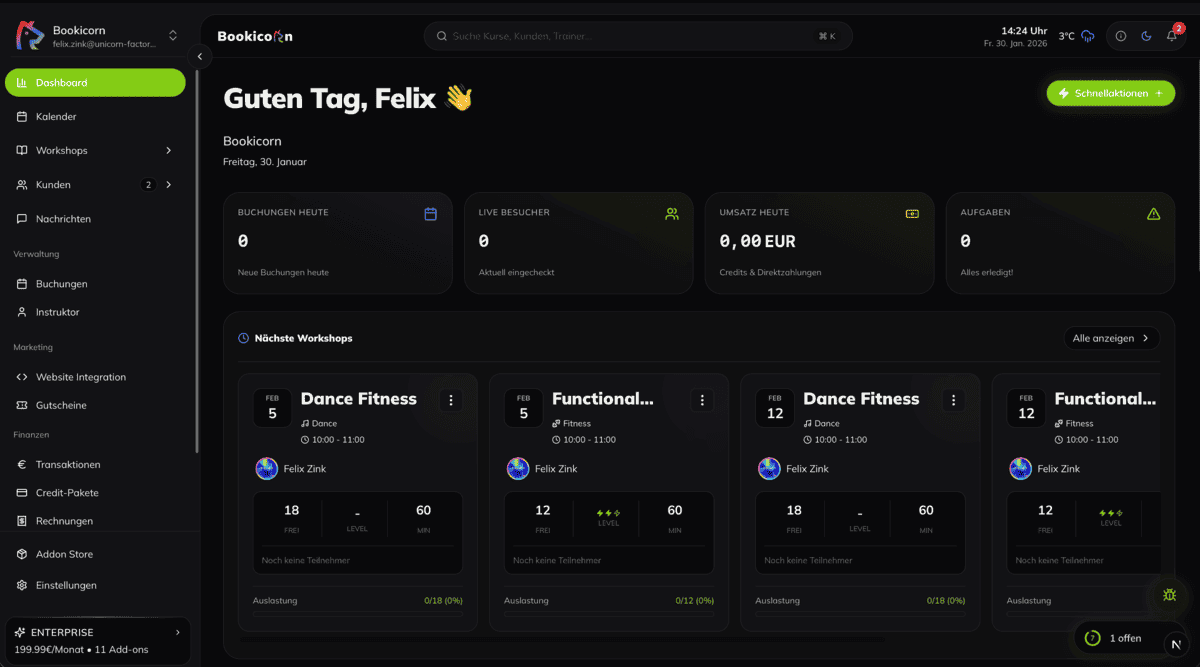
Beyond teaching, organisational tasks arise: class scheduling, participant management, room coordination and client communication. Those who work independently also handle marketing, accounting and contract management. Digital solutions like Bookicorn can significantly reduce the administrative burden.
Working Hours and Locations
Dance teachers often work in the evenings and at weekends – when participants have time. Typical workplaces include dance schools, fitness studios, community colleges, hotels or private premises. Some dance teachers also offer mobile lessons or online classes. The working hours require flexibility but also offer freedom in daily planning.
Dance Teacher Training: All Paths to the Profession
If you want to become a dance teacher, you have several training paths to choose from. In Germany, the two main routes run through the dance associations ADTV and BDT. In addition, there are academic and alternative paths.
ADTV Training
The General German Dance Teachers’ Association (ADTV) offers the best-known training path. The dual vocational training lasts three years and takes place at recognised ADTV dance schools. The practical component involves training at the dance school, supplemented by theoretical seminars at the Dance Teacher Academy (TLA). The training concludes with annual examinations and the qualification as an ADTV dance teacher. Requirements include being of legal age, a general school-leaving certificate and basic knowledge of the world dance programme.
In addition to full-time training, the ADTV also offers a part-time option. This is aimed at people who are already employed and want to train as a dance teacher alongside their job. Classes take place at evenings and weekends.
BDT Training
The Professional Association of German Dance Teachers (BDT) offers an alternative with its own structure. The main training as a social dance teacher also lasts three years. The BDT additionally offers one-year specialist dance teacher courses in areas such as Urban/Commercial, Contemporary, Children’s Dance, Discofox and Latin Dances. These specialist courses are particularly suited for dancers who want to specialise in a specific style.
Dance Pedagogy Degree
Those seeking an academic qualification can study dance pedagogy at a university. The bachelor’s degree typically lasts six to eight semesters. The programme combines practical dance training with dance studies, pedagogy and anatomy. Graduates can work at universities, theatres or in dance therapy. The academic route is especially suitable for those who want to work in research or teach at public institutions.
Career Changers and Specialist Teachers
Entry is also possible without formal training. Experienced dancers with demonstrable stage experience or competition practice can train as specialist dance teachers in their area of expertise. The one-year specialist courses at ADTV or BDT offer a structured path. Workshops and certificate courses from private academies are also an option – but ensure the qualification is recognised.
Requirements: What You Should Bring
The formal and personal requirements vary depending on the training path. Here you will learn what is expected.
Formal Requirements
For ADTV training, you need to be of legal age, have a general school-leaving certificate and basic knowledge of the world dance programme. Dance pedagogy degrees require a university entrance qualification, often supplemented by an aptitude test. Specialist dance teacher courses generally require demonstrable dance experience in the respective style.
Important: Dance teaching is not a state-recognised apprenticeship in Germany. Quality standards are instead maintained by the ADTV and BDT associations. In principle, anyone can give dance lessons – but an association qualification is an important quality indicator and is required by most dance schools.
Personal Qualities
Successful dance teachers are distinguished by a strong sense of rhythm and body awareness. Equally important are pedagogical skill, patience and empathy – not every participant learns at the same pace. Strong communication skills help when explaining complex movement sequences.
Physical fitness is essential, as the profession is physically demanding. Those who want to work independently also need entrepreneurial thinking and organisational talent. The ability to motivate different age groups – from children to seniors – is a great advantage.
Costs and Funding for Dance Teacher Training
The cost question is crucial for many prospective students. The good news: Full-time training costs you nothing – in fact, you earn money during it.
Training Salary for Full-Time Training
The dual full-time training with ADTV or BDT is free for you. As a trainee, you receive a monthly salary. The amount varies depending on the dance school and region. Typical figures are around 600 to 900 euros gross per month – depending on the year, dance school and region.
Costs of Part-Time Training
Those completing the training part-time pay course fees. At the ADTV, these amount to around 360 euros net per month (approximately 428 euros including VAT). This covers all seminars and regular examinations. An additional one-time administration fee of 75 euros applies. Travel costs, accommodation and meals during seminars are not included.
Funding Options
For full-time training, trainees may be eligible for vocational training allowance (BAB) from the employment agency under certain conditions. For school-based or part-time training, education loans or instalment payments may be an option. Some federal states also offer education vouchers or funding programmes for continuing professional development. Check with your local employment agency early on about your options.
Salary as a Dance Teacher: What Can You Earn?
Salary is an important factor in career choice. Dance teachers earn different amounts depending on employment type, region and experience. You can find a detailed overview in our article about dance teacher salary.
Starting Salary
After completing their training, dance teachers typically start with a gross salary of 2,000 to 2,200 euros per month. This corresponds to an annual gross of around 24,000 to 26,400 euros.
Salary by Experience and Region
With increasing experience, salaries rise. After five to ten years, dance teachers can expect 2,500 to 3,200 euros gross. Regional differences are significant: salaries in western Germany and large cities are higher than in rural areas.
Self-Employed vs. Employed
Employed dance teachers benefit from a fixed salary and social insurance. Self-employed teachers have higher earning potential but also greater risks. Freelance hourly rates range from 30 to 80 euros depending on experience and location.
Career Prospects and Specialisations
The profession offers diverse opportunities for development.
Dance Style Specialisations
One key career decision is choosing a dance style. Ballroom dance is the classic. Demand is growing for Urban styles like Hip-Hop, Contemporary, Children’s Dance, and Salsa/Bachata. Niche areas like wheelchair dance or senior dance offer opportunities with less competition.
Opening Your Own Dance School
Many experienced teachers dream of their own dance school. This requires business know-how: business plan, location, registration and a course concept.
Digital tools for class scheduling and management make the transition easier.
Further Career Paths
Beyond your own school, options include:
- Choreographer for shows and events
- Dance therapy in clinics
- Lecturer at universities
- Workshop leader at festivals
- Online teaching as additional income
Combining multiple activities is common – many teachers work at different locations or combine in-person with online classes.
Frequently Asked Questions About Becoming a Dance Teacher
The most important questions and answers about the profession and training as a dance teacher at a glance.
Conclusion: Is a Career as a Dance Teacher Worth It?
Becoming a dance teacher is a path for anyone who wants to turn their passion for dance into a profession. The training is well-structured. Starting salaries are moderate but offer growth potential with experience and specialisation.
The profession is particularly interesting for people who enjoy working with different age groups. Those with an entrepreneurial mindset can earn above average by running their own dance school.
Our tip: Start researching training places in your area early. Observe lessons at different dance schools to get to know the daily routine and decide which path suits you best.

Written by
Felix Zink
Felix built Bookicorn from the ground up – from the booking system and credit system to trainer payouts. As a full-stack developer at Unicorn Factory Media GmbH, he builds software that makes everyday life easier for studios.
Was this article helpful?
Rate this post