





Love working with dogs and even more with their owners? Then learning how to become a dog trainer could be your next step. In the UK and the US, dog training is not a regulated profession: there's no mandatory licence and no legally required qualification. That makes the choice of training and credentials all the more important, because your clients can't rely on a legal standard.
This guide covers the skills you need, recognised qualifications and professional bodies, what courses cost, a realistic earnings example and how to set up your own dog training business.
Key facts at a glance
- Unregulated profession: in the UK and the US, anyone can call themselves a dog trainer.
- Voluntary standards: in the UK, the Animal Behaviour and Training Council (ABTC) sets standards and keeps registers. In the US, independent certifications such as CCPDT are widely recognised.
- Mostly self-employed: most trainers run their own business, teaching group classes and one-to-one sessions.
- People skills matter: in most sessions, you coach the owner, not the dog.
What You Need to Become a Dog Trainer
A good dog trainer understands dogs, but above all can teach people. In most sessions you show owners how to practise with their own dog.
Knowledge and hands-on experience
You need a solid grasp of canine body language, learning theory, welfare and basic canine first aid. Practical experience is best gained by assisting an established trainer, volunteering at a rescue centre or helping at a dog sports club.
Personal qualities
- Patience: progress takes time, for dogs and humans alike.
- Clear communication: owners need to be able to repeat the exercise at home.
- Resilience: classes run outdoors in all weathers, often in the evenings and at weekends.
- Business sense: as a self-employed trainer you also handle bookings, pricing and marketing.
Is there a legal requirement?
No licence is needed to train dogs in the UK or the US. Licensing rules for dog boarding, day care or breeding are separate and don't apply to training as such. Because the sector is unregulated, owners and vets increasingly look for trainers registered with a recognised body, so membership is worth planning for.
Dog Training Qualifications and Professional Bodies
There is no single official route, but these bodies are widely known. Check current requirements on their websites, as they change over time.
| Body | Country | What it offers |
|---|---|---|
| ABTC (Animal Behaviour and Training Council) | UK | Sets standards for trainers and behaviourists and keeps registers of practitioners from member organisations |
| APDT UK (Association of Pet Dog Trainers) | UK | Membership with assessment of practical skills, registered with the ABTC |
| IMDT (Institute of Modern Dog Trainers) | UK | Courses and an assessment-based route to becoming an accredited trainer |
| CCPDT | US | Independent certifications such as CPDT-KA based on an exam and logged training hours |
| IAABC | US and international | Certifications for trainers and behaviour consultants |
How Much Does Dog Trainer Training Cost?
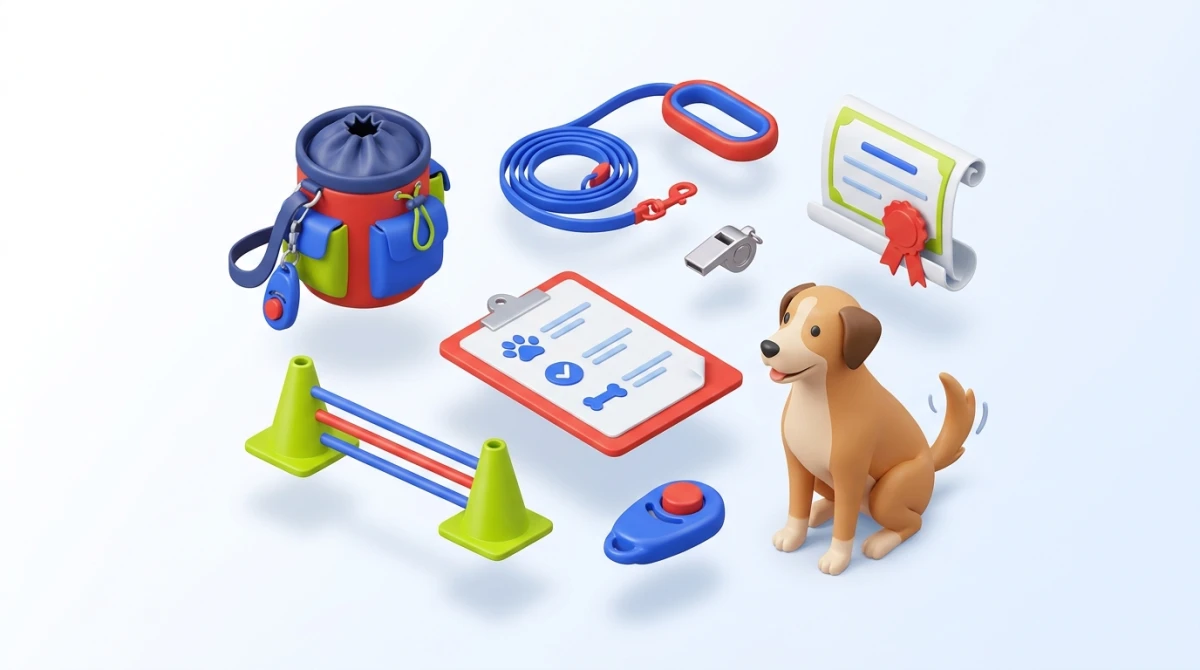
Prices vary widely. Online theory courses can cost a few hundred pounds or dollars, while longer programmes with practical assessments and mentoring cost considerably more. On top of that come membership fees for professional bodies, insurance and basic equipment such as leads, treat pouches, clickers, cones and small agility jumps.
When you compare courses, look at the number of supervised practical hours, the trainers' own credentials, whether the course leads to recognised membership and what support you get after the course.
How Much Do Dog Trainers Earn?
Earnings depend on your prices, how full your classes are and your specialism. Employed positions exist, for example at large rescue organisations or pet businesses, but most trainers work for themselves.
Earnings example for a self-employed trainer
Say you run 8 group classes a week with 6 dogs each at £15 per dog, plus 6 one-to-one sessions at £50. That's £1,020 in revenue per week, or roughly £45,000 over 44 working weeks. Tax, insurance, venue hire, travel, marketing and your pension all come out of that. These figures are an example, not market data, so plug in your own prices and hours.
How trainers earn more
- Specialise: puppy classes, reactive dogs, scent work or dog sports.
- Group classes: several dogs per hour raise your hourly revenue.
- Course packages: multi-week courses paid up front make income predictable.
- Fewer empty slots: full classes and few cancellations go straight to your bottom line.
Starting Your Own Dog Training Business
Once your training is done, it's time to build your offer.
Register and insure your business
In the UK, register as self-employed with HMRC or set up a limited company. In the US, check the business registration rules of your state. Take out public liability and professional indemnity insurance that covers dog training.
Define your classes and prices
Start with a few clear offers, such as a puppy class, everyday manners and one-to-one sessions. Multi-week courses keep clients committed and make your income easier to plan. For ideas, see our article on popular dog training courses.
Find a venue
Many trainers start with home visits and public spaces. For group classes, you'll need a secure, fenced area you can rent or share. If you later want your own premises, our guide on how to start a dog training school walks you through it.
Organise bookings and payments
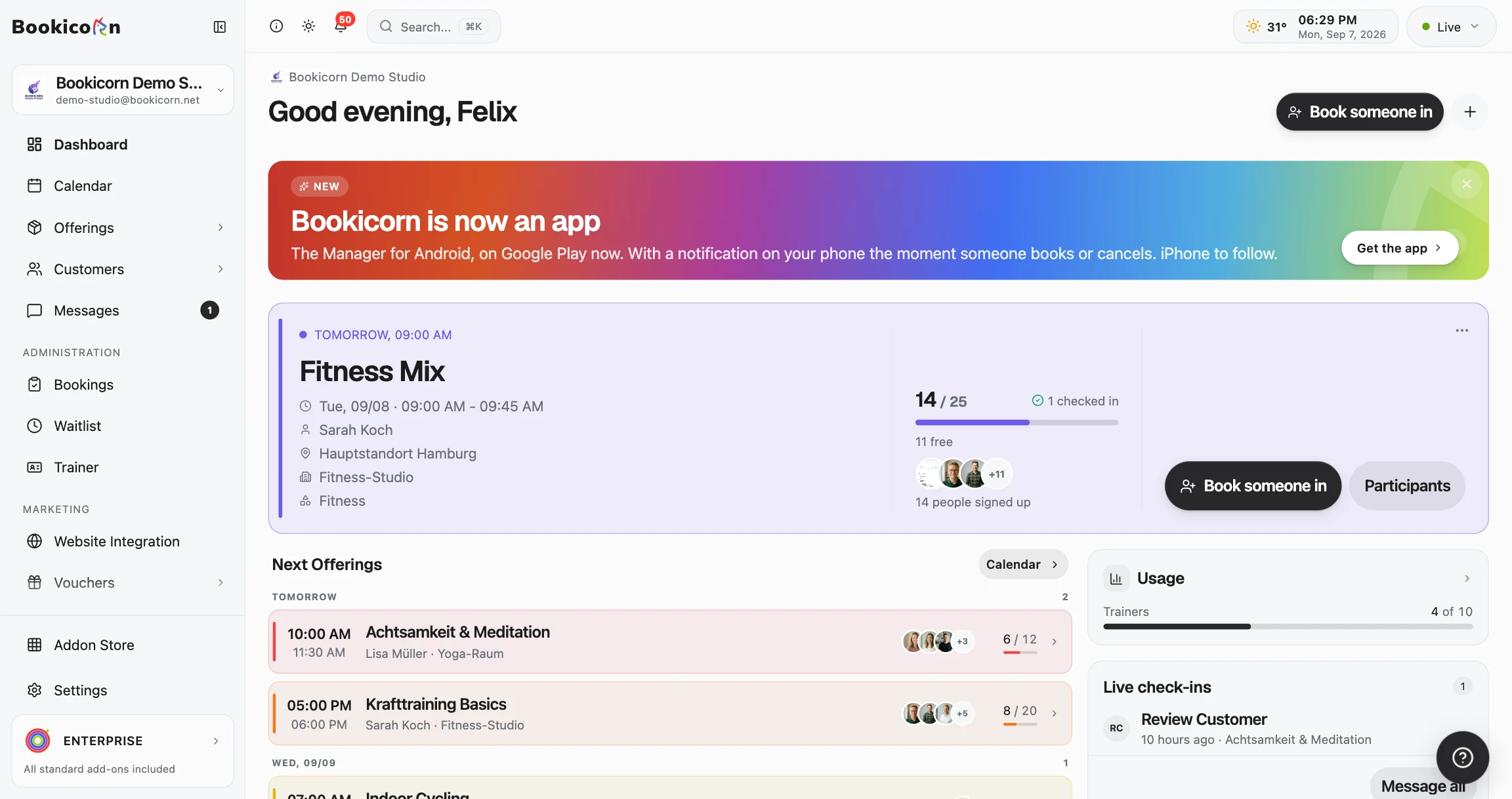
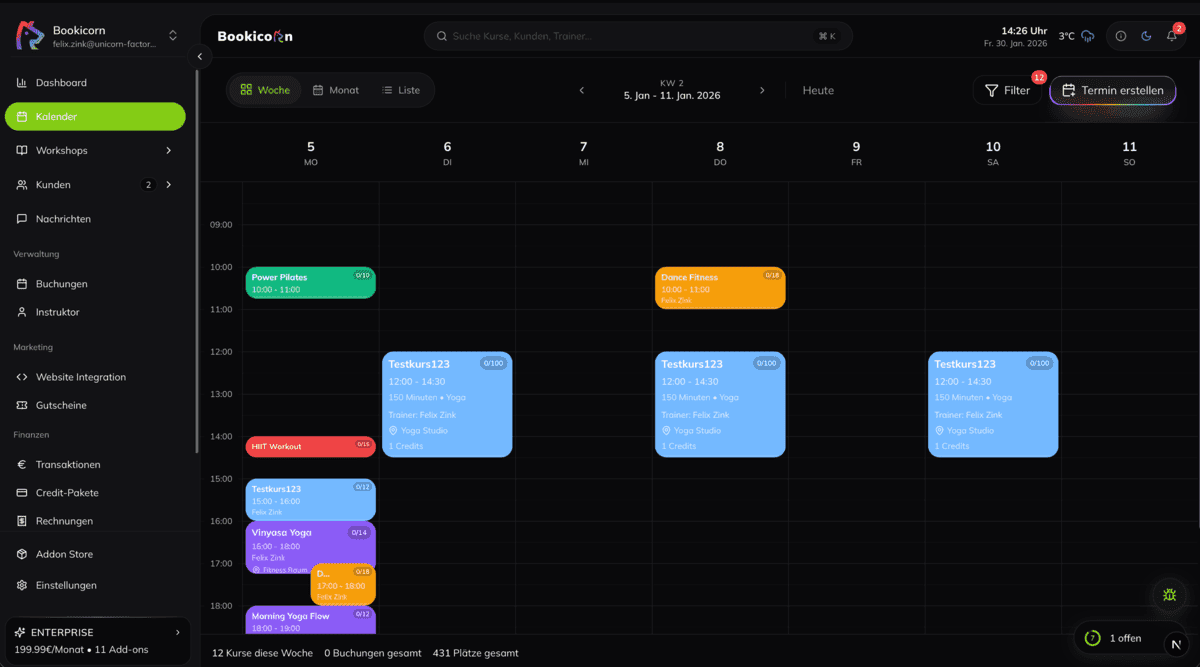
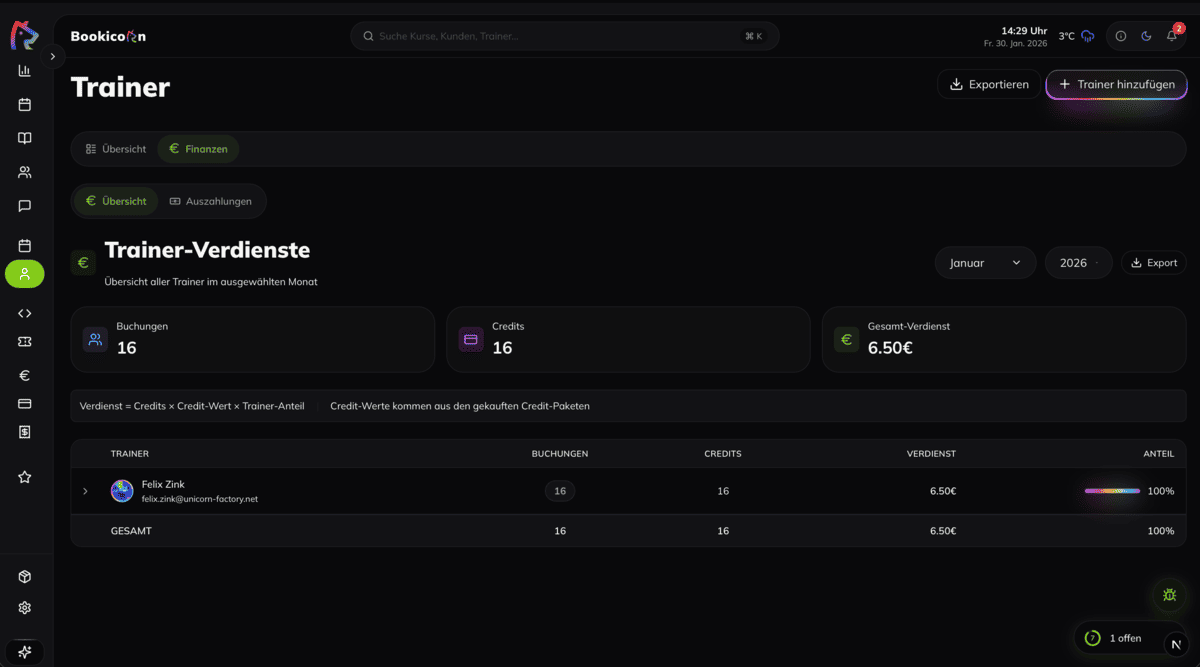
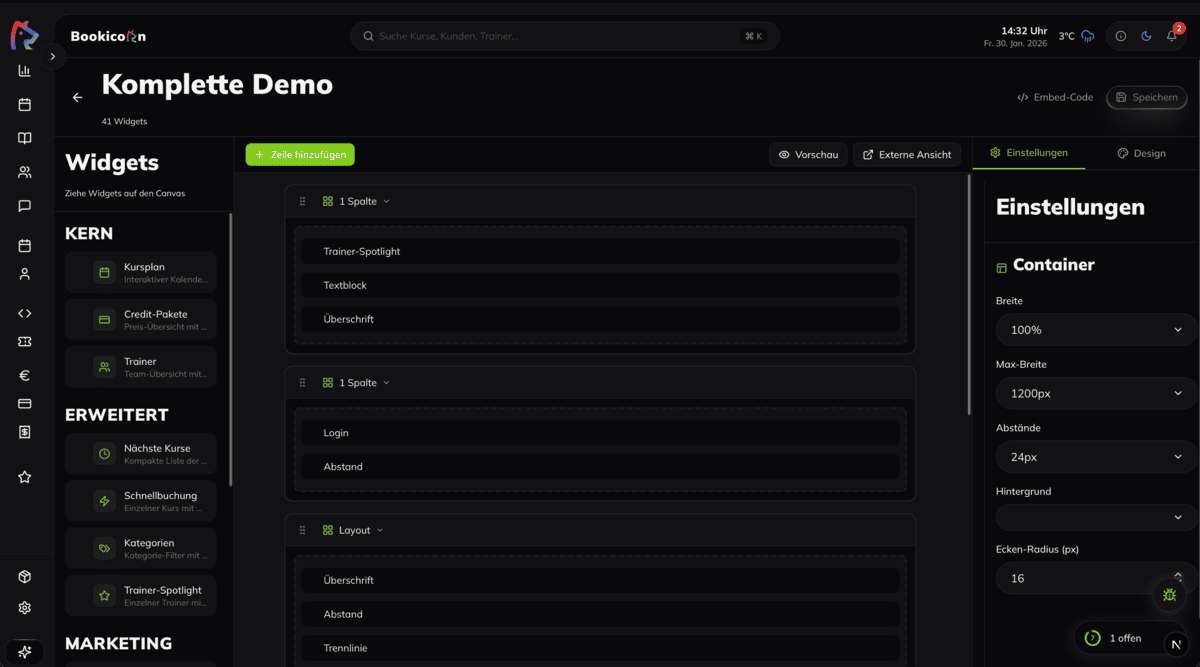
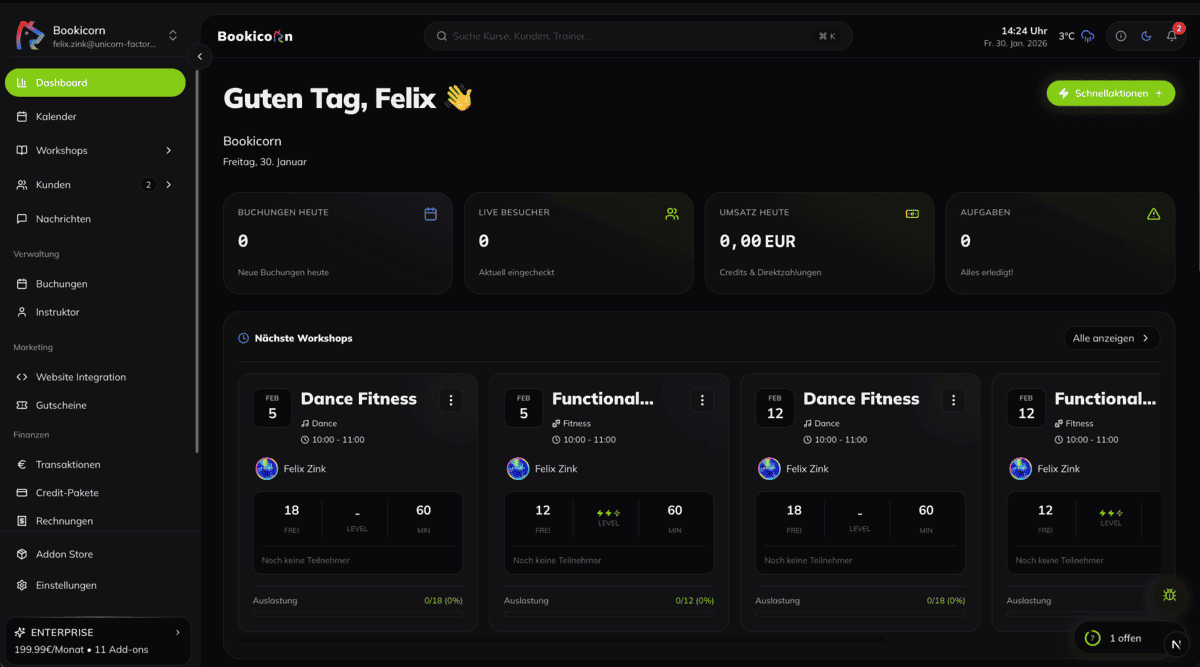
Arranging sessions by text and collecting cash after class eats up time. With dog training software like Bookicorn, clients book classes and one-to-ones online, pay in advance, and you manage packages, waitlists and cancellations in one place.
Frequently Asked Questions About Becoming a Dog Trainer
The key questions and answers about qualifications, costs and earnings.
Conclusion: A Rewarding Career with a Clear Plan
You can become a dog trainer without a formal licence, but not without preparation. Choose training with plenty of supervised practice, aim for membership of a recognised body and price your services realistically. If you understand dogs, coach people well and offer clear, bookable classes, you can build a sustainable business doing what you love.

Written by
Felix Zink
Felix built Bookicorn from the ground up – from the booking system and credit system to trainer payouts. As a full-stack developer at Unicorn Factory Media GmbH, he builds software that makes everyday life easier for studios.
Was this article helpful?
Rate this post