






A coaching business plan makes you answer the big questions before you launch: who you help with what, what it costs, and how many clients you need for the business to pay you a living. Many coaches only write one when a lender asks for it, yet it's above all a tool for you.
This guide walks you through the sections of a coaching business plan, how to set your rates and forecast revenue, a checklist you can follow and what lenders and funders look for.
Why you need a business plan as a coach
- For you: it turns an idea into a business model with clear numbers.
- For funding: lenders such as the UK's Start Up Loans scheme ask for a business plan and a cash flow forecast. In the US, the SBA offers guidance on writing one for loan applications.
- For focus: a clear niche and offer make every marketing decision easier.
Coaching Business Plan Template: The Sections to Include
Your plan doesn't need to be 50 pages. Ten to twenty pages plus financials are usually enough, as long as every claim is backed up.
| Section | What goes in | Tip for coaches |
|---|---|---|
| Executive summary | Your offer, niche, funding needs and revenue goal on one page | Write it last |
| About you | Training, coaching credentials, professional background | Show why you understand this client group |
| Offer | One-to-one coaching, group programmes, online, corporate clients, packages and prices | A few clear packages beat a long list of services |
| Niche and market | Who you serve, where they look for help, how big the market is | The narrower the niche, the easier the marketing |
| Competition and positioning | Other coaches and alternatives such as therapy, training or books | Spell out what makes you different |
| Marketing and sales | Channels, discovery call, path from lead to client | Assume a realistic conversion rate from discovery calls |
| Operations and legal | Business structure, tax, insurance, premises, software | Check registration and tax rules where you live |
| Financial plan | Start-up costs, running costs, revenue and cash flow for three years | Use cautious assumptions |
| Risks | What could go wrong and how you'd respond | A plan B makes the plan more credible |
Your Offer and Niche: the Heart of the Plan
Funders read first what you sell and to whom. The more specific you are, the more convincing the rest becomes.
Coaching formats
- One-to-one coaching: usually sold as a package of several sessions.
- Group coaching: several clients at once, lower price per person, higher revenue per hour.
- Online programmes: courses or groups over video, with no room costs.
- Corporate clients: leadership or team coaching, often at higher day rates but with longer sales cycles.
Describe your ideal client
Describe your ideal clients so precisely that someone else would recognise them: life situation, problem, budget and where they look for help. "People in transition" is too broad. "New managers in their first two years" is a market.
Financial Plan: Setting Your Rate and Forecasting Revenue
The financial plan decides whether your coaching is a hobby or a viable business. It covers start-up costs, running costs, a revenue forecast and a cash flow plan.
How to calculate your hourly rate
Don't start with your competitors' prices. Start with what you need. For example:
- Target profit before tax: $60,000 a year
- Business costs: $15,000 a year for room hire, software, insurance, training and marketing
- Revenue needed: $75,000
- Billable hours: 40 weeks x 15 coaching hours = 600 hours
- Minimum rate: $75,000 / 600 hours = $125 an hour
Be honest about holidays, sick days, sales and admin. Few coaches manage more than 15 to 20 paid hours a week. These numbers are an example, so use your own and check tax with an accountant.
Revenue forecast for three years
Plan client numbers month by month and expect a slow start. Two numbers make your forecast credible: how many discovery calls you need to win one client, and how many discovery calls you can realistically book each month.
Keep an eye on cash flow
Especially at the start, what matters is that you can always pay your bills. Ask for packages to be paid up front, set money aside for tax and keep a few months of reserves.
Marketing, Operations and Legal
These sections show you've thought through your day-to-day as a coach.
From lead to client
Describe each step: where people first find you, for example through referrals, LinkedIn, talks or your website, how they book a discovery call and what happens next. A short, clear path with online booking lowers the barrier a lot.
Structure, tax and insurance
Most coaches start as sole traders or sole proprietors. Check registration and tax rules where you live, and take out professional indemnity insurance if your advice could have financial consequences for clients.
Tools
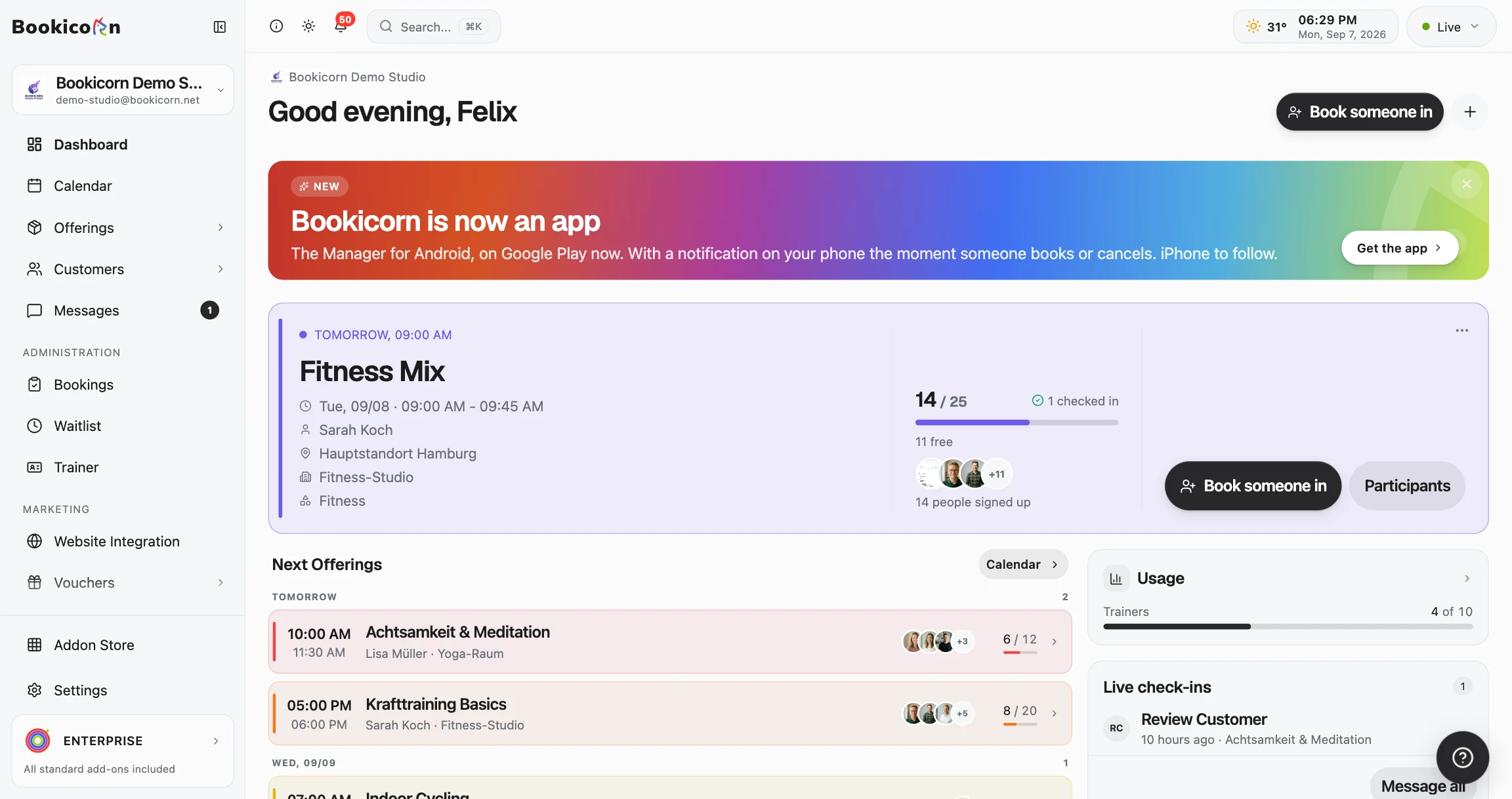
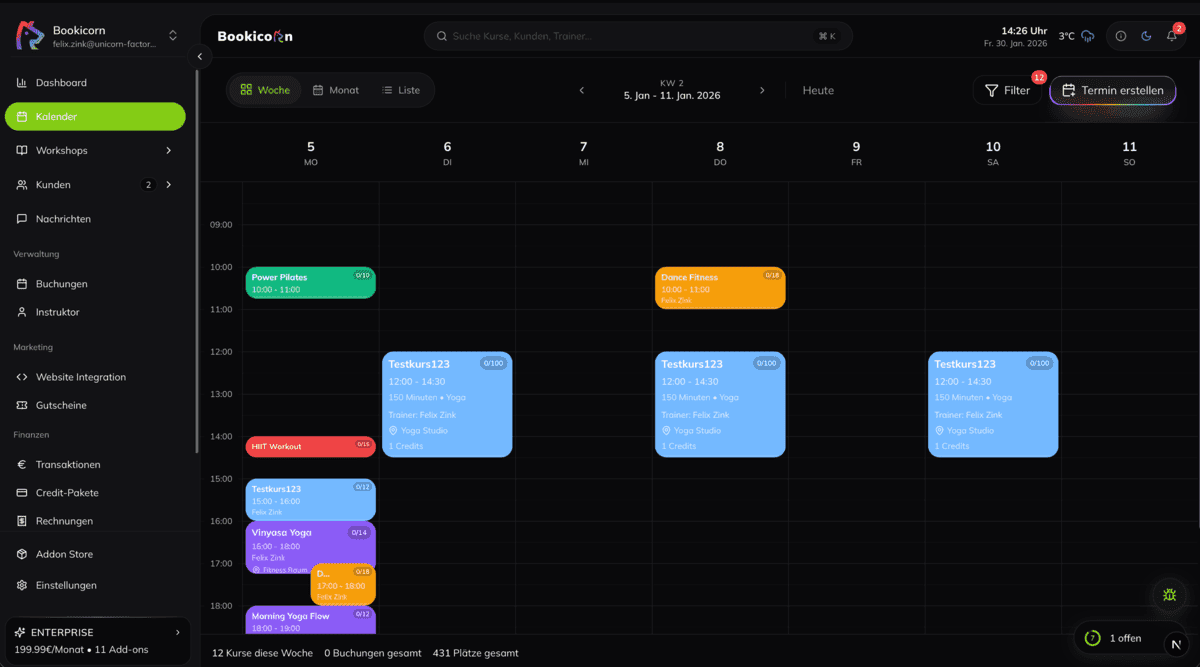
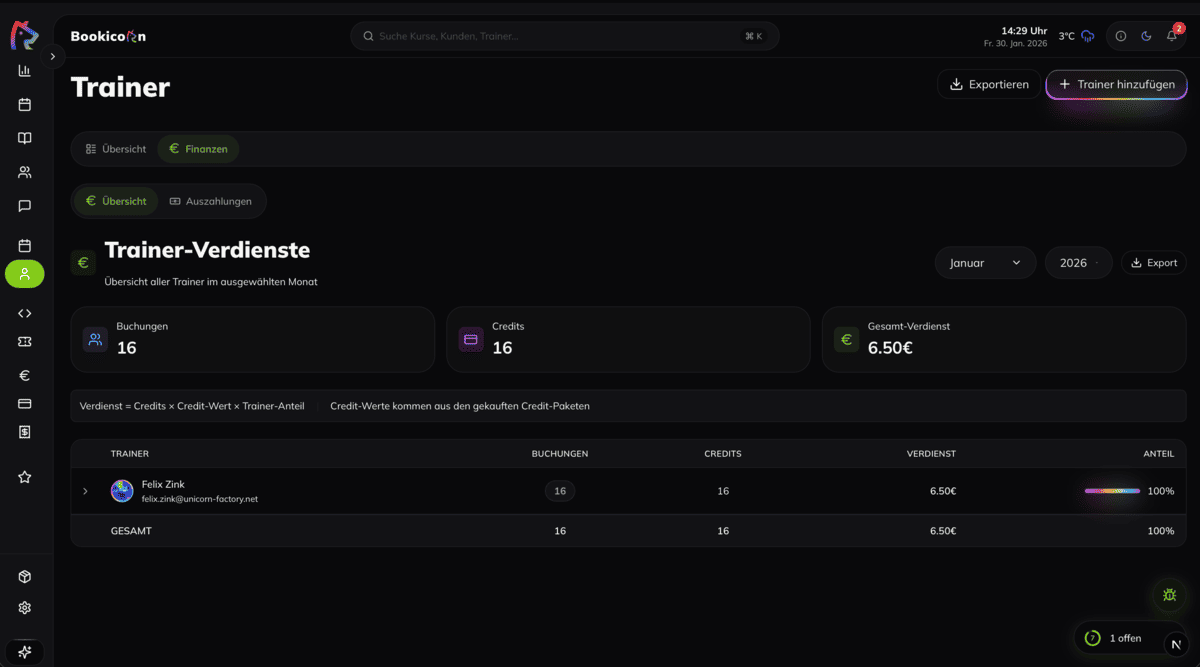
Budget for booking, payments, invoices and client records from day one. With coaching software like Bookicorn, clients book calls and packages online, pay in advance and get automatic reminders. For more on winning clients and shaping your offer, read our guide to building a coaching business.
Coaching Business Plan Checklist
Tick off what your plan already covers.
Frequently Asked Questions About Coaching Business Plans
The key questions and answers at a glance.
Conclusion: Your Business Plan Is Your Compass
A good coaching business plan answers three questions: what you offer, who it's for and how many clients you need for it to work. Be specific about your offer and niche, work out your rate from what you need and forecast revenue and cash flow with cautious assumptions. That convinces lenders and, above all, gives you a clear plan for your first years.

Written by
Felix Zink
Felix built Bookicorn from the ground up – from the booking system and credit system to trainer payouts. As a full-stack developer at Unicorn Factory Media GmbH, he builds software that makes everyday life easier for studios.
Was this article helpful?
Rate this post