






Building a coaching business is the dream of many people who want to guide others in their personal or professional development. The coaching market has been growing steadily for years and offers ambitious founders attractive opportunities. But between vision and sustainable business success lies a path that requires careful planning.
This practical guide shows you step by step how to build a profitable coaching business in 2026 – from finding your niche to pricing and scaling. You will learn which qualifications you need, what legal requirements apply, and how to reliably acquire clients.
What Makes a Coaching Business
Before you build your coaching business, you should understand what characterizes this business model. A solid understanding of the market helps you develop realistic expectations and make the right strategic decisions.
The Coaching Market
The global coaching market is estimated at over 20 billion US dollars annually. Demand is growing particularly in business coaching, life coaching, and health coaching. Around 100,000 coaches are active in Europe alone. At the same time, the market is largely unregulated: the job title "coach" is not legally protected.
This means entry is relatively easy, but competition is intense. Those who want to succeed long-term need clear positioning, demonstrable qualifications, and a well-thought-out business model.
Different Coaching Models
When building your coaching business, you have several options:
- One-on-one coaching: Intensive personal support with hourly rates of 80 to 300 euros
- Group coaching: Small groups of 5 to 15 participants, higher revenue per time unit
- Online coaching: Location-independent via video call, scalable through digital formats
- Hybrid model: Combination of in-person and online sessions
- Coaching programs: Structured multi-week programs with defined processes and pricing
Many successful coaches start with one-on-one coaching and later expand to group formats.
Prerequisites and Qualifications
Although there is no legal requirement, a recognized coaching certification significantly increases your credibility. The International Coaching Federation (ICF) and various national associations offer certifications valued by clients and organizations.
- Active listening and empathy
- Questioning techniques and conversation management
- Industry knowledge in your coaching area
- Basics in business administration and marketing
- Digital competence for online formats
Build Your Coaching Business in 7 Steps
Building a successful coaching business follows a clear process. These seven steps have proven effective in practice and will systematically guide you from idea to profitable business.
Step 1: Define Your Niche and Target Audience
The most common mistake when building a coaching business: being too broad. "I coach everyone" does not work. Instead, you need a clear niche. Ask yourself: What specific target group has an urgent problem that I can demonstrably solve?
Successful coaching niches include:
- Executive coaching for mid-sized companies
- Career coaching for young professionals
- Nutrition coaching for athletes
- Business coaching for solopreneurs
- Stress and resilience coaching for healthcare workers
The narrower your niche, the easier it is to position yourself as an expert and the more targeted your marketing can be.
Step 2: Coaching Training and Certification
A solid education is the foundation of your coaching business. Look for:
- Accreditation: ICF, EMCC, or nationally certified programs enjoy high esteem
- Scope: At least 150 training hours plus practical experience
- Cost: Expect 3,000 to 15,000 euros depending on the provider and certification level
- Specialization: Choose a program that fits your planned niche
Beyond formal training, many aspiring coaches gain initial experience through pro bono coaching or heavily reduced introductory prices. These practice hours are invaluable for your development.
Step 3: Design Your Offers and Pricing
Your pricing strategy significantly determines the success of your coaching business. Use these benchmarks:
- Beginners: 80 to 120 euros per individual session (60 minutes)
- Experienced coaches: 150 to 250 euros per session
- Premium segment: 300 euros and above, often as package pricing
Recommendation: Offer coaching packages alongside individual sessions (e.g., 6 sessions at a preferential rate). This secures predictable revenue and increases client retention.
Step 4: Clarify Legal Foundations
As a coach, you need to address several legal points:
- Business registration: Coaching is typically classified as a trade. Register your business with the relevant authority.
- Legal form: Starting as a sole proprietor is simplest. For higher risk, a limited company may be advisable.
- Insurance: Professional liability insurance is strongly recommended (from approx. 300 euros annually).
- Data protection: Create a GDPR-compliant privacy policy and sign data processing agreements with your software providers.
- Contracts: Use clear coaching contracts with terms, cancellation policies, and liability exclusions.
Step 5: Build Your Online Presence
Your website is the digital business card of your coaching business. It needs:
- Clear offering: What do you offer, for whom, with what outcome?
- Trust signals: Certificates, references, client testimonials
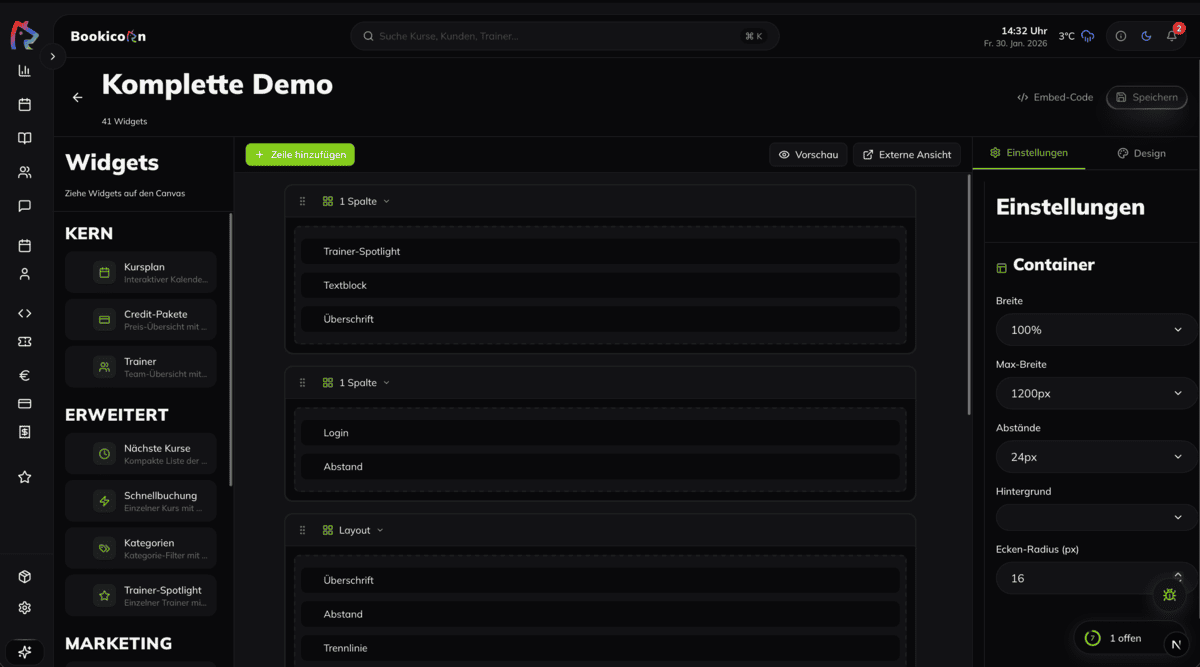
- Booking option: Online appointment booking saves time and lowers the barrier for initial consultations
- Blog or guides: Expert content strengthens your visibility on search engines
Complement your website with profiles on LinkedIn, Google Business Profile, and industry-specific platforms. Consistency in presentation strengthens your brand.
Step 6: Acquire Clients and Marketing
Client acquisition is the biggest challenge for many coaches. Proven strategies:
- Content marketing: Expert articles on LinkedIn, blog posts, guest contributions
- Networking: Business groups, industry events, local business associations
- Referral marketing: Actively ask satisfied clients for recommendations
- Free initial consultations: 15 to 30 minutes is enough to build trust
- Email marketing: Build a newsletter with valuable coaching tips
In the first months, plan at least 30 percent of your working time for marketing. Many coaches invest too little in visibility and then wonder about the lack of inquiries.
Step 7: From Individual Coaching to Scaling
Individual coaching is the best starting point, but limited in scalability. For sustainable growth, consider:
- Group programs: Support 6 to 12 participants simultaneously
- Online courses: Package your knowledge into self-paced courses
- Workshops and seminars: One-day or multi-day in-person formats
- Corporate coaching: Coaching assignments for companies bring higher daily rates
The key to successful scaling: Document your coaching processes, identify recurring patterns, and develop standardized programs from them.
Tools and Software for Your Coaching Business
The right software saves you hours of administrative work per week. These categories are particularly relevant for coaches:
Booking and Appointment Management
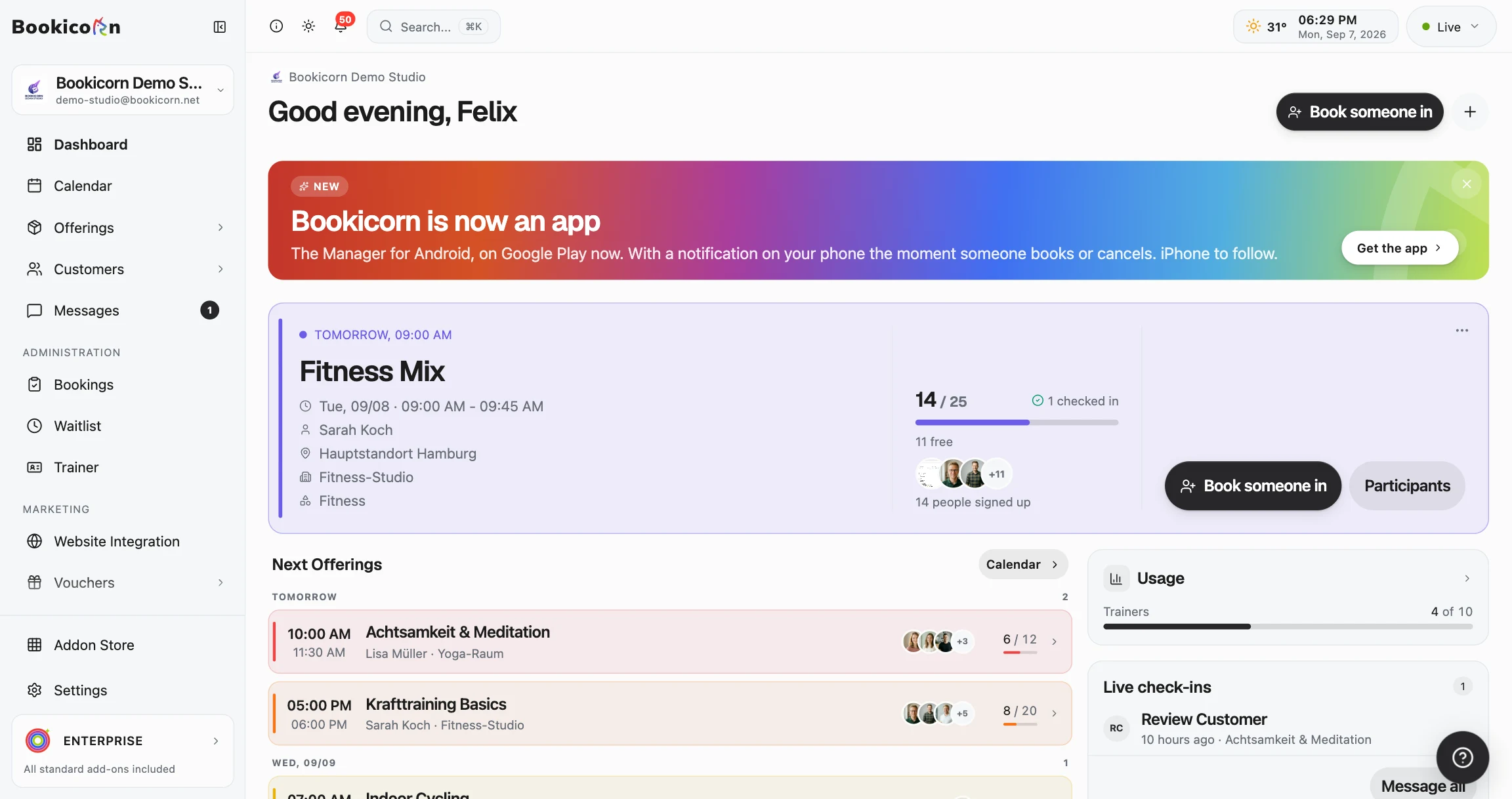
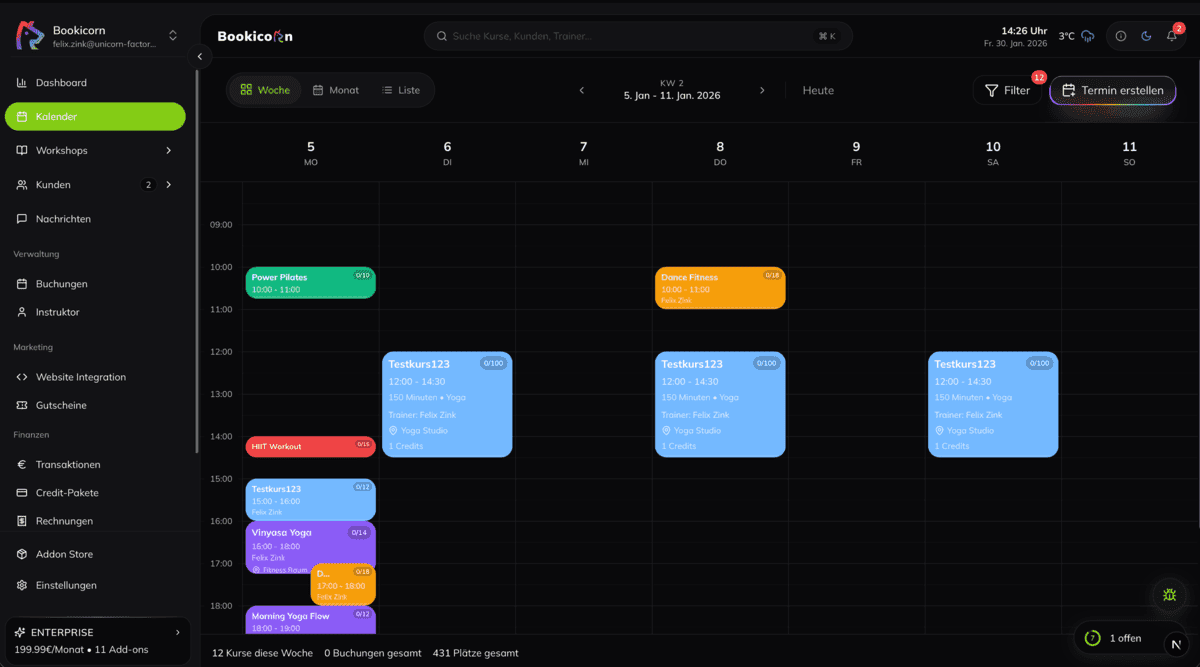
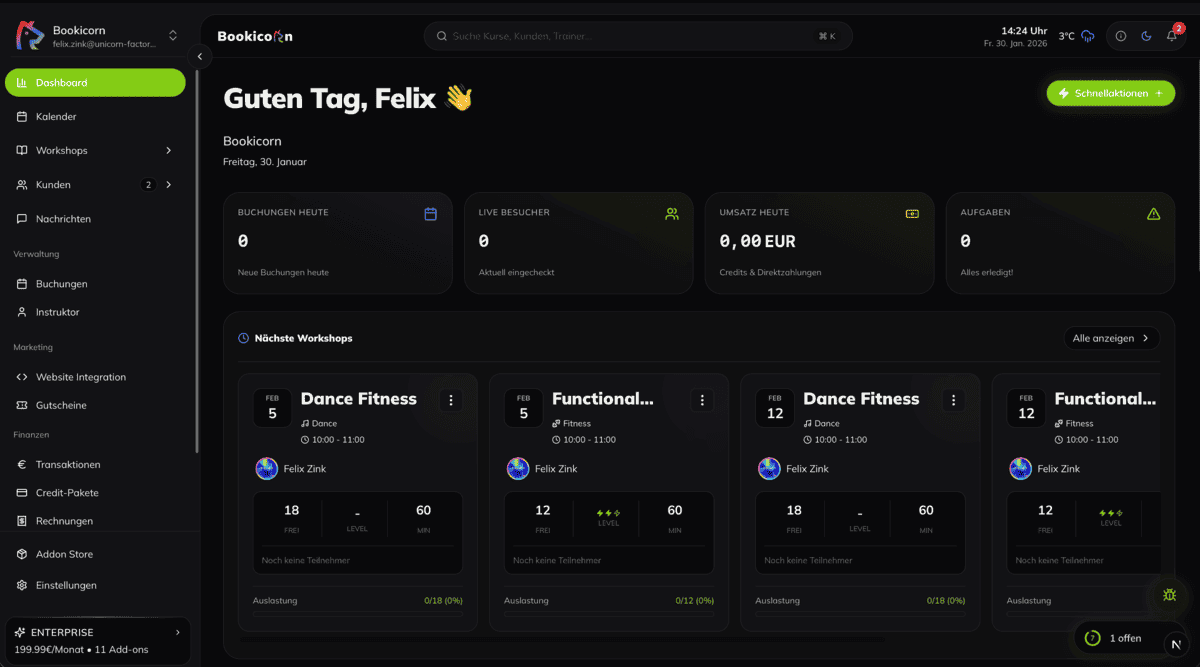
A coaching software with online booking is the backbone of your business. Clients independently book available appointments, receive automatic confirmations and reminders. This reduces no-shows and relieves you from manual scheduling.
Look for these features: online calendar with availability display, automatic reminders via email or SMS, integration with video tools, and clear client management.
Video and Communication Tools
For online coaching, you need a reliable video platform. Zoom and Google Meet are the most common options. Pay attention to stable connections, recording features (with client consent), and professional presentation.
Payment Processing and Accounting
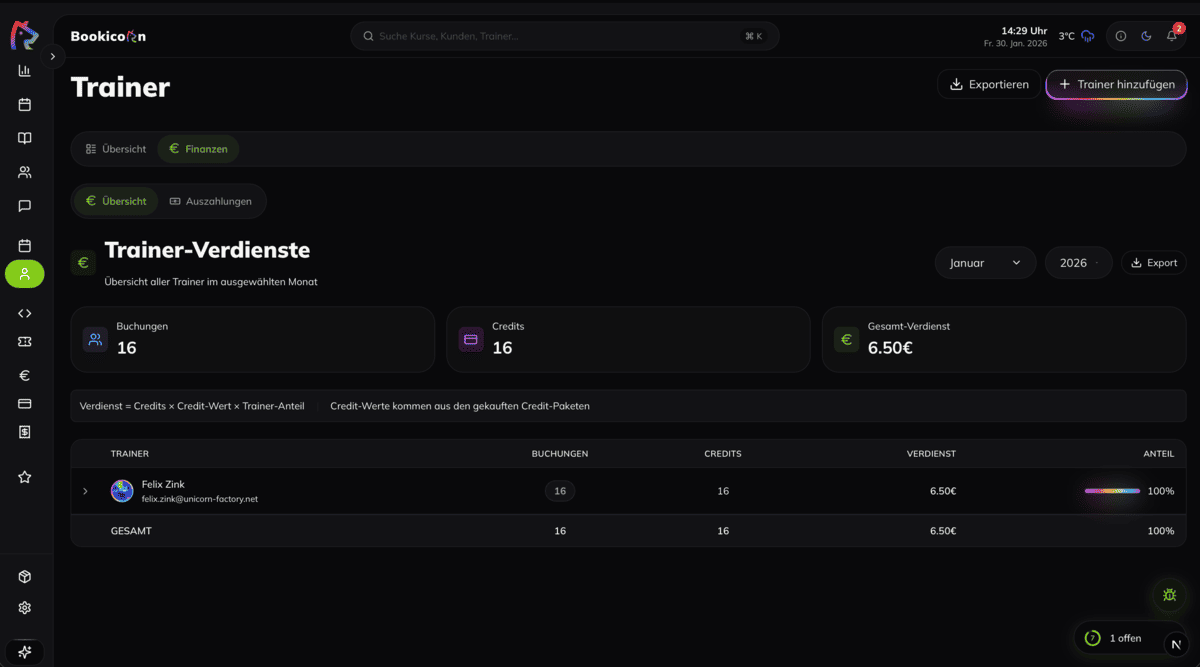
Accept various payment methods: bank transfer, PayPal, and credit card. Integrated invoicing additionally saves time. For accounting, specialized tools for self-employed professionals are recommended.
Common Mistakes When Building a Coaching Business
These three mistakes slow down aspiring coaches most frequently. Knowing them helps you avoid them.
Too Broad Positioning
The desire to reach as many people as possible paradoxically leads to nobody feeling addressed. A "life coach for everyone" has a much harder time than a "resilience coach for healthcare executives". Specialization builds trust and significantly simplifies marketing.
Missing Price Calculation
Many coaches set their prices too low, out of insecurity or false modesty. Beyond your direct costs, also factor in: acquisition time, preparation and follow-up, continuing education, vacation, and sick days. A realistic hourly rate is often 50 to 100 percent above what beginners intuitively charge.
Neglecting Marketing
Coaching expertise alone does not bring clients. Without systematic marketing, even excellent coaches remain invisible. Reserve fixed times per week for content creation, networking, and maintaining your online presence. Consistency beats perfection.
Costs and Financial Planning for Coaches
Realistic financial planning is crucial when building a coaching business. Many founders underestimate ongoing costs and overestimate revenue in the first months.
Startup Costs Overview
For starting your coaching business, plan for these investments:
- Coaching training: 3,000 to 15,000 euros (depending on certification level)
- Website and branding: 500 to 3,000 euros (or less with website builders)
- Business registration: 20 to 60 euros depending on municipality
- Professional liability: 300 to 600 euros per year
- Software tools: 50 to 150 euros monthly (booking, video, accounting)
- Marketing budget: 200 to 500 euros monthly in the first year
In total, startup costs range from 5,000 to 20,000 euros. Starting part-time significantly reduces risk as you do not need to give up your main income.
Planning Revenue Realistically
Expect few clients in the first six months. A realistic projection for the first year:
- Months 1 to 3: 0 to 2 clients per week (building phase)
- Months 4 to 6: 3 to 5 clients per week
- Months 7 to 12: 5 to 10 clients per week
- From year 2: 10 to 15 clients per week (full capacity)
With an average session price of 120 euros and 10 sessions per week, this yields a gross revenue of around 4,800 euros monthly. After taxes, social contributions, and operating costs, the net income is comparable to an employee salary – with significantly more freedom and flexibility.
Building Financial Reserves
Set aside a financial buffer of at least three to six months’ salary before transitioning to full self-employment. Also consider that coaching revenue is subject to seasonal fluctuations: during holiday periods, clients book fewer sessions.
Frequently Asked Questions About Building a Coaching Business
The most important questions and answers about building a coaching business at a glance.
Conclusion
Building a coaching business is a realistic goal achievable with the right strategy and perseverance. The key success factors: a clear niche, solid training, realistic pricing, and consistent marketing. Start part-time and grow organically rather than putting all your eggs in one basket.
Invest early in professional tools for appointment management and client communication. They save time for what really matters: working with your clients. And remember – every successful coach once started with their first client.

Written by
Felix Zink
Felix built Bookicorn from the ground up – from the booking system and credit system to trainer payouts. As a full-stack developer at Unicorn Factory Media GmbH, he builds software that makes everyday life easier for studios.
Was this article helpful?
Rate this post