






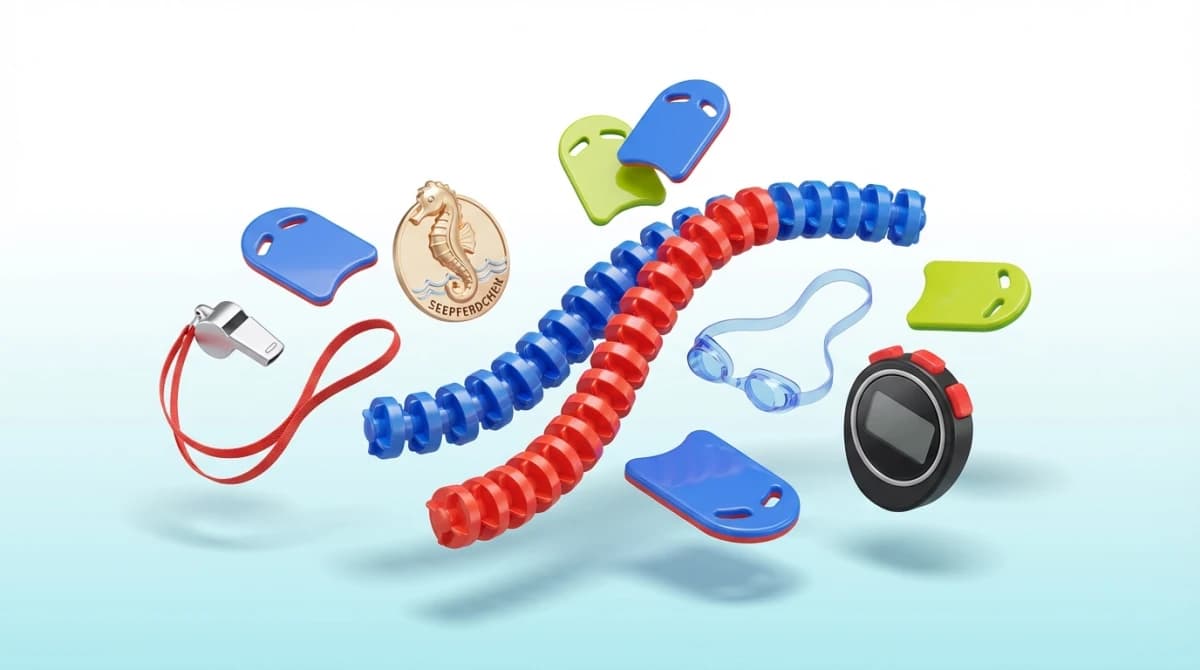
Why swimming lessons for children are so important
Swimming lessons for kids are among the most important investments in a child's safety and development. According to the German Life Saving Association (DLRG), drowning is one of the most common fatal accident causes in childhood. Between 400 and 500 people drown annually in Germany, with children and adolescents disproportionately affected. Structured swimming instruction teaches not only the necessary technique but also self-confidence and respect for water.
Drowning as an accident risk: The numbers speak clearly
Studies by the DLRG show that approximately 59 percent of ten-year-olds in Germany are not safe swimmers. The Seepferdchen badge, which many parents consider a milestone, only certifies basic water ability. Safe swimming, by contrast, means being able to swim for at least 15 minutes without a break in deep water. This gap between perceived and actual safety makes professional swimming courses indispensable.
When should children start swimming lessons?
Experts recommend enrolling children in a swimming course from around age five. At this age, most children have the necessary physical coordination and cognitive maturity to learn swimming movements purposefully. Before the age of five, playful water familiarization is advisable, such as parent-child swimming or baby swimming. These early experiences build trust and significantly facilitate later swimming courses.
What does safe swimming mean?
The DLRG defines safe swimming as the ability to swim for at least 15 minutes without interruption in deep water, staying afloat and changing direction. This corresponds to at least the German Swimming Badge Bronze, formerly known as Freischwimmer. Parents should be aware that the Seepferdchen badge is not yet a guarantee of water safety but merely marks the beginning of a longer swimming education.
How a swimming course for children should be structured
The structure of a swimming course for children follows a proven level model. Each phase builds on the previous one and considers the child's motor and emotional development. Professional swimming schools divide their instruction into four clearly defined levels, leading from the first contact with water to safe swimming.
Level 1: Water familiarization (from age 3)
Water familiarization forms the foundation of every swimming course. This phase is not about swimming technique but about children developing trust in the element of water. Typical activities include splashing in the shallow area, dipping the face into water, blowing bubbles, and gliding with assistance. Children learn that water supports them and overcome initial contact fears. This phase typically lasts between four and eight weeks with weekly sessions.
It is important that no pressure is applied. Children who are not yet ready to put their head underwater need more time. Experienced swimming instructors recognize this and adapt lessons individually. Parent-child courses are particularly effective in this phase because the presence of a caregiver provides security.
Level 2: Water management and first techniques
Once children feel comfortable in the water, water management begins. Here they learn basic skills such as diving, jumping from the pool edge, and body position in water. The leg kick is introduced, first at the pool edge and then with a swimming noodle or board. Children practice gliding in prone and supine positions and gain initial experience with arm-leg coordination.
This phase is crucial for later swimming ability. Children who are rushed through this phase often develop technique errors that are difficult to correct later. A well-designed course structure plans at least ten to twelve sessions for this phase.
Level 3: Seepferdchen course (from age 5)
The Seepferdchen course is the first concrete goal for many families. The requirements include: swimming 25 meters without assistance, a jump from the pool edge, and retrieving an object from shoulder-deep water. Children typically need between 10 and 20 lesson units to achieve the Seepferdchen, with significant individual differences.
Professional swimming schools work with small groups of a maximum of six to eight children per instructor in this phase. This ensures each child receives sufficient individual attention. Lessons typically last 45 minutes, divided into warm-up, technique acquisition, and free swimming.
Level 4: Advanced courses for Bronze, Silver, and Gold
After the Seepferdchen, the German Swimming Badges follow. Bronze requires swimming 200 meters in a maximum of 15 minutes, a jump from one meter height, and diving to two meters depth. Silver demands 400 meters in 25 minutes, Gold even 600 meters in 24 minutes plus knowledge of pool rules and various swimming styles.
Advanced courses consolidate technique and increase endurance and versatility. Children learn backstroke and crawl in addition to breaststroke. These courses are essential because only with the Bronze badge can one speak of safe swimming.
The right swimming technique for beginners
Which swimming technique children should learn first is quite debated among experts. Most German swimming schools traditionally start with breaststroke. International concepts increasingly favor the flutter kick as an entry point. Both approaches have advantages and disadvantages that parents should know.
Breaststroke vs. crawl: What do children learn first?
Breaststroke is the most commonly taught beginner technique in Germany. The advantage: children can keep their head above water and see their surroundings. The disadvantage: the frog kick is motorically demanding and leads many children to develop an asymmetric scissors kick that must be corrected later.
The flutter kick is motorically simpler as it resembles the natural walking movement. Children can perform it in both prone and supine positions. The disadvantage: breathing during front crawl requires a head rotation that presents an additional challenge for beginners. Many modern swimming schools therefore combine both approaches and start with the flutter kick in supine position.
Backstroke as a safety technique
Backstroke holds a special place in swimming education because it fulfills a life-saving function. Those who can swim on their back conserve energy, can breathe freely, and keep themselves above water for extended periods. Therefore, backstroke should be integrated into the swimming course as early as possible, ideally during the water management phase.
Children who master backstroke have a rescue technique available in emergencies. Professional courses therefore specifically practice switching between prone and supine positions so children can react in any situation.
Common mistakes when learning to swim
Some mistakes occur particularly frequently among swimming beginners:
- Constantly keeping the head above water instead of adopting a natural water position. This leads to tension and an inefficient swimming position.
- Scissors kick during breaststroke, where the legs work asymmetrically. This error often occurs when children learn breaststroke too early.
- Missing glide between swimming strokes. Children tend to paddle frantically instead of gliding calmly.
- Fear of diving, which prevents children from developing efficient breathing technique.
An experienced swimming instructor recognizes these errors early and corrects them systematically. The smaller the course group, the better individual error correction succeeds.
What parents should look for when choosing a course
Not every swimming course is equally good. Parents should look closely when choosing, as the quality of instruction significantly determines how quickly and safely a child learns to swim. The following criteria help with the decision.
Instructor qualifications
A qualified swimming instructor holds a recognized certification, for example from the DLRG, the German Swimming Association, or a comparable organization. Important is not only professional competence but also pedagogical experience in working with children. Good swimming instructors create a fear-free learning atmosphere and address each child's individual needs.
Ask about instructor qualifications before enrollment and whether they regularly participate in continuing education. Reputable swimming schools readily provide this information.
Group size and course concept
Group size is one of the most important quality indicators. For beginner courses, experts recommend a maximum of six to eight children per instructor. With more than ten children per group, individual supervision suffers considerably. Ensure the course follows a clear, step-by-step concept and does not place all children in one group regardless of their skill level.
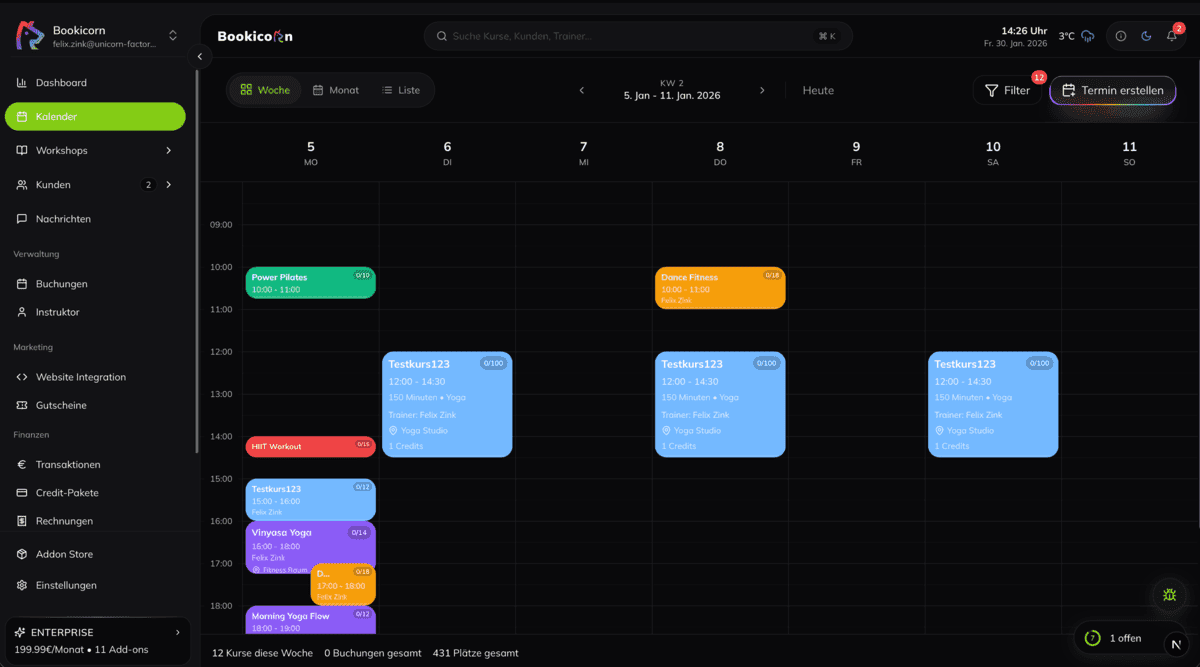
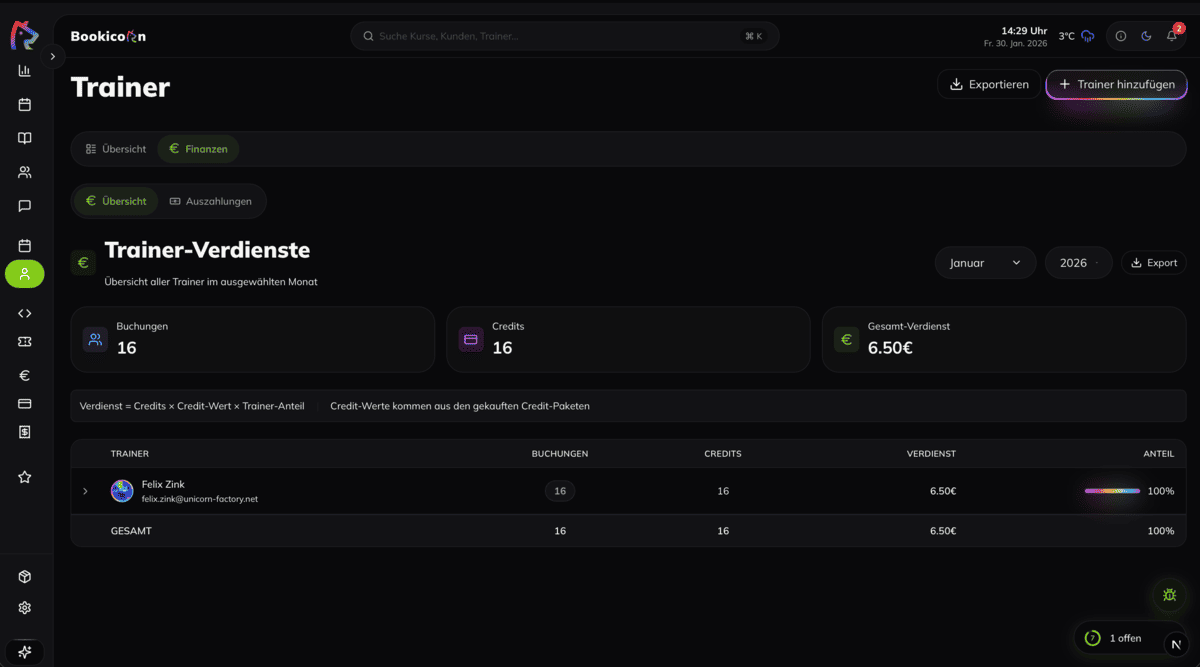
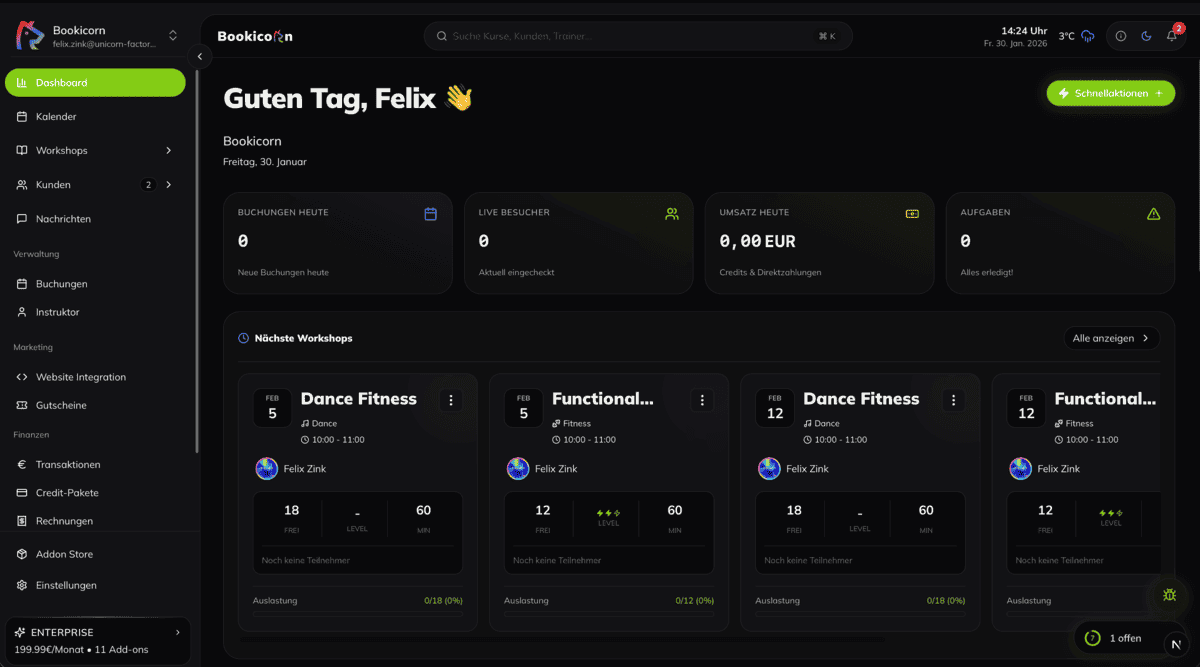
Professional swimming schools increasingly use digital tools to organize their courses efficiently. Booking software for swimming schools enables operators to manage course spots, waiting lists, and participant data clearly. For parents, this means: easy online booking, automatic reminders, and transparent communication.
Costs and duration of swimming courses
Swimming course costs vary significantly by region. Municipal offerings from DLRG or swimming clubs typically cost between 80 and 150 euros for ten sessions. Private swimming schools often charge 150 to 300 euros for comparable courses but frequently offer smaller groups and more flexible schedules.
Plan for at least 30 to 40 lesson units from beginner to safe swimmer (Bronze), spread over six to twelve months. This corresponds to about two to four course blocks. Quick results should not be the goal. What matters is a solid basic education on which further skills can be built.
How parents can support learning success
The swimming course alone is often not enough. Parents play a crucial role in how quickly and sustainably their child learns to swim. With targeted support between course sessions, you can significantly accelerate the learning process.
Regular practice between course sessions
Children who practice in the water once or twice a week between course sessions make significantly faster progress than those who only swim during lessons. Visit an indoor pool regularly and let your child repeat the exercises learned in the course. You do not need to be a swimming expert. It is sufficient to know the basic exercises and motivate the child.
Make sure to keep practice sessions short and playful. Twenty to thirty minutes in the water is entirely sufficient. When the child is having fun, they learn faster and more sustainably than under performance pressure.
Dealing with water anxiety
Water anxiety is common in children and no cause for concern. About one in five children initially shows apprehension toward water. A patient, step-by-step approach is important: never push the child into the water or force them to submerge their head. Instead, create positive experiences, such as playing together in the shallow area.
If the anxiety persists for several weeks, a special water familiarization course can help. Some swimming schools offer courses for particularly anxious children that work in even smaller groups with especially empathetic instructors.
Swimming aids: helpful or counterproductive?
Swimming aids like water wings, swim belts, or pool noodles are a controversial topic. Experts warn against viewing swimming aids as a safety guarantee. They can slip or create a false sense of security. Additionally, they alter the natural body position in water and can hinder learning correct swimming technique.
During swimming lessons, however, pool noodles and boards are deliberately used as learning aids. The difference: in the course, they are used in a controlled manner to isolate and practice specific movements. Outside the course, parents should be careful not to use swimming aids as a substitute for supervision.
Important: Supervision duty remains
Even after passing the Seepferdchen or even the Bronze badge, children must be supervised while swimming. Children frequently overestimate their abilities, and unforeseen situations such as currents, cramps, or exhaustion can endanger even more experienced swimmers. Never leave your child unsupervised in or near water.
Swimming badges at a glance
Swimming badges are important milestones in swimming education. They provide parents and children with clear orientation and motivate continued learning. The German swimming badge system is divided into several levels that build on each other.
Seepferdchen: What children need to be able to do
The Seepferdchen is the most well-known beginner badge. The exam requirements include: swimming 25 meters without assistance, a jump from the pool edge into the water, and retrieving an object from shoulder-deep water with the hands. Additionally, children must know the pool rules. The Seepferdchen certifies that a child has acquired basic swimming skills but is not yet proof of safe swimming.
German Swimming Badge Bronze, Silver, and Gold
The German Swimming Badge Bronze (formerly Freischwimmer) is considered proof of safe swimming. Requirements: 200 meters swimming in a maximum of 15 minutes (150 meters prone, 50 meters backstroke), a jump from one meter height, retrieving an object from two meters depth, and knowledge of pool rules.
Silver requires 400 meters in 25 minutes (300 meters prone, 100 meters backstroke), diving twice from the surface to two meters depth, ten meters distance diving, and a jump from three meters height. Gold demands 600 meters in 24 minutes in various swimming styles, 25 meters front crawl, 50 meters breaststroke in under 70 seconds, 25 meters backstroke, deep diving and distance diving, plus knowledge of self-rescue and basic rescue of others.
| Badge | Swimming Distance | Time Limit | Additional Requirements | Recommended Age |
|---|---|---|---|---|
| Seepferdchen | 25 m | No limit | Jump from pool edge, retrieve ring from shoulder-deep water | From age 5 |
| Bronze | 200 m | 15 minutes | Jump from 1 m board, 2 m depth dive, knowledge of bathing rules | From age 7 |
| Silver | 400 m | 25 minutes | Jump from 3 m board, 10 m distance dive, 2x depth dive (2 m) | From age 8 |
| Gold | 600 m | 24 minutes | Jump from 3 m board, 25 m distance dive, 3x depth dive (2 m each), 50 m rescue swimming | From age 9 |
Practical exercises: How parents can supplement swimming lessons
In addition to regular swimming course attendance, parents can support their child's learning with targeted exercises. The following exercises are easy to implement and require no special training. They complement professional instruction and help children stay on track between course sessions.
Exercise 1: Blowing bubbles and exhaling underwater
This exercise trains breath control, which is fundamental to every swimming technique. Have your child stand in the shallow area of the pool and exhale with their face in the water, creating bubbles. Gradually increase the duration from three to ten seconds. Children who can confidently exhale underwater learn breathing technique during swimming much faster.
Exercise 2: Starfish in supine position
Have your child lie on their back in the water, arms and legs spread out like a starfish. Initially support the child with one hand under the back and gradually reduce the support. This exercise promotes trust in buoyancy and prepares for backstroke. The goal is for the child to lie calmly on their back for at least 15 seconds.
Exercise 3: Gliding with push-off from the pool wall
The child stands at the pool wall, pushes off, and glides as far as possible in prone position through the water. Arms are held stretched out in front of the head, the body forms a straight line. This exercise is central to an efficient water position. Measure the glide distance and motivate your child to beat their own record.
Exercise 4: Leg kick with kickboard
Give your child a kickboard to hold onto and let them swim forward using only the leg kick. The legs remain straight, the movement comes from the hips. This exercise isolates the leg kick and helps develop a powerful and even leg technique. Alternate between prone and supine positions to prepare different swimming techniques.
Exercise 5: Diving for objects
Throw colorful diving rings or small objects into hip-deep water and let your child dive for them. This exercise overcomes the fear of submerging and strengthens water confidence. Gradually increase the depth. Children love the playful competition of who can collect the most rings.
All exercises should take place in a relaxed, pressure-free atmosphere. Praise the effort, not just the result. If your child is not in the mood on a given day, accept that. Pressure is the greatest enemy of learning to swim.
What makes a good swimming school
Not every swimming school operates to the same standards. The quality of instruction depends on many factors that parents should check before enrollment. Asking the right questions helps find the suitable course for their child more quickly.
Transparent communication and organization
A professional swimming school is characterized by clear communication. Course times, learning content, and the child's progress should be accessible to parents at all times. Many swimming schools now use digital booking systems that reduce administrative effort and make registration easier for parents. Automatic reminders before course sessions and clear course schedules increase reliability for everyone involved.
Safety concept and hygiene standards
Ensure that the swimming school can demonstrate a documented safety concept. This includes: staff trained in first aid and lifeguarding, clear supervision regulations, an emergency plan, and regular water quality checks. The water temperature for children's courses should be between 30 and 32 degrees Celsius so that children do not get cold and feel comfortable.
Reputable providers are usually members of a professional association or cooperate with the DLRG. This membership is an additional quality indicator, as association guidelines regulate training standards and safety requirements.
Trial lesson and feedback culture
Good swimming schools offer a free or low-cost trial lesson. This allows parents to get to know the instruction and assess whether their child feels comfortable in the group. After each course unit, the swimming instructor should briefly provide feedback on learning progress. Some schools document each child's development in writing or digitally so parents can follow the process.
Before enrollment, also ask about how anxious children are handled. A swimming school that simply says the child should just overcome their fear may not be the right choice. Patience and pedagogical sensitivity are more important in beginner training than ambitious schedules.
Different course formats compared
Swimming schools offer various course formats that differ in intensity, duration, and group composition. Depending on your child's situation and needs, a particular format may be more suitable than another.
Semester courses: The classic approach
The weekly semester course is the most widespread format. Children attend class once a week for 45 minutes, typically over ten to twelve weeks. The advantage: the regular rhythm promotes sustainable learning. The disadvantage: between sessions, learned skills can be forgotten, especially with younger children. Parents should therefore fill the gaps with independent practice.
Holiday courses and intensive courses
Holiday courses offer daily instruction over one or two weeks. This format has the advantage that children have no time to forget what they learned between sessions. Many children make significantly faster progress in intensive courses. The disadvantage: the physical strain is higher, and some children need recovery breaks. Intensive courses are particularly suitable for children from age six who already have water familiarization.
Private lessons: Individual but more expensive
Private lessons offer maximum individual attention. The swimming instructor can adjust the pace exactly to the child and address weaknesses specifically. This format is particularly suitable for children with severe water anxiety, motor limitations, or particularly ambitious learning goals. Costs typically range from 30 to 60 euros per session, significantly above group courses. As a compromise, some swimming schools offer mini-groups with only two to three children.
Frequently asked questions about swimming courses for children
The most important questions and answers about swimming courses for children at a glance.
Conclusion
A well-structured swimming course for children is one of the most valuable investments in your child's safety and development. The path from first contact with water to safe swimming leads through clearly defined levels: water familiarization, water management, Seepferdchen, and finally the advanced courses for the German Swimming Badges.
Decisive for learning success are the quality of the course, the qualifications of the instructors, an appropriate group size, and regular support from parents. Take the time to choose the right course and be patient with your child's learning process. Learning to swim is not a sprint but a marathon that is always worthwhile.
Start looking for a suitable swimming course in your area today. The sooner your child gets to know water as a friend, the safer and more confident they will move in it.

Written by
Felix Zink
Felix built Bookicorn from the ground up – from the booking system and credit system to trainer payouts. As a full-stack developer at Unicorn Factory Media GmbH, he builds software that makes everyday life easier for studios.
Was this article helpful?
Rate this post