






Considering a career as a personal trainer – or already working as one and wondering if your personal trainer salary matches the industry average? The answer depends on many factors: employment type, qualifications, location and target audience all play a decisive role. Monthly earnings from €2,200 to over €6,000 gross are possible.
Employed trainers in fitness studios often start at around €2,400 gross, while self-employed trainers can earn significantly more with hourly rates of €50 to €120 – but also face higher expenses. In this guide, you'll learn what you can realistically earn as a personal trainer, which factors influence your income, and which strategies help you boost your earnings.
Whether you're just starting to consider entering the fitness industry or already have experience and are looking for ways to optimize your income: This article provides you with the numbers and facts you need for informed decisions. We examine the German market with current data and give you practical recommendations you can implement immediately.
What Does a Personal Trainer Earn?
A personal trainer's salary primarily depends on whether you work as an employee or are self-employed. Both paths have their merits – and very different income structures.
Salary as an Employed Personal Trainer
As an employed personal trainer in a fitness studio or health center, your gross salary typically ranges from €2,200 to €2,700 per month. This equals an annual salary of roughly €26,000 to €33,000 gross. In large fitness chains or premium studios, it can reach up to €3,500 gross monthly.
Your actual salary is influenced by:
- Size and focus of the studio
- Your qualifications (B-License, A-License, additional certifications)
- The region where you work
- Commission models: Many studios pay a base salary plus performance-based bonuses
A common model is base salary plus commission: You receive a fixed base pay and earn additionally for each personal training session delivered. This gives you direct influence over your income.
Income as a Self-Employed Personal Trainer
Self-employed personal trainers have significantly higher earning potential. Common hourly rates range from €50 to €120 gross. Specialized trainers in major cities can charge €150 or more per hour.
An example calculation: At an hourly rate of €80 and 20 paid hours per week, you generate a monthly turnover of roughly €6,400 gross. However, deductions include:
- Health and nursing care insurance
- Retirement savings
- Taxes (income tax, potentially VAT)
- Operating costs (rent, equipment, travel)
Realistically, about 50 to 60 percent remains as net income after all deductions. In our example, that's roughly €3,200 to €3,800 net – significantly more than employment. Important: During the startup phase, 10 to 15 paid hours per week is more realistic.
Hourly Rate: How Much Can You Charge?
The recommended minimum hourly rate for self-employed personal trainers is €60. Below this amount, your revenue after deducting all costs barely covers living expenses. A detailed calculation shows that a rate of €60 just covers the break-even for administrative work, social security, and operating costs.
Typical hourly rates at a glance:
- Beginners (little experience): €40–60
- Experienced trainers: €60–90
- Premium and specialized trainers: €90–150+
Your target audience and location are decisive for your hourly rate. In Munich or Hamburg, rates of €100 and above are common, while smaller cities typically see €50 to €70.
Salary Development Over the Years
Your income as a personal trainer typically develops in three phases:
- Years 1–2 (Entry): Whether employed (€2,200–2,500 gross) or self-employed (10–15 hours/week) – this phase is about gaining experience, building a network, and winning first regular clients. Expect a net income of €1,500 to €2,500.
- Years 3–5 (Establishment): Your reputation grows, referrals increase. Hourly rates of €70–90 are realistic, utilization reaches 20–25 hours per week. Net income: €2,500 to €4,000.
- From year 5 (Expert): You're established, have waiting lists and can charge premium prices from €100. With additional offerings like online coaching, net income of €4,000 to €6,000+ is achievable.
Important: This development doesn't happen automatically. Active continuing education, professional marketing, and consistent client base expansion are prerequisites for rising income.
What Influences Your Personal Trainer Salary?
Your income as a personal trainer is not a fixed figure. Several factors determine whether you end up at the lower or upper end of the salary scale.
Qualifications and Licenses
Fitness trainer licenses in Germany are tiered: C-License (basics), B-License (standard for fitness trainers), A-License (advanced, authorizes creating individual training plans). For personal trainers, at least a B-License is required, while the A-License opens further doors.
Additional qualifications significantly increase your market value:
- Nutrition consulting
- Functional training
- Rehabilitation and prevention training
- Pre- and postnatal fitness
- Performance diagnostics
Each specialization expands your target audience and justifies higher hourly rates. Investments in continuing education typically pay off quickly.
Experience and Reputation
As in most professions, a personal trainer's salary rises with increasing experience. In the first two to three years, you build expertise and a client base. After that, hourly rates and utilization noticeably increase.
Your reputation is your most important asset: Positive reviews, referrals from satisfied clients, and a visible online presence make the difference between an hourly rate of €50 and €100. Experienced trainers with a good reputation and full utilization often earn €5,000 to €8,000 gross monthly.
Location and Target Audience
Location has a major influence on your salary level. In major cities like Munich, Frankfurt, Hamburg, and Berlin, both demand and willingness to pay are significantly higher than in rural areas.
Your target audience is equally important:
- Private individuals in recreational sports: Medium hourly rates
- Business clients and executives: Premium prices possible
- Corporate wellness: Lucrative, as companies have higher budgets
- Seniors and rehab clients: Stable demand, moderate prices
The trend clearly points toward specialized target audiences. The more precisely you know who you serve, the more targeted your pricing and marketing can be.
Network and Online Presence
An underestimated salary factor is your visibility. Personal trainers with a professional online presence – their own website, active social media channels, and positive Google reviews – have a clear advantage in client acquisition and can command higher prices.
Specifically, this means:
- Google reviews: Trainers with 20+ reviews and a 4.8+ average are contacted more frequently
- Social media: Regular posts with training tips, transformation stories, and insights into your daily routine build trust
- Own website: A professional web presence with online booking signals credibility and simplifies booking
- Partnerships: Collaboration with physiotherapists, doctors, or nutritionists leads to qualified referrals
Invest regular time in building your brand. This pays off long-term through higher hourly rates and better utilization.
Employed or Self-Employed? An Honest Comparison
The decision between employment and self-employment is one of the most important for your career as a personal trainer. Both models have clear advantages and disadvantages.
Advantages and Disadvantages of Employment
As an employed personal trainer, you benefit from security: You receive a regular salary, have social insurance, and are entitled to paid vacation and sick pay. Client acquisition is handled by your employer, allowing you to focus on training.
The downside: Your income is limited. Even with a commission model, you'll rarely earn more than €3,000 to €3,500 gross in employment. You're also bound by the studio's rules and opening hours, with less freedom in designing your training sessions.
For entering the industry or if financial security is important to you, employment can be the right path – especially in the first few years.
Opportunities and Risks of Self-Employment
Self-employment offers higher earning potential: You set your own prices, choose your clients, and design your workday freely. Successful self-employed trainers earn significantly more than their employed counterparts.
However, the risks are real: You bear the full entrepreneurial risk. No clients means no income. You're responsible for health insurance, retirement savings, and taxes yourself. And alongside training, you must also handle marketing, administration, and accounting.
A common compromise is a gradual transition: Many trainers start employed, build a private client base in parallel, and then transition to self-employment.
Costs as a Self-Employed Personal Trainer
As a self-employed personal trainer, you should plan for the following monthly costs:
- Health and nursing care insurance: €400–800
- Professional liability insurance: €15–30 (approx. €150–300/year)
- Room rental or studio costs: €200–800
- Equipment and maintenance: €50–100
- Travel costs (for home visits): €100–300
- Marketing and website: €50–200
- Continuing education (allocated): €50–150
- Tax reserves: approx. 25–30 percent of your profit
In total, expect monthly fixed costs of €1,000 to €2,000 before reaching your actual net income. These costs must be factored into your pricing.
The Hybrid Model: Combining Both
Many successful personal trainers use a hybrid model: They work part-time in a fitness studio while simultaneously managing their own clients. This model offers the security of a fixed income and the opportunity to build your own client base.
The advantage: You use the studio's infrastructure (rooms, equipment, existing members as potential clients) while having the freedom to work outside the studio on your own terms. Clarify in advance with your employer whether side activities are permitted – most studios are open to it as long as you don't poach their direct clients.
From a tax perspective, the hybrid model is straightforward: Your employment is handled through payroll tax, and you report self-employment income additionally in your tax return. Above an annual profit of €22,000 from self-employment, you become VAT-liable – tax advice is worthwhile at that point at the latest.
How to Increase Your Income as a Personal Trainer
Whether employed or self-employed: With the right strategies, you can significantly boost your income as a personal trainer. Here are the most effective levers.
Find and Leverage a Specialization
The most important factor for higher hourly rates is specialization. Generalists compete with every other trainer; specialists have a unique selling point. In-demand niches with high income potential:
- Rehab and pain therapy training: Stable demand, partially covered by health insurance
- Pre- and postnatal fitness: Growing market with a willing-to-pay audience
- Corporate wellness: Companies pay premium prices
- Competitive sports and contest prep: For ambitious athletes
- Senior training: Demographically driven growth market
Invest strategically in certifications for your chosen niche. The cost of an additional qualification (€500 to €2,000) pays for itself through higher rates within a few months.
Online Coaching as a Second Income Stream
Online coaching perfectly complements your personal training. You reach clients who don't live nearby and create additional income without extra space requirements. Options include:
- Create and sell individual online training plans
- Offer live coaching via video conferencing
- Sell pre-produced training programs as digital products
- Build a community with a monthly subscription model
The advantage: Online offerings are scalable. While in-person training limits you to hours worked, you can sell digital products to many clients simultaneously.
Packages and Subscriptions Instead of Single Sessions
Single-session bookings mean irregular income. Smarter options include packages and subscription models:
- 10-session cards with discount: Clients commit, you get predictable revenue
- Monthly subscriptions: Fixed monthly rate for an agreed number of sessions
- Premium packages: Training plus nutrition consulting plus online support
Packages increase client retention and provide stable monthly income. Most successful personal trainers work almost exclusively with package models.
Set Up Professional Administration
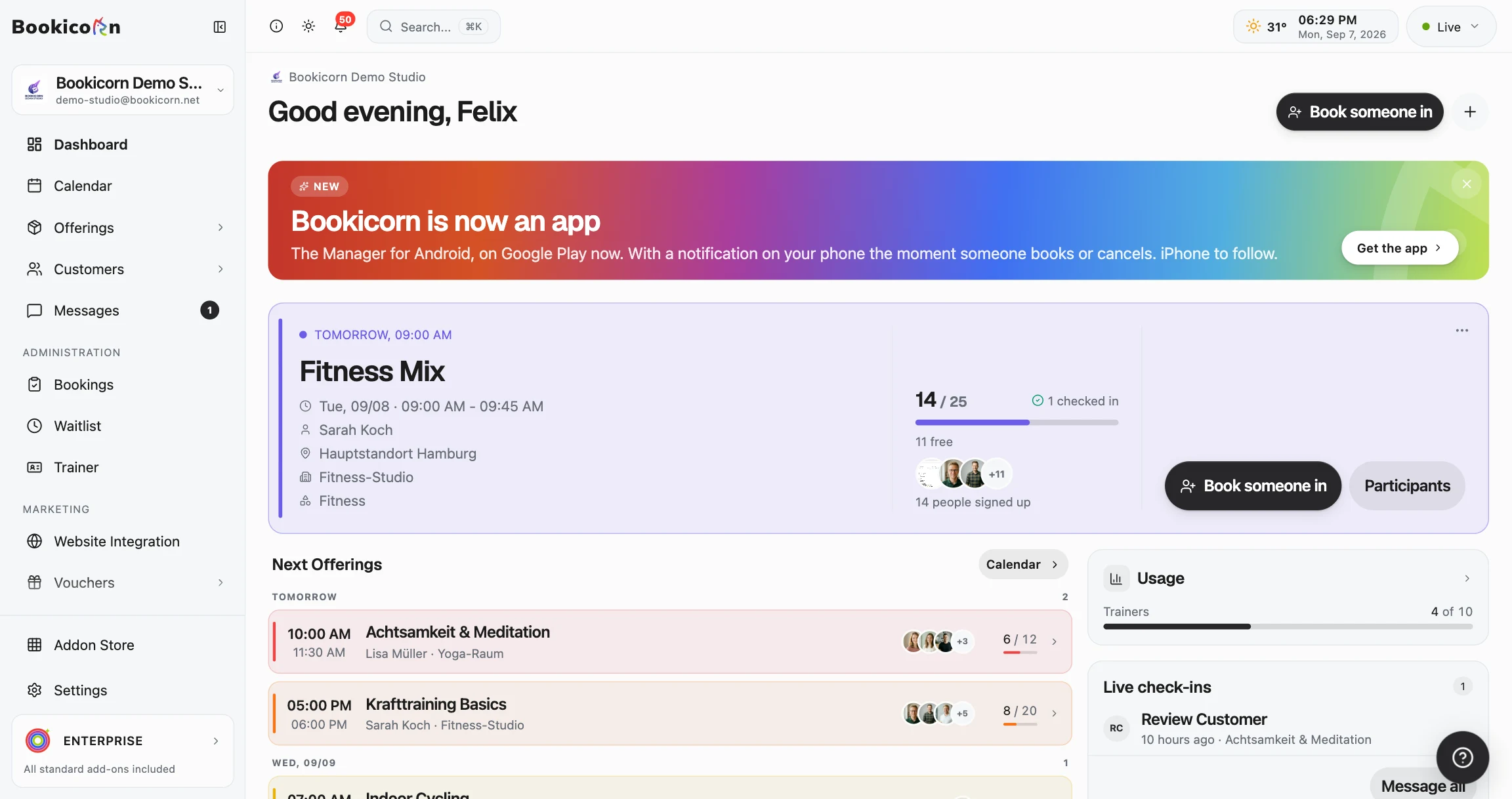
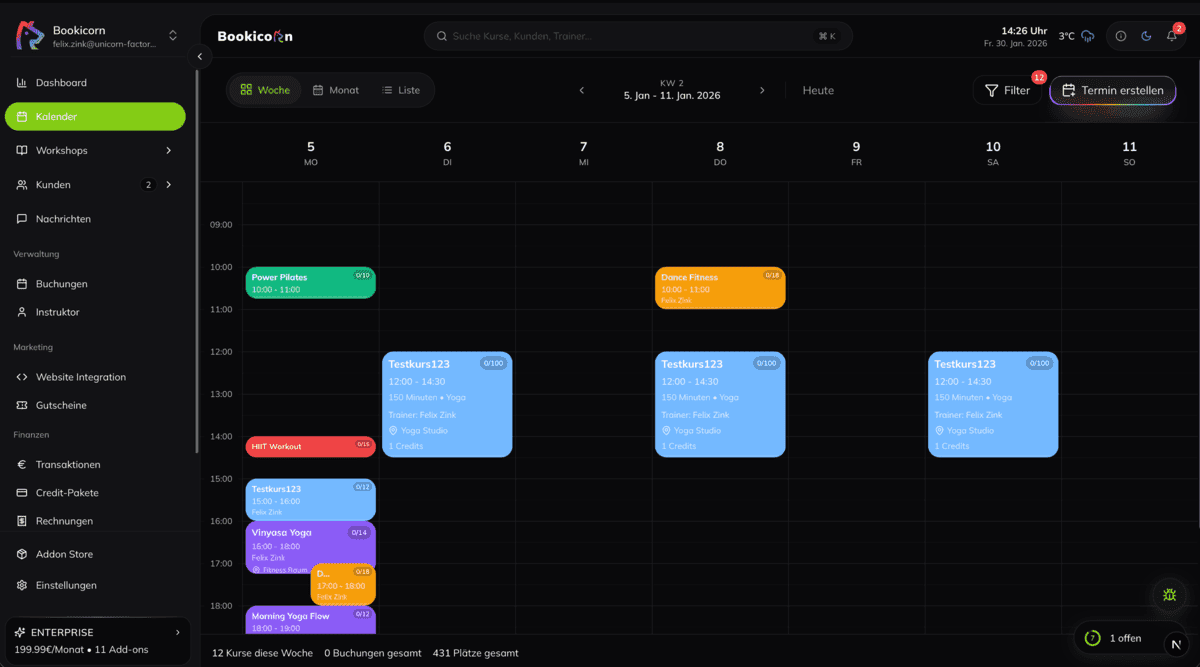
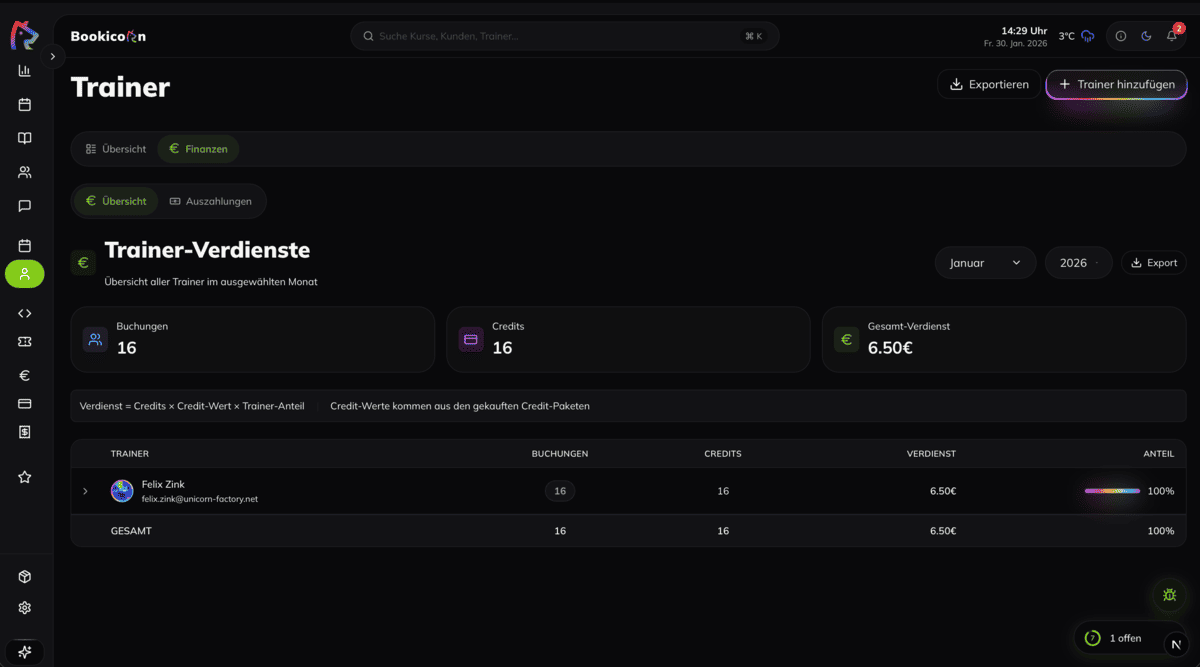
Administrative work eats into time you could spend on training and client acquisition. A professional solution for scheduling, client management, and billing saves you several hours per week. Tools like Bookicorn automate booking processes, reminders, and payment handling – so you can focus on what you do best.
A professional booking system also appears more trustworthy to potential clients than manual scheduling via WhatsApp or email.
Using Social Media Strategically for Client Acquisition
Social media is one of the most effective channels for acquiring new clients as a personal trainer. It's not about perfect polished content, but about authentic insights into your work.
What works particularly well:
- Training tips in short videos: Show an exercise, explain common mistakes, and offer solutions. Short Reels and TikToks organically reach thousands of people.
- Before-and-after stories: With your clients' consent, transformations are the most convincing content. They show that you deliver results.
- Insights into your daily routine: Stories from training sessions, client feedback, and your daily schedule make you approachable and build trust.
- Educational content: Debunking myths, nutrition tips, explaining training concepts – this positions you as an expert.
Focus on one or two platforms that match your target audience. For personal trainers, Instagram and TikTok are usually most effective. Consistency beats perfection: Three posts per week with real value bring more than one perfect video per month.
Frequently Asked Questions About Personal Trainer Salary
The most important questions and answers about personal trainer salary at a glance.
Conclusion
The personal trainer salary offers a wide range: From approximately €2,200 gross monthly in employment to €6,000 and more as a self-employed trainer with a strong client base. The key to above-average income lies in combining specialization, professional presentation, and smart business models like package and subscription offerings.
If you want to increase your income as a personal trainer, invest in continuing education, clearly define your niche, and rely on professional administration. Online coaching as a complement to in-person training creates additional income streams that aren't tied to your available time.
The profession offers real prospects – provided you treat it from the start as what it is: a serious business.
Your next step: Review your current hourly rate or salary based on the figures in this guide. Identify the biggest lever for your situation – whether that's a specialization, transitioning to self-employment, or building online offerings. And then: Start. The best time to increase your personal trainer salary is now.

Written by
Felix Zink
Felix built Bookicorn from the ground up – from the booking system and credit system to trainer payouts. As a full-stack developer at Unicorn Factory Media GmbH, he builds software that makes everyday life easier for studios.
Was this article helpful?
Rate this post