







The challenges facing yoga studios in 2026 are more diverse than ever before. Rising rental costs, aggressive aggregators like ClassPass, increasing staff shortages and growing online competition are putting studio owners under enormous pressure. According to industry experts, the economic situation for owner-operated studios has deteriorated significantly over the past three years.
At the same time, new opportunities are emerging: digital management tools, hybrid class models and a more conscious clientele open up ways to strengthen your market position. In this guide, we analyze the seven biggest challenges for yoga studios and show you proven solutions to future-proof your studio.
1. Rising Rental Costs and Operating Expenses
Fixed costs are the biggest burden for many yoga studios. Especially in metropolitan areas like London, New York or Berlin, commercial rents have increased by an average of 15 to 25 percent since 2020. For a studio with 80 to 120 square meters, this means additional monthly costs of several hundred euros.
Why Fixed Costs Are Exploding
In addition to rent, energy costs, insurance and rising staff costs are driving up operating expenses. An average yoga studio budgets for monthly fixed costs between 3,000 and 8,000 euros, depending on location and size. Variable costs for cleaning, maintenance and marketing add to this.
Inflation has also significantly increased equipment acquisition costs. High-quality yoga mats, blocks, straps and bolsters now cost around 20 percent more than three years ago. Those offering Reformer or other specialized equipment must expect investments in the five-figure range.
Levers for Cost Reduction
- Rent negotiations: Negotiate long-term leases with graduated rent instead of annual index adjustments
- Energy efficiency: LED lighting, smart heating controls and renewable energy can reduce utility costs by up to 30 percent
- Joint purchasing groups: Form alliances with other studios for better rates on equipment and supplies
Hybrid Space Concepts as an Alternative
More and more studios are adopting flexible space utilization. Yoga classes during the day, workshops or corporate events in the evening. Some studios sublet their spaces during off-peak hours to therapists, coaches or other class providers. This can increase utilization to over 70 percent and significantly reduce the rental burden per class.
Another trend: pop-up studios and outdoor yoga. During summer months, parks, rooftop terraces or corporate grounds can serve as cost-effective class spaces while simultaneously reaching new target groups.
2. Aggregators and Dumping Prices
Platforms like ClassPass, Urban Sports Club or Mindbody have fundamentally changed the fitness market. For a monthly flat rate, users gain access to hundreds of studios. What sounds convenient for customers poses an existential dilemma for yoga studios.
The Aggregator Problem Explained
Aggregators pay studios a fraction of the regular class price per visit. Where a single ticket costs 15 to 20 euros, studios often receive only 5 to 8 euros per participant from aggregators. With small class rooms of 10 to 15 spots, this can jeopardize the profitability of individual classes.
At an online panel in November 2025, attended by around 200 studio operators and industry representatives, the frustration in the yoga scene became clearly visible. The central criticism: aggregators profit from the studios’ offerings while the studios themselves barely benefit.
Impact on Value Creation
The problem extends beyond low compensation. Aggregators condition customers to view yoga as an interchangeable mass commodity. A studio’s individual brand identity gets lost when customers switch between ten different providers via app. Regular customers become occasional visitors, and retention drops.
Strategies for Dealing with Aggregators
- Limit quotas: Reserve a maximum of 20 percent of class spots for aggregator customers
- Exclusive offers: Offer premium classes, workshops and retreats only for direct bookers
- Own membership models: Create attractive packages that are better in price and content than aggregator passes
- Build community: Use events, social media and personal relationships as differentiators
In the long run, studios that focus on a strong own brand and direct customer relationships are less dependent on aggregators and more economically stable.
3. Skilled Labor Shortage in the Yoga Sector
Finding qualified yoga teachers is becoming an increasing challenge for studio operators. The profession of yoga teacher is not state-regulated in many countries, which makes market access easier on one hand but complicates quality assurance on the other. Many well-trained teachers migrate to better-paid activities or become self-employed with their own online offerings.
Why Qualified Yoga Teachers Are Scarce
Yoga teacher training costs between 5,800 and 11,000 euros and typically takes two to four years. Despite this significant investment, the average fee for a yoga class is only 30 to 60 euros. After deducting travel costs and preparation time, this results in an hourly wage that often falls below minimum wage.
Additionally, the boom in online platforms has shown many teachers that they can achieve greater reach and higher margins without a fixed studio. YouTube channels, Instagram Live and their own course platforms make the traditional studio teaching job unattractive for many.
Creating Attractive Working Conditions
Successful studios rely on a comprehensive package that goes beyond pure fees:
- Fair pay: At least 50 euros per teaching unit plus revenue sharing for well-attended classes
- Training budget: Annual budget for continuing education, workshops and conferences
- Planning security: Fixed class times, long-term contracts and reliable income
- Personal development: Opportunity to develop own class formats and build their own brand
- Digital tools: Modern management software that minimizes administrative effort for teachers
Another approach: cooperation models with yoga teacher training programs. Studios that offer internship positions and mentoring programs build up a pool of qualified teachers early on.
4. Digitalization and Online Competition
The pandemic accelerated the digitalization of the fitness industry by years. Online yoga platforms like YogaEasy, Alo Moves or Down Dog offer professionally produced classes for a fraction of studio prices. For 10 to 15 euros per month, users get unlimited access to thousands of classes.
The Boom of Online Yoga Platforms
The global online yoga market grows by around 12 percent annually. For local studios, this means an entirely new competitive dimension. Customers who previously came to the studio two to three times a week now replace some of their visits with online sessions at home.
Studios in rural areas and smaller cities are particularly affected. They often lack the critical mass of yoga practitioners to economically sustain a broad class offering. Online services fill this gap and draw away potential customers.
Hybrid Models as an Opportunity
Instead of viewing online yoga as a threat, successful studios use it as a complement to their offering. Hybrid models combine in-person classes with live streaming and on-demand content:
- Live streaming: Broadcast classes simultaneously online to increase reach and generate additional revenue
- On-demand library: Recorded classes as supplementary content for existing members
- Digital community: Online groups, challenges and virtual events for member retention
Digital Administration as a Competitive Advantage
Beyond class digitalization, administrative digitalization plays a crucial role. Studios still working with Excel spreadsheets and paper calendars waste valuable time and appear unprofessional to tech-savvy customers.
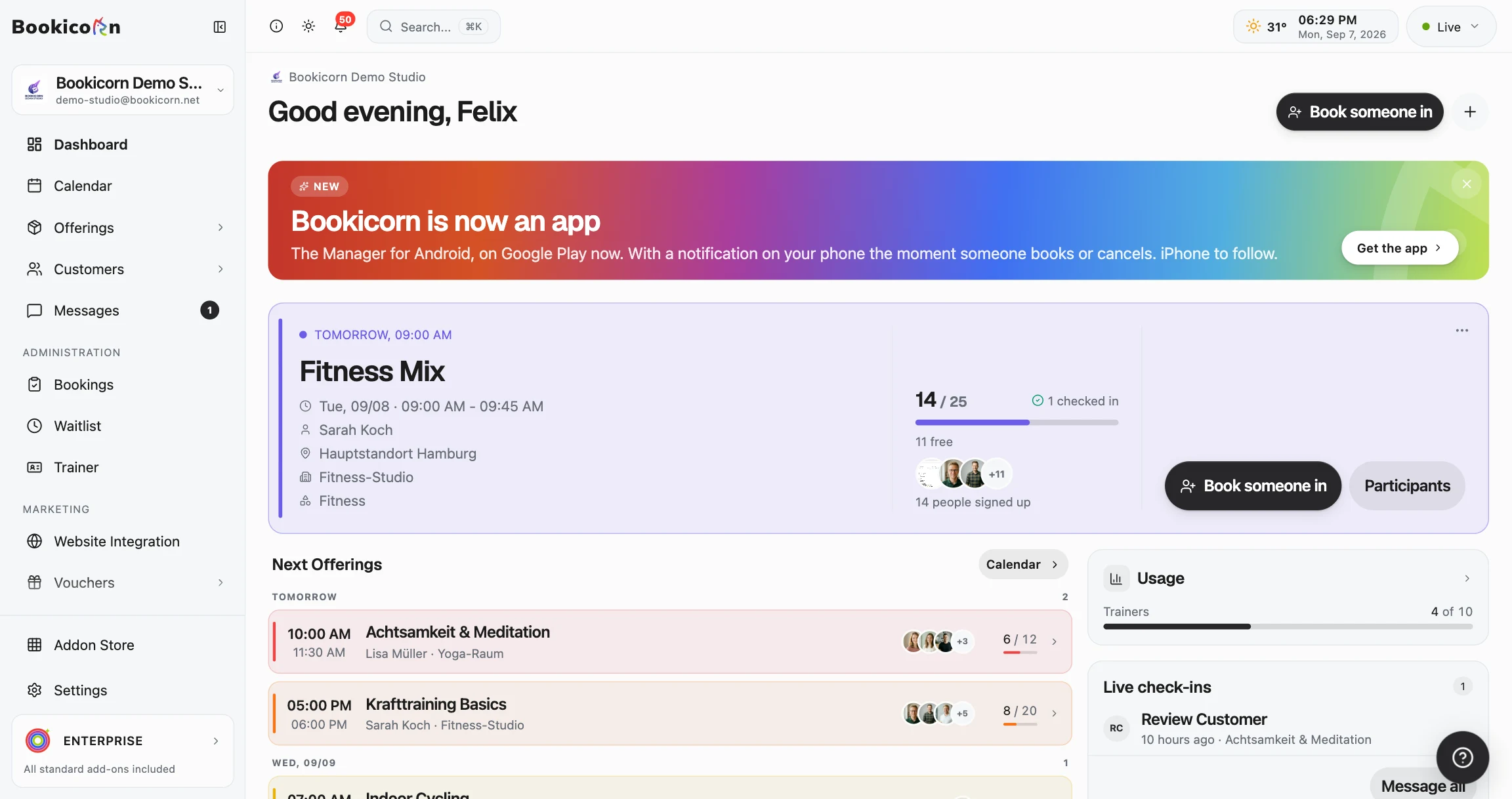
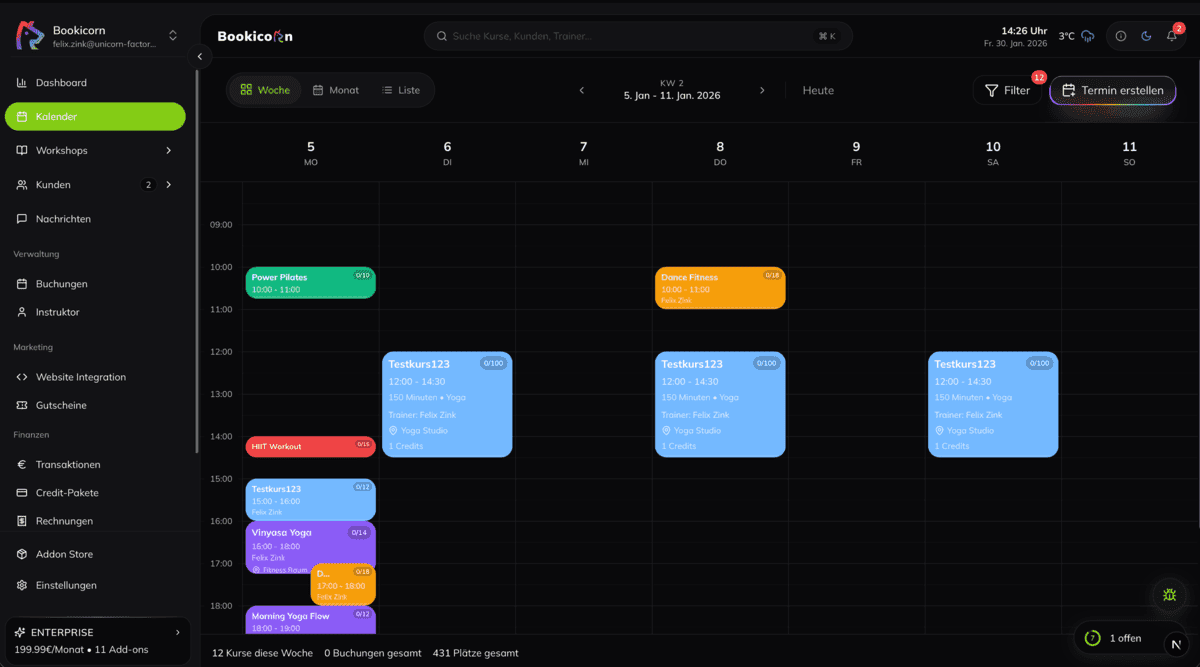
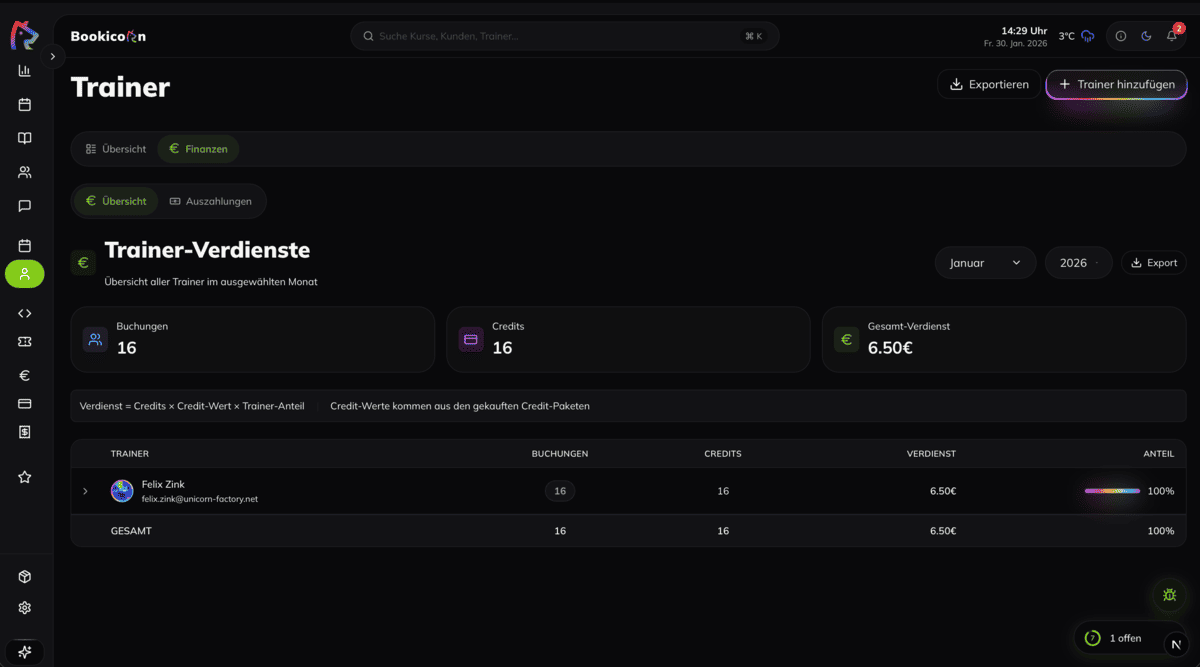
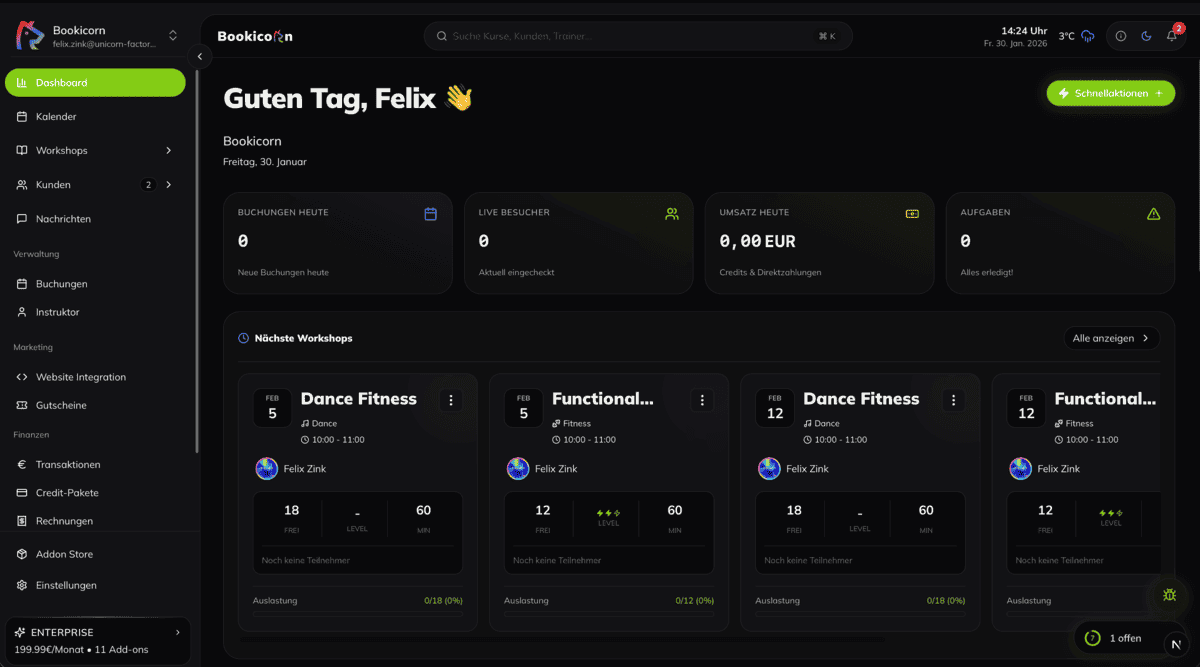
Modern booking systems like Bookicorn automate scheduling, payment processing and customer communication. This not only saves several hours of administrative work per week but also improves the customer experience through easy online booking, automatic reminders and transparent class planning.
5. Customer Retention and Fluctuation
The average retention period for yoga studio customers is only 6 to 12 months. After that, many switch to another studio, take a break or stop entirely. This high fluctuation makes sustainable revenue planning nearly impossible and forces studios into permanent new customer acquisition.
Why Members Drop Out
The reasons for customer churn are diverse: relocations, changed work schedules, boredom from monotonous class offerings or simply the temptation of new studios and online offerings. Often there is a lack of emotional connection to the studio that goes beyond just attending classes.
Studies from the fitness industry show: The critical phase lies between the third and sixth month. Those who do not develop a routine during this period and do not feel part of the community are highly likely to drop out.
Membership Models vs. Card Systems
The choice of pricing model directly impacts customer retention. Membership models offer financial predictability but according to industry experts are only suitable for larger studios with at least 20 to 30 spots per class. Smaller studios often do better with flexible card models that lower the entry barrier.
A hybrid model can combine the advantages of both systems: an affordable basic membership for regular visitors plus single tickets for occasional visitors and new customers.
Community as a Retention Tool
The strongest customer loyalty comes from a sense of community. Successful studios invest specifically in community building:
- Regular events: Workshops, kirtans, communal brunches or seasonal specials
- Personal relationship: Teachers who know participants by name and give individual attention
- Digital presence: Active social media channels, newsletters and a WhatsApp group for members
- Create achievements: Challenges, progress tracking and celebrating personal milestones
6. Regulatory Uncertainties
The legal classification of yoga studios remains inconsistent and complex in many countries. Whether a yoga studio qualifies as a freelance profession or commercial business depends on the owner’s training, the class offering and the regional tax authority.
Freelance or Commercial Business
Yoga teachers can operate as freelancers under certain conditions, bringing tax advantages: no trade tax, no mandatory chamber membership and simplified accounting. However, courts have ruled that yoga studios with employed teachers are classified as commercial businesses.
In practice, this means: as long as you teach as an individual, you can often claim freelancer status. Once you employ staff or offer a broad range of classes beyond yoga, commercial classification becomes more likely. Individual consultation with a tax advisor is strongly recommended.
Special Tax Cases for Yoga Studios
Particular attention is warranted regarding VAT exemption. Yoga classes can be exempt from VAT under certain conditions if they are recognized as educational services. Prevention certification bodies also certify prevention courses that are subsidized by health insurance companies.
This certification is a significant competitive advantage: participants receive up to 80 percent of course fees reimbursed by their health insurance. For studios, this means higher willingness to pay and more stable class attendance.
7. Mastering Seasonal Fluctuations
Yoga studios typically experience strong seasonal fluctuations in class attendance. This predictability is simultaneously a challenge and an opportunity for strategically-minded studio operators.
Typical Patterns Throughout the Year
January traditionally brings the biggest influx: New Year’s resolutions and the desire for more exercise fill classes. From February to March, occupancy stabilizes at normal levels. The summer months of June to August are the weakest phase for many studios, as vacations and outdoor activities take priority.
Autumn brings a second peak: cooler weather and the desire for indoor activities drive demand. December is split: the first half runs well, the holidays bring a dip.
Counter-Strategies for Weak Months
- Summer specials: Outdoor yoga in the park, early morning yoga before work, weekend yoga retreats
- Corporate partnerships: Workplace health management and corporate yoga are season-independent
- Workshop intensive programs: Multi-day courses, training modules and themed workshops fill summer gaps
- Price incentives: Summer packages at reduced prices, bring-a-friend promotions and trial classes
- Digital supplement: Online classes as alternatives for traveling members maintain the connection
Experienced studio operators already factor seasonal fluctuations into their annual budget and use the weak months for renovations, training and strategic planning.
Conclusion
The challenges facing yoga studios in 2026 are real and diverse. From rising costs to aggressive aggregators, staff shortages and online competition: the pressure on owner-operated studios has rarely been this high.
Yet each of these challenges also holds an opportunity. Studios that actively manage costs, focus on direct customer relationships, invest in digital tools and build a strong community position themselves for long-term success.
The decisive factor is the willingness to change. Those who regularly question their business model, develop new revenue streams and organize their administration efficiently with modern tools like Bookicorn can successfully thrive even in a demanding market environment.

Written by
Felix Zink
Felix built Bookicorn from the ground up – from the booking system and credit system to trainer payouts. As a full-stack developer at Unicorn Factory Media GmbH, he builds software that makes everyday life easier for studios.
Was this article helpful?
Rate this post