




Structuring MMA training is one of the most important tasks for martial arts schools that want to add Mixed Martial Arts to their program. Whether you are expanding an existing martial arts school or building a dedicated MMA studio – a well-thought-out training plan determines the success of your classes and the satisfaction of your participants.
In this article, you will learn how to professionally structure MMA courses, which disciplines should be trained in which phase, and how to build a clear progression from beginner to advanced level. You will also get concrete weekly plans, safety guidelines, and proven tips from practice.
What Makes MMA Training: An Overview of the Disciplines
Mixed Martial Arts combines several combat sports disciplines into one system. As a course provider, you need to understand which areas are covered and how they interconnect.
Striking: Boxing, Kickboxing, and Muay Thai
Stand-up fighting forms the foundation of every MMA education. Your participants learn punches, kicks, knee strikes, and elbow techniques. Boxing teaches the fundamentals of hand technique and footwork. Kickboxing expands the repertoire with leg and body kicks. Muay Thai introduces clinch work as well as knee and elbow techniques. In your course structure, you should introduce these elements step by step and connect them with each other.
Grappling: Wrestling and Jiu-Jitsu
Grappling encompasses all grip techniques while standing. Wrestling teaches takedowns, throws, and opponent control. Standing Brazilian Jiu-Jitsu focuses on clinch transitions and submission setups. For beginners, it is important to first master balance and basic grip fighting before complex techniques follow.
Ground Fighting and Submissions
On the ground, the true versatility of MMA becomes apparent. Positions like guard, mount, and side control come into play here. Your course participants should learn to control positions, execute transitions, and apply submissions such as armbar, triangle, and rear naked choke. Plan sufficient drilling time for these techniques.
Strength and Conditioning
A dedicated area for functional strength training and endurance completes the MMA program. Exercises like kettlebell swings, burpees, jump rope, and circuit training improve sport-specific fitness. Integrate strength and conditioning sessions as standalone classes or as part of warm-ups.
Planning the Course Structure: Structure of an MMA Training Session
A well-structured MMA session follows a clear sequence. The typical training duration is 60 to 90 minutes. Here is a proven template for a 90-minute session.
Warm-Up (15–20 Minutes)
The warm-up prepares body and mind for training. Start with light jogging, jump rope, or shadow boxing. Then follow dynamic stretching exercises and sport-specific movements like hip circles, sprawls, and technical stand-up drills. The warm-up should become progressively more intense and ideally already incorporate basic martial arts movements.
Technique Section (25–30 Minutes)
In the technique section, you teach new techniques or refine existing ones. The instructor demonstrates the technique, explains the details, and lets participants practice in partner work. Examples: jab-cross-hook combination on focus mitts, double-leg takedown with partner resistance, or guard sweeps from the back. It is important to have a clear focus per session – do not cover too many techniques at once.
Sparring and Drilling (15–20 Minutes)
Here participants apply what they have learned under more realistic conditions. For beginners, controlled situational sparring works best: for example, boxing only, takedowns only, or ground fighting from a specific position. Advanced students can practice free sparring with a full rule set. Drilling rounds with predetermined sequences serve as a good intermediate step.
Cool-Down (10 Minutes)
The cool-down includes static stretching of all used muscle groups, light mobility exercises, and a brief reflection on the session. Use this phase also for feedback and participant questions. A mindful closing ritual strengthens group cohesion.
Progression: From Beginner to Advanced
A clear progression structure gives your participants orientation and keeps motivation high. Divide your MMA program into three phases and define clear learning objectives for each phase.
Beginner: Month 1–6
In the beginner phase, the focus is on fundamental techniques and safety. Your participants learn:
- Basic stance and footwork
- Basic striking techniques: jab, cross, front kick, low kick
- Fundamental takedown defense and sprawl
- Basic ground positioning: closed guard, mount escape
- Breakfall technique (ukemi) and safe rolling
Sparring in this phase: only controlled technique sparring with clear rules. No free sparring for beginners in the first three months.
Intermediate: Month 6–18
The intermediate level builds on the fundamentals and introduces more complex techniques:
- Striking combinations: 3–4 punch-kick combinations
- Takedowns: single leg, double leg, body lock
- Transitions between stand-up and ground fighting
- Submissions: armbar, triangle, guillotine, kimura
- Controlled sparring with various rule sets
This is also where specialization begins. Some participants develop preferences for certain areas. Encourage them to develop their strengths but continue training all areas.
Advanced: From 18 Months
Advanced practitioners work on refining and integrating all disciplines:
- Advanced striking setups and angle work
- Chain wrestling: linked takedown attempts
- Submission chains and advanced transitions
- Strategic sparring with game planning
- Competition preparation (optional)
A level or belt system can make this progression visible. Unlike traditional karate or jiu-jitsu, MMA has no standardized belt system. You can introduce your own system with colored hand wraps, t-shirts, or wristbands that indicate the achieved level. This motivates and provides structure.
Safety and Injury Prevention
Safety is the top priority in MMA training. As a course provider, you are responsible for a safe training environment. Here are the key areas you need to cover.
Mandatory Protective Equipment
The following equipment should be mandatory for every MMA training session:
- Mouthguard – protects teeth and jaw, mandatory from the first sparring session
- Groin protector – for all participants during contact exercises
- Shin guards – for all exercises involving leg techniques
- MMA gloves (4–6 oz) for sparring, boxing gloves (12–16 oz) for pure boxing training
- Headgear – recommended for beginners during sparring
Sparring Rules
Define clear sparring rules and communicate them before each session. This includes: intensity levels (light, medium, hard), allowed techniques based on experience level, clear stop signals (tapping), and the prohibition of uncontrolled techniques. Pair sparring partners by weight and experience.
First Aid and Emergency Plan
Keep a first aid kit readily accessible and ensure at least one instructor has current first aid training. Create an emergency plan with contact details for the nearest emergency room. Document injuries systematically to identify patterns and derive preventive measures.
Training Planning: Weekly and Monthly Cycles
A well-thought-out weekly plan ensures that all disciplines are trained regularly and your participants get sufficient recovery time.
Example Weekly Plan for an MMA Studio
- Monday: Striking – Boxing and kickboxing (focus: combinations)
- Tuesday: Grappling – Wrestling and takedowns (focus: stand-up fighting)
- Wednesday: Strength and conditioning – Functional training and circuits
- Thursday: Sparring day – Controlled MMA sparring with rotating rule sets
- Friday: Technique mix – Integration of all disciplines, practicing transitions
- Saturday: Open mat – Free training, individual coaching (optional)
Periodization Over the Month
Vary the intensity throughout the month. In the first week, the focus is on new techniques with low intensity. The second and third weeks increase intensity and complexity. The fourth week serves as a deload week with reduced sparring portions and more technique work. This pattern prevents overtraining and promotes sustainable progress.
Planning Recovery
Schedule at least one complete rest day per week. Additionally recommend active recovery to your participants, such as light yoga, swimming, or fascia training. Ensure that training with high sparring intensity does not occur on two consecutive days. Recovery is just as important as the training itself.
Common Mistakes in Course Structuring
Many MMA schools make similar mistakes in course planning. If you know them, you can avoid them from the start.
Too Much Sparring Too Early
Throwing beginners directly into hard sparring is one of the most common mistakes. It leads to frustration, injuries, and high turnover. Build sparring gradually: first shadow boxing, then technique sparring at 30% intensity, then controlled situational sparring.
No Clear Progression
When beginners and advanced students always do the same exercises, some get bored while others get overwhelmed. Define clear levels with different course content and sparring rules.
One-Size-Fits-All Instead of Specialization
Training everything a little bit every day yields less than focused theme days. Dedicate each session to a main focus and vary across the week. This creates real depth instead of superficial breadth.
Neglecting Strength and Conditioning
MMA places high demands on physical fitness. Those who only train technique will quickly tire during sparring and lose form. Integrate at least one dedicated strength and conditioning session per week into your course plan.
Frequently Asked Questions About MMA Training
Here you will find answers to the most important questions about planning and conducting MMA courses.
Conclusion
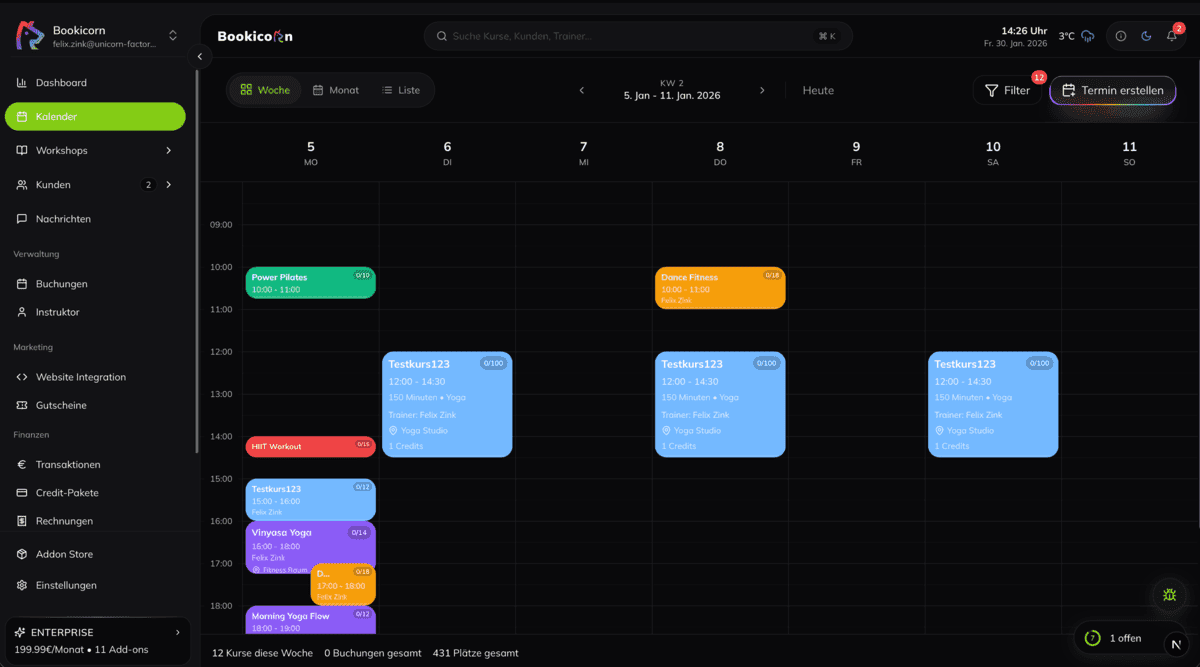
A well-structured MMA training program is the foundation for satisfied participants and sustainable growth of your martial arts school. With a clear progression from beginner to advanced, well-thought-out weekly plans, and consistent safety standards, you set yourself apart from the competition.
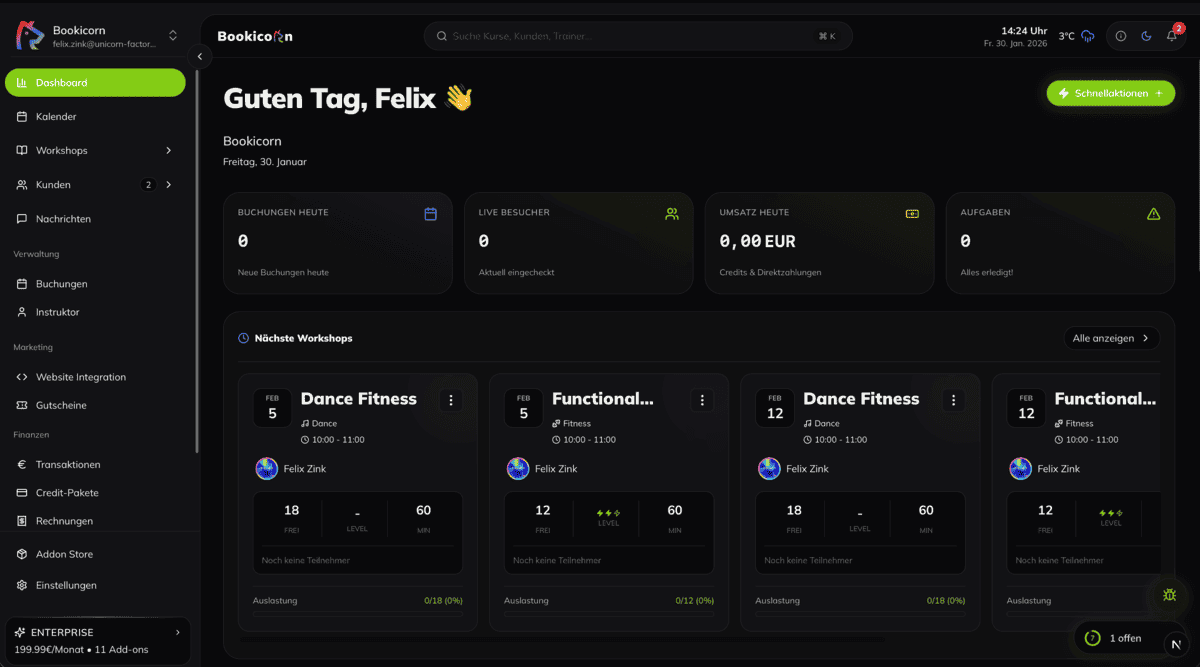
Implement the tips from this article and adapt them to the needs of your participants. Start with a solid basic structure and refine it over time based on feedback and experience. With a digital course management system, you always keep track of class occupancy, participant progress, and training planning.

Written by
Felix Zink
Felix built Bookicorn from the ground up – from the booking system and credit system to trainer payouts. As a full-stack developer at Unicorn Factory Media GmbH, he builds software that makes everyday life easier for studios.
Was this article helpful?
Rate this post