




Offering a self-defense class for women is about much more than teaching techniques. It is about giving participants confidence, safety awareness, and practical skills they can rely on. Demand for professional courses has been growing steadily, creating attractive opportunities for martial arts trainers, fitness studios, and freelance instructors.
In this guide, you will learn how to develop a solid course concept, which qualifications you need, how to structure your content, and how to market your classes successfully. From target group analysis to pricing and digital management – everything you need for a professional women’s self-defense course.
Why self-defense classes for women are in high demand
Self-defense for women is no longer a niche topic. Women are disproportionately affected by certain types of violence, and awareness of prevention and empowerment is growing. This leads to steadily increasing demand for professional courses.
Growing demand and social relevance
The #MeToo movement, media coverage, and a shifting sense of personal safety have driven more and more women to actively seek self-defense classes. For course providers, this means: The target audience is large, motivated, and willing to invest in their safety.
Demand is particularly high in urban areas. Community colleges, martial arts schools, and fitness studios report long waiting lists – a clear signal that the market is far from saturated.
Target groups and their needs
Not every participant comes to your class with the same expectations. It pays to understand the key target groups:
- Working women (25–45): Looking for compact formats after work, value realistic everyday scenarios
- Students and young women (18–25): Often price-sensitive, prefer group dynamics and social-media-friendly courses
- Mothers and older women (45+): Want to feel safer, appreciate a calm, respectful class atmosphere
- Companies and organizations: Book courses as team events or as part of corporate health programs
The better you understand your target group, the more precisely you can tailor content, class times, and pricing.
Qualifications and requirements as a trainer
Before you can offer a self-defense class for women, you need the right foundation. Beyond technical skills, pedagogical abilities and legal knowledge play a crucial role.
Professional training and certification
A solid education forms the backbone of your course offering. These paths are available:
- Trainer license through martial arts federations: Recognized qualification with examination
- Certification through self-defense associations: Multi-level system specifically for self-defense trainers, DIN-certified
- Self Defense Instructor (SDI): Approximately 70-hour training covering methodology, didactics, and scenario training
- WenDo trainer: Feminist self-defense concept, particularly suited for women’s and girls’ courses
Important: There is no legally mandated minimum qualification for self-defense trainers in many countries. However, recognized training is essential for your credibility and liability protection .
Pedagogical and psychological competence
Women’s self-defense classes often attract participants with experiences of violence. You must be able to:
- Teach trauma-sensitively – never force exercises, respect boundaries
- Create a trusting atmosphere – a safe space without performance pressure
- Teach de-escalation – not just physical but also verbal strategies
- Lead groups – integrate different fitness levels and experiences
Additional training in trauma pedagogy or violence prevention is a genuine unique selling point.
Legal basics
Anyone offering self-defense courses needs to consider several legal aspects:
- Business registration: Generally required. Freelance status may be possible if your work is primarily educational.
- Professional liability insurance: Indispensable. Covers damages that may occur during training.
- Teaching self-defense law: Participants must understand the legal limits of self-defense – defense is permitted, excessive force is not.
- Duty of supervision: Particularly strict rules apply for courses with minors.
Developing your course concept: content and methods
A professional self-defense class for women consists of more than punching and kicking techniques. A holistic concept encompasses prevention, communication, physical techniques, and stress training.
Prevention and threat recognition
The best fight is the one that never happens. The prevention portion of your course should occupy at least 20–30% of total time:
- Situational awareness: Recognizing dangers early, scanning surroundings, identifying escape routes
- Reading body language: Detecting warning signs in potential aggressors
- Risk assessment: Evaluating everyday situations (parking garages, public transport, dark streets)
- Digital safety: Social media stalking, safe online behavior
Verbal de-escalation and setting boundaries
Around 80% of all assaults can be prevented through assertive behavior. Practice with your participants:
- The voice as a weapon: Loud, firm No. Practicing shouting (surprisingly difficult for many women)
- Body language of strength: Upright posture, eye contact, space-claiming gestures
- Verbalizing boundaries: Clear phrases like “Stop, don’t come any closer!”
- Involving bystanders: “You in the red jacket, please call the police!”
Physical techniques and escape holds
Techniques must be simple, effective, and retrievable under stress. Proven methods include:
- Escape holds: Freeing wrists, breaking chokes, escaping bear hugs
- Strike and kick techniques: Palm strikes, knee strikes, elbow strikes – targeting vulnerable areas
- Ground defense basics: Defending from back position, getting up quickly
- Using everyday objects: Keys, umbrella, handbag as defensive tools
Important: Every technique must be practiced repeatedly to be retrievable under stress. Showing it once is not enough.
Stress training and realistic scenarios
The crucial difference between a good and an average course lies in scenario training:
- Adrenaline training: Exercises under physical exertion (after sprints, push-ups)
- Role plays: Realistic scenarios with protective gear (full-force training)
- Darkness training: Exercises in low-light conditions
- Surprise scenarios: Unexpectedly initiated attacks for reaction training
Make sure the stress level is gradually increased . Start with mild scenarios and work toward more realistic situations.
Popular self-defense methods at a glance
Not every self-defense method is equally suited for women’s courses. Here is an overview of the most common approaches and who they best serve.
Krav Maga
Krav Maga was originally developed for the Israeli military and is now one of the most popular methods for self-defense courses. It focuses on quick, instinctive reactions and realistic scenarios. Particularly suitable for participants seeking an intense, physical approach.
Advantages: Practical, quickly learnable, works regardless of body size. Disadvantage: Can be intimidating for beginners.
WenDo
WenDo is a feminist self-defense and empowerment concept developed specifically by women for women. It combines physical techniques with verbal assertiveness and prevention work. Especially popular with women’s counseling centers and educational institutions.
Advantages: Holistic approach, trauma-sensitive, low entry barrier. Disadvantage: Less intensive physical training than martial arts-based methods.
Wing Tsun and Ju-Jutsu
Classical martial arts like Wing Tsun and Ju-Jutsu offer a broad technique repertoire. Wing Tsun uses force redirection and is particularly suited for physically smaller defenders. Ju-Jutsu combines throwing, leverage, and ground techniques.
Advantages: Well-founded techniques, long-term learning progress. Disadvantage: Requires longer training until techniques are accessible under stress.
Combination concepts
Many successful course providers develop their own concepts combining elements of different methods. A typical mix:
- Prevention and body language from WenDo
- Strike and kick techniques from Krav Maga
- Escape holds from Ju-Jutsu
- Stress training inspired by military methods
This creates a course that leverages the strengths of different systems, tailored to your target group’s needs.
Course formats and pricing
Choosing the right format determines the success of your offering. Different target groups prefer different models – and pricing must match.
Compact courses vs. ongoing classes
Both formats have their merits:
- Compact courses (3–6 hours): Ideal as an introduction, low barrier to entry, great for corporate events. Downside: techniques aren’t deeply anchored.
- Weekly courses (6–10 sessions of 90 minutes): Deeper anchoring, group dynamics develop, sustainable learning effect. Most popular format.
- Ongoing classes (weekly): For advanced participants, predictable revenue, strong participant retention.
- Intensive workshops (full day): For motivated participants who want to learn everything in one day.
Tip: Offer a compact course as a taster and then guide interested participants into the weekly course.
Calculating prices
Several factors play into pricing:
- Room rental: Depending on location, 15–50 EUR per hour
- Group size: Optimal 8–16 participants. Too few don’t cover costs, too many reduce quality.
- Your hourly rate: As a qualified trainer, 40–80 EUR per teaching hour is realistic
- Equipment: Pads, protective gear, dummy weapons if needed
Typical price ranges:
- Compact course (3–4 hours): 50–90 EUR per person
- Weekly course (8 sessions): 120–200 EUR per person
- Ongoing class: 40–70 EUR per month
- Corporate workshop (half day): 500–1,200 EUR flat rate
Organization and marketing
A great course concept alone is not enough – you also need the right infrastructure and a thoughtful marketing strategy to attract participants.
Venues and equipment
For self-defense courses, you need a space with sufficient room (at least 3 square meters per participant). Ideal options:
- Martial arts school or dojo: Mats available, professional environment
- Gymnasium: Affordable to rent, plenty of space, often through community organizations
- Fitness studio: Use the course room, existing clientele as target group
- Outdoor: A summer option, realistic environment (park, parking lot)
Equipment needed: focus pads, kick shields, protective gear for full-contact drills , and possibly a padded suit for scenario training. Starting costs for basic equipment: approximately 300–800 EUR.
Online marketing and participant acquisition
Most participants find courses online. Focus on these channels:
- Google Business Profile: Local listing with reviews – most important channel for local searches
- Instagram and TikTok: Short clips of techniques, behind-the-scenes, participant testimonials
- Partnerships: Collaborations with women’s counseling centers, universities, companies
- Referral marketing: Bring-a-friend discounts, testimonials on your website
A website with online booking is standard today. Course details, prices, and easy registration should all be available.
Digital course management
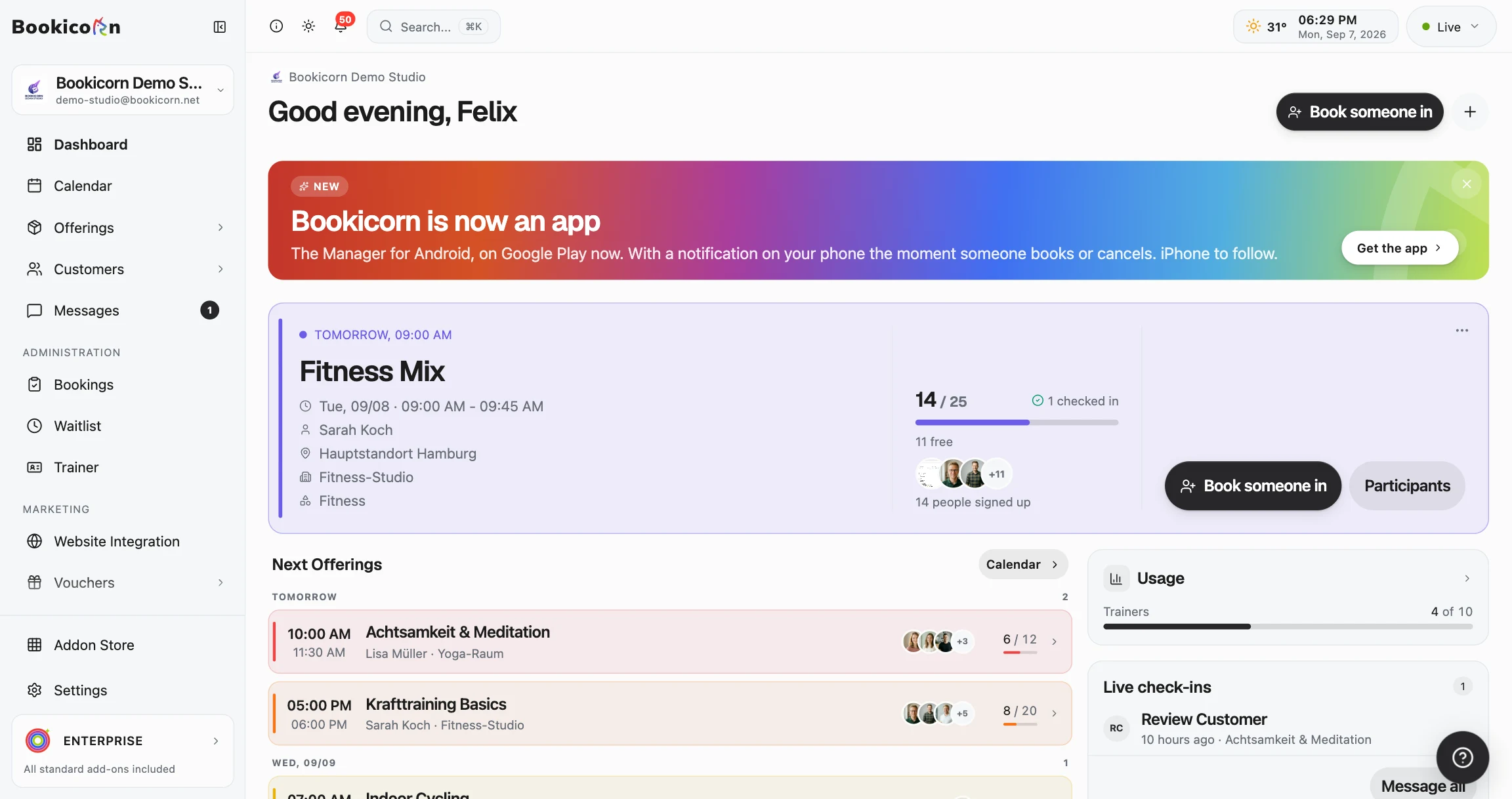
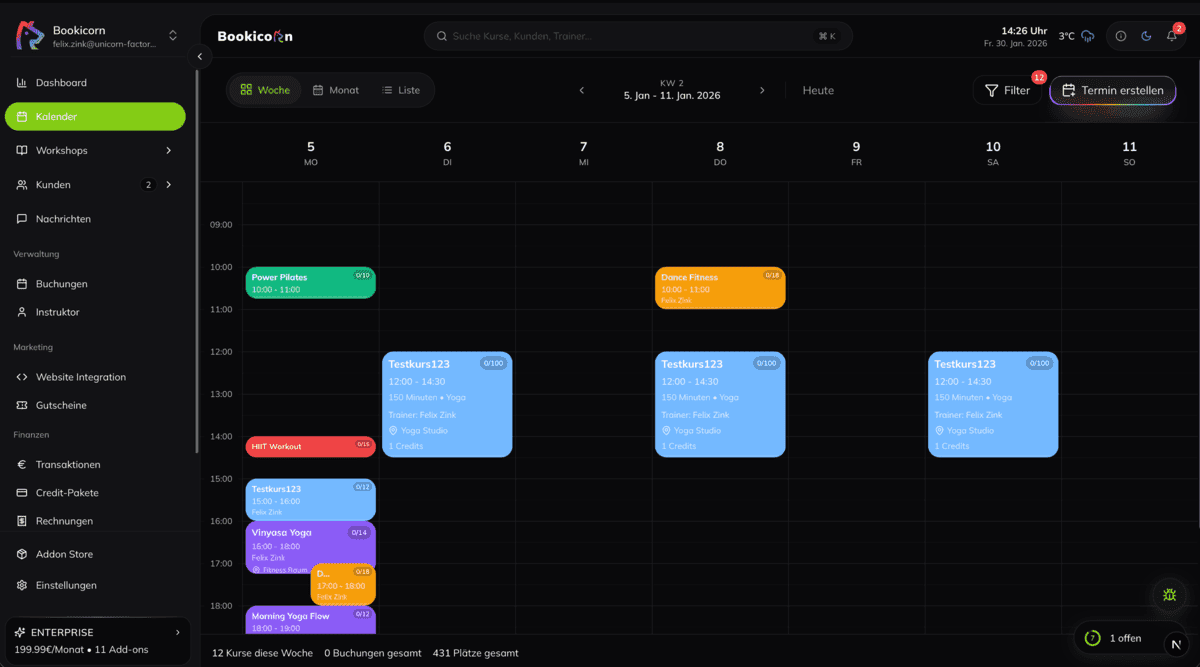
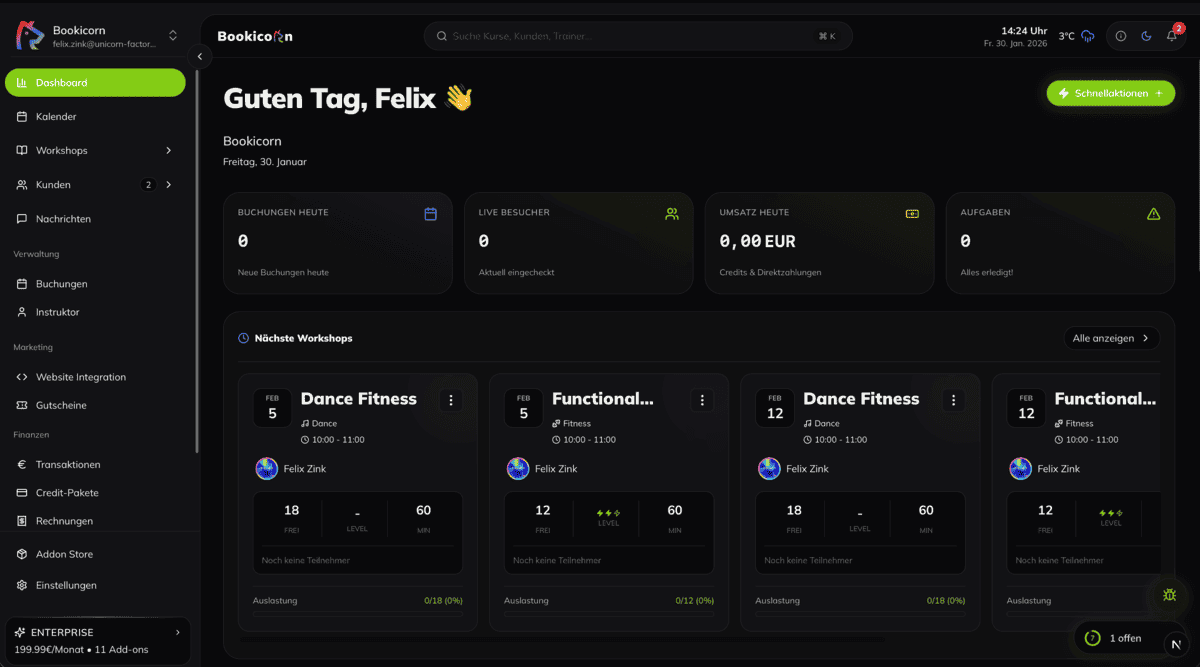
As your participant numbers grow, manual management quickly becomes unwieldy. A digital course management tool helps with:
- Online registration and payment: Participants book and pay directly through the app
- Automatic reminders: Fewer no-shows through SMS or email notifications
- Participant lists and attendance: Overview of active participants, waiting lists, course history
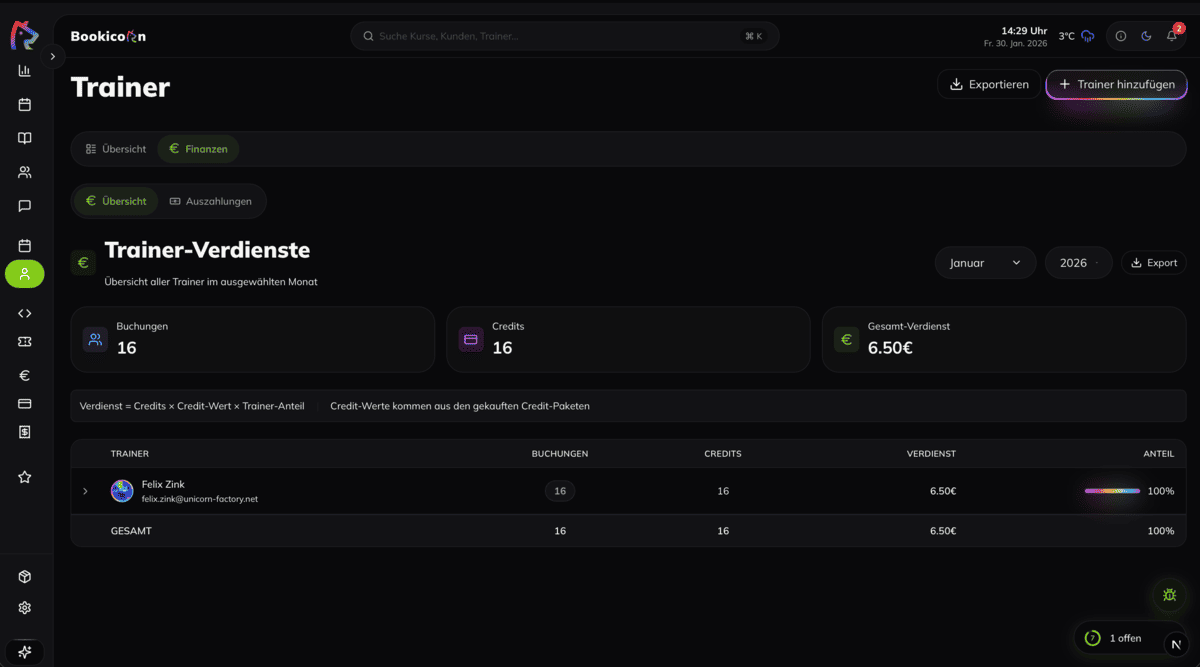
- Billing and statistics: Revenue, occupancy rates, and course development at a glance
Especially when running multiple courses in parallel, a software solution saves several hours of admin work per week.
Frequently asked questions about self-defense classes for women
The most important questions and answers about women’s self-defense courses at a glance.
Conclusion
Offering a self-defense class for women is a rewarding endeavor – both socially and economically. Demand is high, the target audience is motivated, and the barriers to entry are manageable.
The key to success lies in a well-thought-out course concept that combines prevention, communication, and technique. Invest in your qualifications, create a safe space for your participants, and pursue a clear marketing strategy.
Start with a compact course, gather experience, and expand your offering step by step. With digital course management, you’ll always keep track of registrations, payments, and course development.

Written by
Felix Zink
Felix built Bookicorn from the ground up – from the booking system and credit system to trainer payouts. As a full-stack developer at Unicorn Factory Media GmbH, he builds software that makes everyday life easier for studios.
Was this article helpful?
Rate this post