




What Is Pilates? – The Gentle Power for Your Body
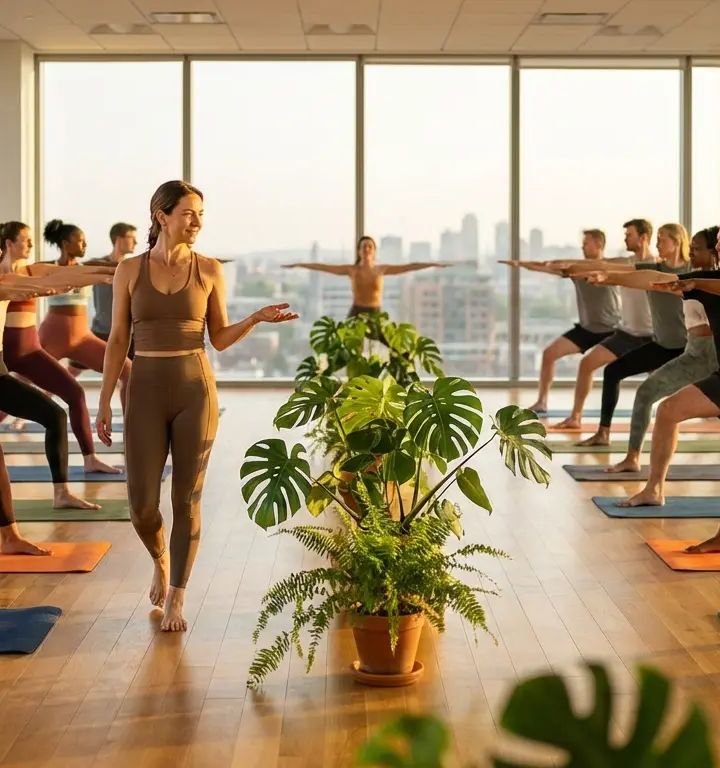
Pilates exercises for beginners are the perfect entry point into a holistic training system that challenges both body and mind. The method was developed by Joseph Hubertus Pilates in the early 20th century under the name Contrology, combining controlled movements with mindful breathing. Today, Pilates is one of the most popular training methods worldwide – and for good reason: the exercises can be adapted to any fitness level and specifically strengthen the deep stabilizing muscles.
Joseph Pilates, born in 1883 in Mönchengladbach, Germany, was frequently ill as a child and initially developed his training method to strengthen his own body. During World War I, he refined his techniques and helped fellow internees with rehabilitation. In the 1920s, he emigrated to New York, where he opened his first studio – launching Pilates on its worldwide journey.
Today, we distinguish between classical Pilates (following the original program) and modern Pilates (integrating physiotherapy insights). For beginners, the modern approach is particularly suitable as it focuses more on individual needs and limitations.
The 6 Core Principles of Pilates
Every Pilates exercise is based on six core principles formulated by Joseph Pilates himself. These principles set Pilates apart from conventional strength training and ensure that you not only build muscles but also sharpen your body awareness:
- Centering – All movements originate from the body's center (Powerhouse)
- Concentration – Full attention on every movement and muscle activation
- Control – No uncontrolled or momentum-driven movements
- Precision – Quality over quantity with every repetition
- Breath – Conscious lateral breathing supports and enhances each exercise
- Flow – Smooth, harmonious transitions between movements
What Is the Powerhouse?
The Powerhouse is the central concept in Pilates. It encompasses the deep core muscles: the transversus abdominis, the pelvic floor muscles, the multifidus (deep back muscles), and the diaphragm. These muscles form a natural corset that stabilizes your spine.
In every Pilates exercise, you activate the Powerhouse first before performing the actual movement. Imagine tightening an invisible belt around your waist – this gentle base tension accompanies you throughout the entire workout.
Why Pilates Is Ideal for Beginners
Pilates is particularly well-suited for beginners because the training is joint-friendly and can be adapted to any fitness level. Instead of heavy weights, you work with your own body weight and focus on correct execution – this minimizes the risk of injury and maximizes the training effect.
Benefits for Body and Mind
Regular Pilates training offers numerous scientifically proven benefits:
- Strengthening deep stabilizing muscles and the entire core
- Improving posture and flexibility
- Relieving back pain through targeted spinal stabilization
- Reducing stress through mindful breathing and present-moment focus
- Enhancing body awareness – you learn to control your body with precision
Who Benefits Most from Pilates?
Pilates is suitable for virtually everyone – regardless of age, gender, or fitness level. It especially benefits those with sedentary lifestyles, back problems, or recovering from injuries (in consultation with a doctor). Athletes also use Pilates as complementary training for injury prevention and performance enhancement.
If you want to learn Pilates under professional guidance, you can find suitable courses near you through a booking software for Pilates studios.
Pilates at Home or in a Studio?
Both options have their advantages. At home, you train flexibly without travel time – ideal for getting started with the mat exercises presented here. In a studio, you receive professional guidance, individual corrections, and access to equipment like the Reformer. Many beginners start at home and transition to a studio once they master the fundamentals.
For effective home training, you only need a quiet corner with enough space (about 2 × 1.5 meters), a mat, and the right music or silence – depending on your preference. Important: don't train on a surface that's too soft like a bed, as this compromises stability.
The 10 Best Pilates Exercises for Beginners
The following ten exercises form the foundation of classic mat Pilates training. Perform each exercise slowly and with control – quality always comes before quantity. Consciously activate your Powerhouse with every exercise.
1. Pilates Breathing (Lateral Breathing)
Target muscles: Diaphragm, intercostal muscles, deep abdominals
Starting position: Lie on your back with knees bent, feet hip-width apart. Place your hands on the sides of your ribcage.
Execution: Breathe in through your nose, allowing your ribcage to expand sideways – keep your belly flat. As you exhale through your mouth, gently draw your navel toward your spine. Feel the ribcage opening sideways on the inhale and drawing together on the exhale.
Repetitions: 8–10 conscious breath cycles | Common mistake: Pushing the belly upward while inhaling instead of breathing laterally.
2. Pelvic Curl
Target muscles: Glutes, hamstrings, lower back
Starting position: Lie on your back, knees bent, arms by your sides. Activate the Powerhouse.
Execution: On the exhale, slowly roll your pelvis off the floor vertebra by vertebra until your body forms a straight line from shoulders to knees. Hold briefly at the top and roll back down on the inhale, vertebra by vertebra.
Repetitions: 8–10 | Common mistake: Pushing up too quickly instead of rolling up vertebra by vertebra.
3. Dead Bug
Target muscles: Transversus abdominis, obliques
Starting position: Lie on your back, arms extended straight up, legs in tabletop position (knees above hips, shins parallel to the floor).
Execution: On the exhale, extend your right arm back and left leg forward simultaneously without lifting your lower back off the floor. Inhale to return to starting position. Switch sides.
Repetitions: 8 per side | Common mistake: Allowing the lower back to lift off the mat.
4. Single Leg Circles
Target muscles: Hip flexors, glutes, deep abdominals
Starting position: Lie on your back, one leg extended toward the ceiling, the other foot planted. Arms at your sides, palms down.
Execution: Draw controlled circles on the ceiling with the extended leg. Keep your pelvis stable – it should not rock from side to side. After 5 circles, reverse direction.
Repetitions: 5 circles per direction, per leg | Common mistake: Making circles too large and losing pelvic stability.
5. Roll Up
Target muscles: Rectus abdominis, hip flexors, spinal flexibility
Starting position: Lie on your back, legs extended, arms stretched overhead.
Execution: On the exhale, slowly lift your head, then shoulders, and roll up vertebra by vertebra until seated. Reach your arms toward your feet. On the inhale, roll back down just as slowly, vertebra by vertebra.
Repetitions: 6–8 | Common mistake: Using momentum to jerk up instead of rolling up with control.
6. The Hundred
Target muscles: Full abdominal complex, respiratory muscles
Starting position: Lie on your back, legs in tabletop position. Lift head and shoulders off the floor, arms extended at hip height.
Execution: Pump your extended arms rapidly up and down as if slapping water. Breathe in for 5 pumps and out for 5 pumps. Count to 100 (10 breath cycles).
Repetitions: 100 pumps (10 × 10) | Common mistake: Tensing the neck – direct your gaze toward your navel, not the ceiling.
7. Single Leg Stretch
Target muscles: Abdominals, hip flexors, coordination
Starting position: Lie on your back, head and shoulders lifted. One knee pulled to chest, the other leg extended at a 45-degree angle.
Execution: Switch legs in a flowing motion. Hands hold the bent knee. Upper body stays lifted and stable.
Repetitions: 8–10 per side | Common mistake: Dropping the upper body with each leg change.
8. Spine Stretch Forward
Target muscles: Erector spinae, hamstrings, spinal flexibility
Starting position: Sit tall, legs open slightly wider than hip-width, feet flexed. Arms extended forward at shoulder height.
Execution: On the exhale, roll forward vertebra by vertebra as if bending over a ball. Draw the navel inward. On the inhale, stack back up vertebra by vertebra.
Repetitions: 5–6 | Common mistake: Hinging from the hips instead of rounding the spine segment by segment.
9. Swimming
Target muscles: Erector spinae, glutes, posterior deltoids
Starting position: Lie face down, arms extended forward, legs extended. Forehead just above the floor.
Execution: Lift the right arm and left leg a few centimeters off the floor simultaneously. Switch sides dynamically as if swimming the crawl. Keep your gaze downward.
Repetitions: 20–30 seconds | Common mistake: Craning the head too far back.
10. Shoulder Bridge
Target muscles: Glutes, hamstrings, core stability
Starting position: Lie on your back, knees bent, arms at your sides. Roll into bridge position (as in Pelvic Curl).
Execution: Hold the bridge steady. Extend one leg toward the ceiling, lower it with control, and bring it back. The pelvis stays completely still.
Repetitions: 5 per leg | Common mistake: Letting the pelvis drop on one side.
Common Pilates Mistakes and How to Avoid Them
Even seemingly simple exercises can lead to typical mistakes for beginners. Recognizing these early helps you get the most out of your training and prevent injuries.
Incorrect Breathing
The most common beginner mistake is chest breathing instead of lateral breathing. Many unconsciously hold their breath or breathe shallowly into the belly. The solution: Practice Pilates breathing as a standalone exercise before starting your workout. Place your hands on the sides of your ribcage and consciously feel the lateral expansion.
Insufficient Core Activation
Without an active Powerhouse, many Pilates exercises lose their effectiveness. The solution: Imagine tightening a snug belt around your waist. This gentle tension in the lower abdomen should be maintained throughout every exercise – without holding your breath.
Moving Too Fast
Pilates thrives on slow, controlled movements. Moving too fast means using momentum rather than muscle strength. The solution: Count to 4 internally with each repetition (4 seconds for each direction). Slowing down makes every exercise significantly more intense.
Poor Body Alignment
Many beginners focus only on the primary movement and forget correct alignment of the pelvis and spine. During Roll Ups and Single Leg Stretches, the pelvis frequently tilts to one side. The solution: Imagine your hip bones are headlights that always shine parallel to the ceiling. Regularly check your alignment in a mirror.
Raising the Shoulders
Under strain, shoulders unconsciously creep toward the ears – this tenses the neck and reduces the exercise's effectiveness. The solution: Before each exercise, consciously draw your shoulder blades back and down. This shoulder depression should become a habit. A helpful cue: actively press your shoulders away from your ears and maintain this position.
Your 4-Week Pilates Training Plan for Beginners
A structured start helps you learn Pilates safely and effectively. The following plan builds systematically: from foundation weeks to a complete workout.
Weeks 1–2: The Foundation
Start with 2 sessions per week of 20–30 minutes. Focus on exercises 1–5 (Breathing, Pelvic Curl, Dead Bug, Leg Circles, Roll Up). The goal is to internalize correct execution and Powerhouse activation.
- Monday: Exercises 1–5 (2 rounds)
- Thursday: Exercises 1–5 (2 rounds)
Weeks 3–4: Building Intensity
Increase to 3 sessions per week of 30–45 minutes. Add exercises 6–10 and gradually increase repetitions for the base exercises.
- Monday: Exercises 1–10 (full program)
- Wednesday: Exercises 1–5 intensive (3 rounds)
- Friday: Exercises 1–10 (full program)
Training Frequency and Equipment
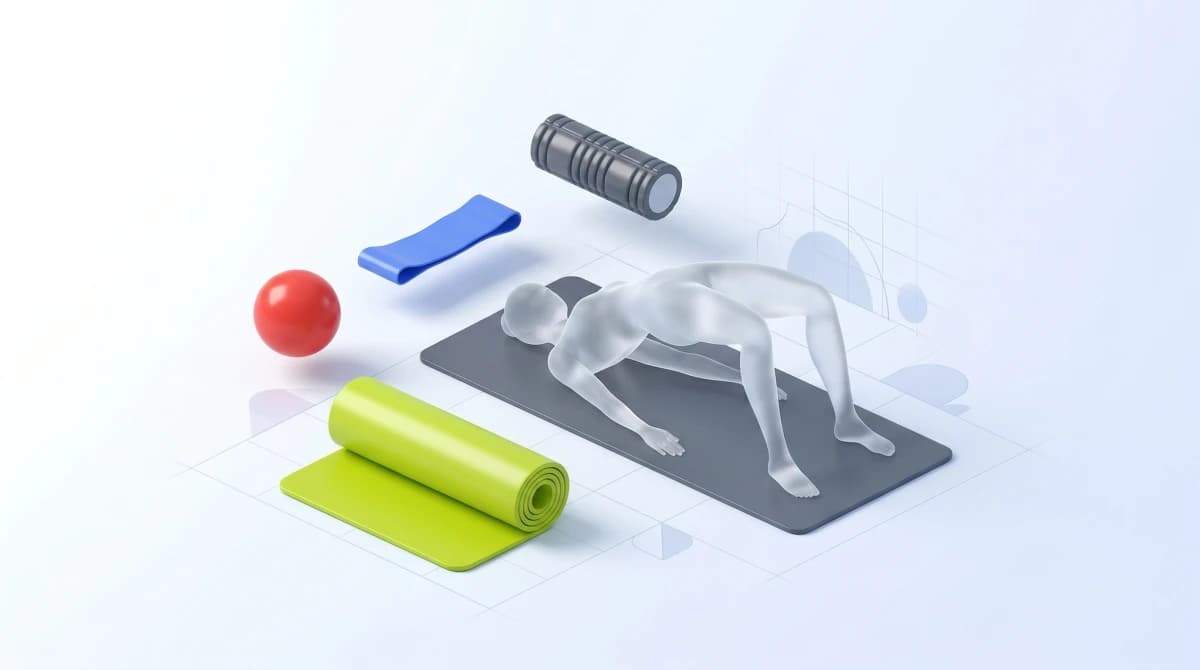
After the first 4 weeks, aim for 3–4 Pilates sessions per week. For mat training, you only need a non-slip Pilates or yoga mat (at least 15 mm thick for comfort). Optional additions include resistance bands, a small Pilates ball, and a foam roller.
Frequently Asked Questions About Pilates for Beginners
The most important questions and answers about getting started with Pilates at a glance.
Conclusion: Start Your Pilates Journey Right with These 10 Exercises
Pilates exercises for beginners are the perfect gateway to a workout that strengthens your entire body while improving flexibility. The ten foundational exercises presented cover all major muscle groups and can easily be performed at home on a mat.
Three things are key to your success: consciously activate your Powerhouse with every exercise, breathe in a controlled manner into your lateral ribcage, and perform every movement slowly and precisely. Start with the 4-week plan and progress gradually.
If you want to deepen your Pilates practice under professional guidance, specialized studios offer beginner courses in small groups – giving you individual feedback on correct form.

Written by
Felix Zink
Felix built Bookicorn from the ground up – from the booking system and credit system to trainer payouts. As a full-stack developer at Unicorn Factory Media GmbH, he builds software that makes everyday life easier for studios.
Was this article helpful?
Rate this post