






Opening your own gym is the dream of many fitness enthusiasts and trainers. But between the initial idea and your first paying member lies a demanding journey: finding the right location, writing a business plan, selecting equipment, obtaining permits and building a marketing strategy all need careful planning. This guide walks you through every step of starting a successful fitness studio.
The fitness industry is a growth market across Europe. In Germany alone, over 11 million people hold gym memberships, making it one of the continent's largest fitness markets. At the same time, competition is fierce: large chains dominate the budget segment while boutique studios with specialized offerings continue to grow. A well-thought-out concept that clearly differentiates you from the competition is therefore essential.
Whether you're planning a traditional gym, a specialized functional training studio or a CrossFit box – this article guides you through the entire founding process: from requirements and costs to proven strategies for attracting and retaining members.
Requirements for Your Own Gym
Before you start with the actual planning, you should know the basic requirements. From professional qualifications to business registration and necessary insurance – here's what you need.
Do You Need a Special Qualification?
Fundamentally, there is no legal requirement for a specific qualification to run a gym in most countries. A business license is formally sufficient. However, professional qualifications are strongly recommended – both for your credibility with members and investors and for training safety.
Recommended qualifications:
- Personal trainer certification from recognized institutes (ACE, NASM, or equivalent)
- Degree in sports science, kinesiology or related field
- Business administration fundamentals (management, accounting, finance)
- First aid certification (refresh regularly)
Banks and investors often expect proof of professional competence before approving a startup loan. A combination of fitness expertise and business know-how is the ideal foundation.
Business Registration and Legal Structure
The first formal step is registering your business with your local authority. Costs vary by region. You'll then be automatically registered with tax authorities and your local chamber of commerce.
For your legal structure, you have several options:
- Sole proprietorship: Simple and inexpensive to set up, but you're personally liable with all your assets
- Limited liability company (LLC/GmbH): Liability limited to share capital, professional appearance to business partners
- Small LLC (UG): A mini-LLC option with low minimum capital – affordable entry with liability protection
- Partnership: For founding with a partner, but both partners have unlimited personal liability
For a gym, a limited liability structure is often recommended as it minimizes personal risk – especially with expensive equipment and long-term lease agreements.
Insurance and Permits
The following insurance policies are essential for gym operators:
- General liability insurance (essential): Covers personal injury and property damage if a member gets injured on equipment
- Contents insurance: Protects your equipment and furnishings from theft, fire or water damage
- Business interruption insurance: Covers ongoing costs if your studio must temporarily close
- Legal protection insurance: Helpful in disputes with members, suppliers or landlords
Additionally, depending on your location and renovation work, you may need building permits, noise protection certificates (especially in residential areas) and a hygiene concept for wet areas and training floors.
Opening a Gym: Costs at a Glance
The biggest uncertainty when starting a gym is the cost. Total investment varies widely – from around €50,000 for a small boutique studio to over €500,000 for a fully equipped gym with a large floor area.
One-Time Investment Costs
- Fitness equipment: €50,000–300,000 (cardio machines, strength stations, free weights, functional equipment)
- Renovation: €10,000–100,000 (floors, showers, changing rooms, reception area)
- Furnishings: €5,000–50,000 (reception desk, furniture, lockers, mirrors)
- Security deposit: 3–6 months' rent
- Opening marketing: €2,000–10,000 (website, flyers, social media, launch event)
- Software and IT: €1,000–5,000 (booking system, access control, POS system)
Ongoing Monthly Costs
- Rent: €1,000–10,000/month (depending on location and size)
- Staff: €3,000–15,000/month (trainers, reception, cleaning)
- Utilities: €500–2,000/month (electricity, water, heating – gyms are energy-intensive)
- Insurance: €50–250/month
- Marketing: €500–2,000/month
- Software licenses: €50–200/month
Financing and Funding Options
Few founders can cover the entire investment from their own capital. These financing options are available:
- Government startup loans: Many countries offer favorable loan programs for new businesses
- Bank loan: With a solid business plan and equity contribution (usually 10–20%)
- Startup grants: Available for founders transitioning from employment in some regions
- Leasing: Leasing equipment instead of buying significantly reduces initial investment
- Investors: Business angels or silent partnerships for larger projects
Always plan a financial buffer of at least 3–6 months' operating costs. The first months after opening are rarely profitable – you need reserves to bridge this phase.
Business Plan for Your Gym
A convincing business plan is the foundation of your startup – not only for banks and investors, but also as your personal roadmap for the first years.
Market Analysis and Target Audience
Before investing a single euro, thoroughly analyze your local market:
- How many gyms already exist in your area?
- Which price segments are occupied (budget, mid-range, premium)?
- Are there underserved target groups (senior fitness, women-only, CrossFit)?
- What is the population density and purchasing power in your catchment area?
Define your target audience as specifically as possible. "Everyone who wants to get fit" is not a target group. Better: "Working professionals aged 25–45 looking for an efficient full-body workout in under 60 minutes."
Location: The Decisive Factor
Location is often the biggest success factor for a gym:
- Visibility: Main road with foot traffic or cheaper commercial area?
- Accessibility: Sufficient parking and good public transport connections are crucial
- Space: At least 200–400 m² for a small studio, 800–1,500 m² for a traditional gym
- Competition: Avoid being directly next to established studios
- Lease: Check duration, operating costs, renovation permits and termination rights
Business Model and Pricing
Think carefully about how you generate revenue. A mix of income streams makes your model more robust:
- Monthly memberships: The classic – €20–80/month depending on positioning
- Annual memberships: Higher retention and predictable revenue
- 10-session cards: Flexible, ideal for new members
- Personal training: Additional revenue with high margins
- Beverages and supplements: Secondary income from the counter
Franchise or Independent Gym?
An important decision: Start under your own brand or as a franchise partner?
Advantages of a Franchise Model
A franchise system offers a proven business model with an established brand. You benefit from centralized marketing, favorable equipment purchasing and tested operational concepts. Especially for first-time founders, this can significantly reduce risk.
Disadvantages and Costs of a Franchise
Franchise isn't free: You pay an entry fee of often €10,000–50,000 plus ongoing license fees of 5–10% of revenue. Add limited creative freedom and strict requirements. Total investment often ranges €200,000–500,000.
When Does Your Own Brand Make Sense?
If you want to serve a clear niche – such as a specialized functional training studio, a women-only gym or a boutique CrossFit concept – you're better positioned with your own brand. You have full control over concept, pricing and branding.
Marketing and Member Acquisition
The best gym is worthless if nobody knows about it. A well-planned marketing mix is crucial.
Online Presence and Local SEO
- Google Business Profile: Essential – photos, hours and reviews are the first touchpoint
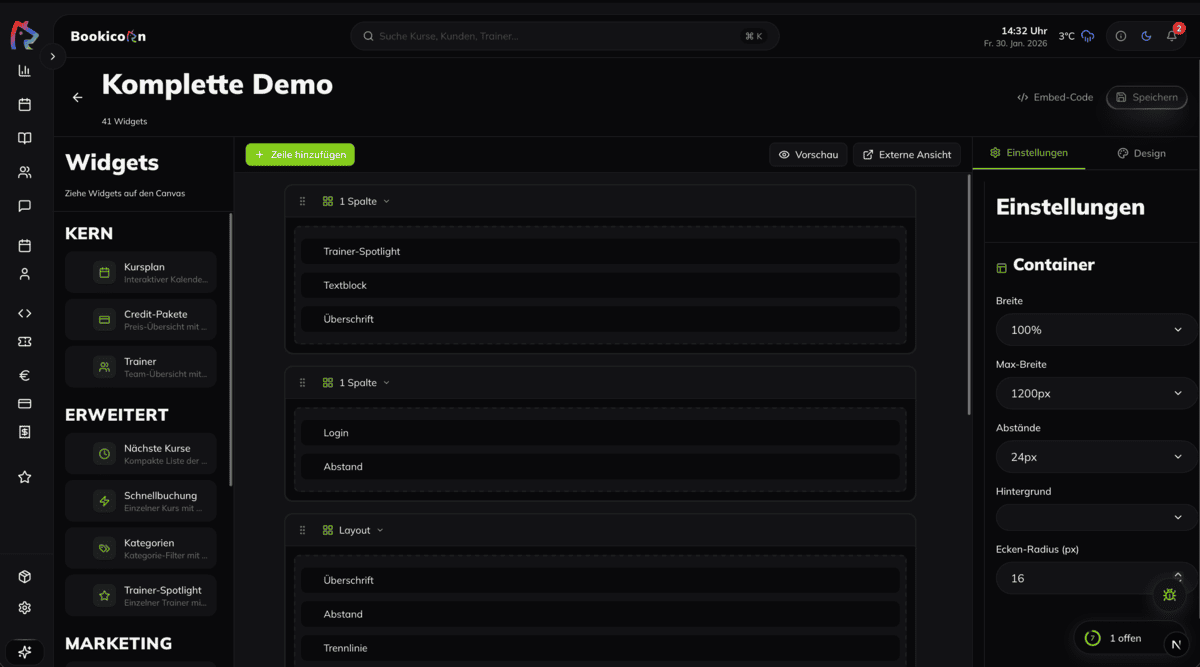
- Website: Professional, mobile-optimized, with online booking
- Social Media: Instagram and TikTok for training content, Facebook for local community
- Google Ads: Local campaigns with keywords like "gym [your city]"
Opening Offers and Promotions
The opening phase significantly determines your start:
- Pre-sale: Sell discounted memberships before opening
- Grand opening: Open day with free trial sessions and promotions
- Referral program: "Bring a friend" with rewards for both
- Local partnerships: Collaborations with businesses and sports clubs
Retaining Members: Loyalty Strategies
Acquiring new members costs more than retaining existing ones:
- Personal attention: Regular check-ins and training plan updates
- Community: Events, challenges and social groups create belonging
- Diverse classes: Yoga, HIIT, spinning, functional training
- Digital tools: Online booking, training apps and automated communication
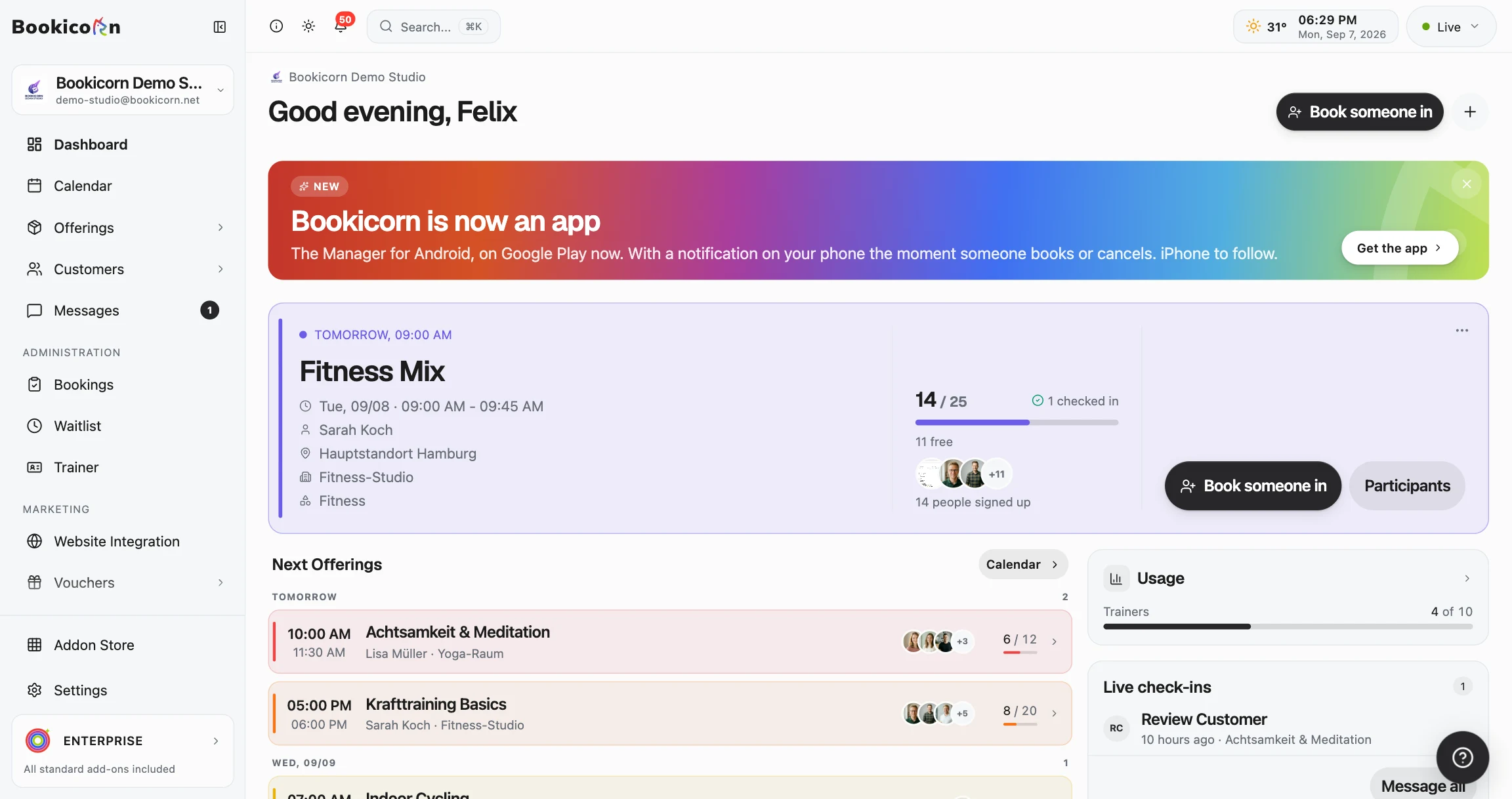
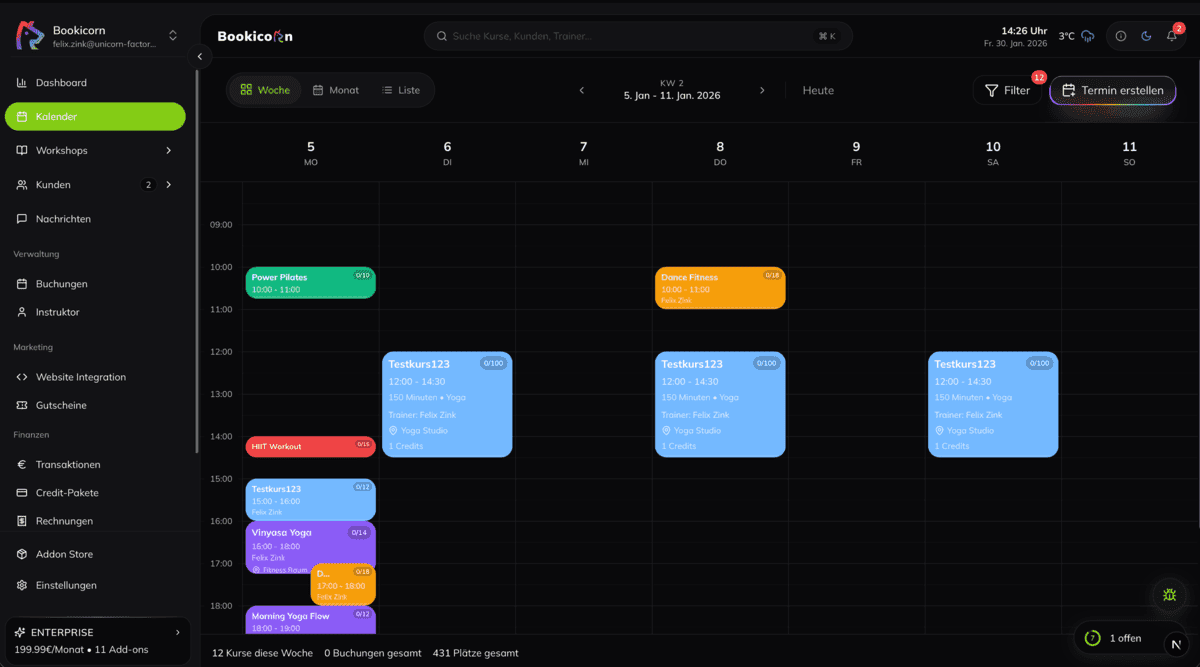
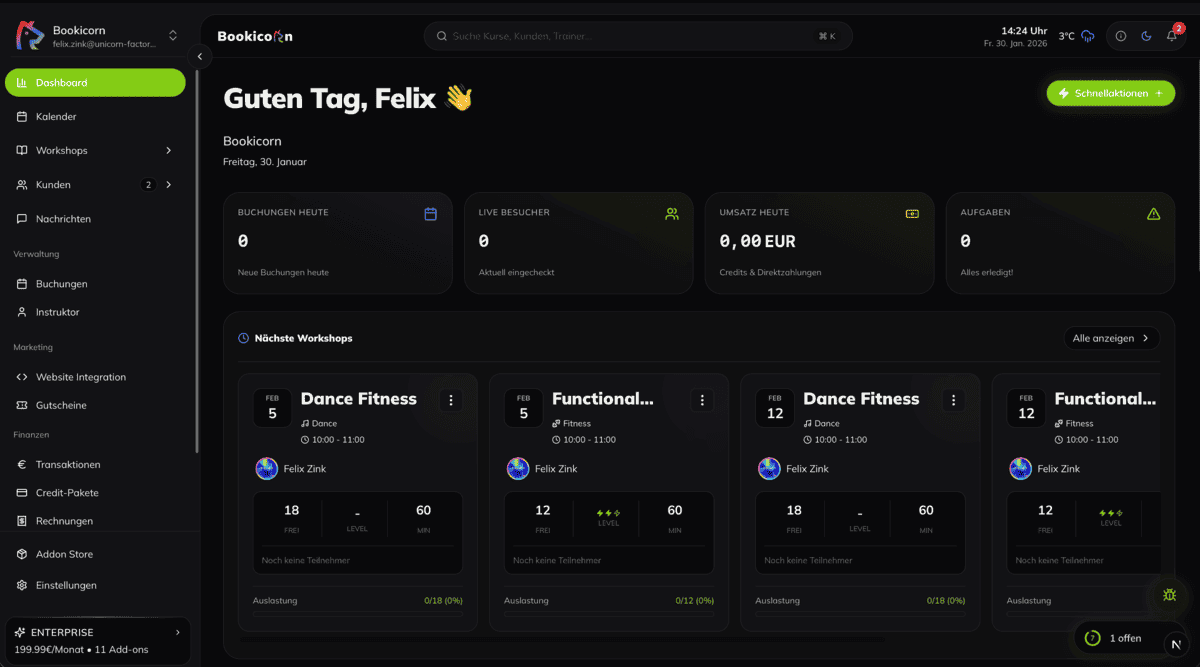
A booking system like Bookicorn helps you plan classes efficiently, manage participants and reduce no-shows.
Software and Technology for Your Gym
The right software infrastructure isn't an optional extra – it's an essential success factor. Modern members expect digital processes from online booking to automated communication.
Booking and Management Software
The core of your digital infrastructure is a booking and management system. It should offer at least these features:
- Online booking: Members book classes and appointments 24/7 via browser or app – reducing phone inquiries and freeing up your reception team
- Member management: Contracts, payments, master data and training history managed centrally
- Class scheduling: Create timetables, assign trainers and manage capacities
- Automated communication: Reminders, confirmations and follow-ups sent automatically via email or SMS
- No-show management: Automatic cancellation for no-shows and waitlist notifications
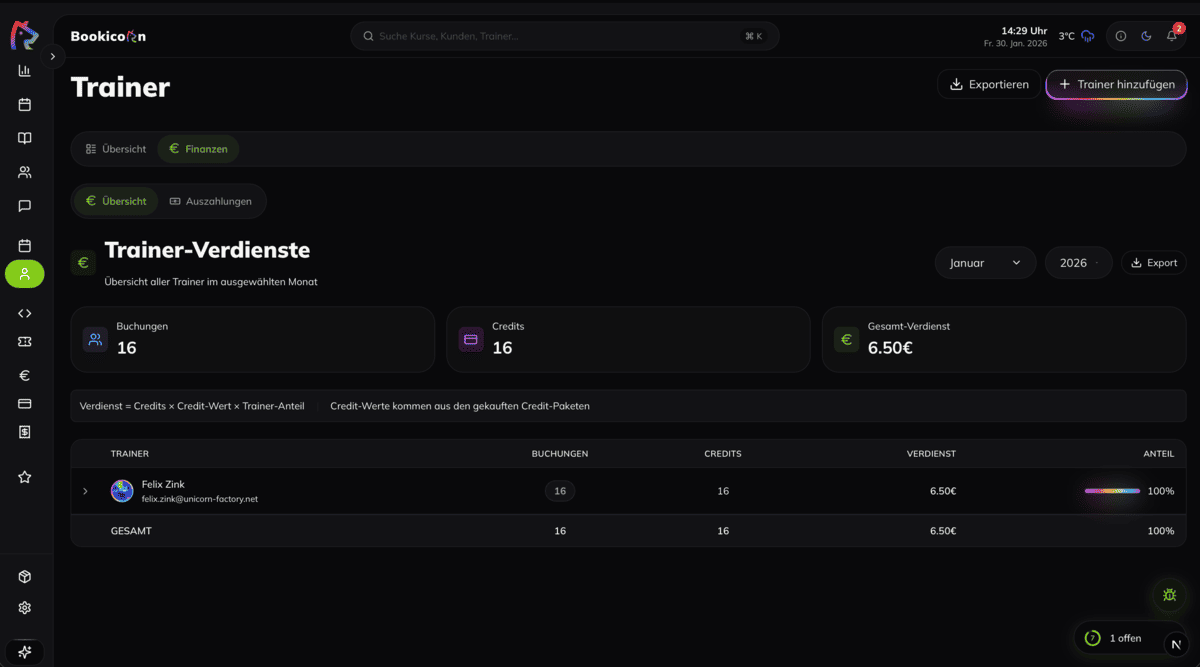
A system like Bookicorn combines all these features in one platform, specifically designed for course providers and fitness studios.
Access Control and POS System
For smooth daily operations you also need:
- Access control: Chip cards, RFID wristbands or QR codes enable entry without reception staff – especially important for extended opening hours
- POS system: Compliant register for counter products, add-on services and day passes
- Payment processing: Direct debit for monthly fees, card payment for spontaneous purchases
Digital Class Planning and Member App
A member app or customer portal significantly boosts retention. Your members can view the schedule, book classes, track their training progress and communicate directly with the studio. The easier you make it for your members, the more loyal they become.
Frequently Asked Questions About Opening a Gym
The most important questions and answers about starting a gym at a glance.
Conclusion
Opening your own gym is demanding but rewarding. With thorough preparation – from a solid business plan to the right location to a well-crafted marketing mix – you lay the foundation for success.
The key steps:
- Build qualifications and industry knowledge
- Create a business plan with detailed market analysis
- Secure financing and calculate costs realistically
- Choose location carefully and review the lease
- Set up software and systems from the start
- Start marketing and pre-sales before opening
The first months are the toughest. With perseverance, clear positioning and a strong focus on member satisfaction, your gym will achieve long-term success.

Written by
Felix Zink
Felix built Bookicorn from the ground up – from the booking system and credit system to trainer payouts. As a full-stack developer at Unicorn Factory Media GmbH, he builds software that makes everyday life easier for studios.
Was this article helpful?
Rate this post