




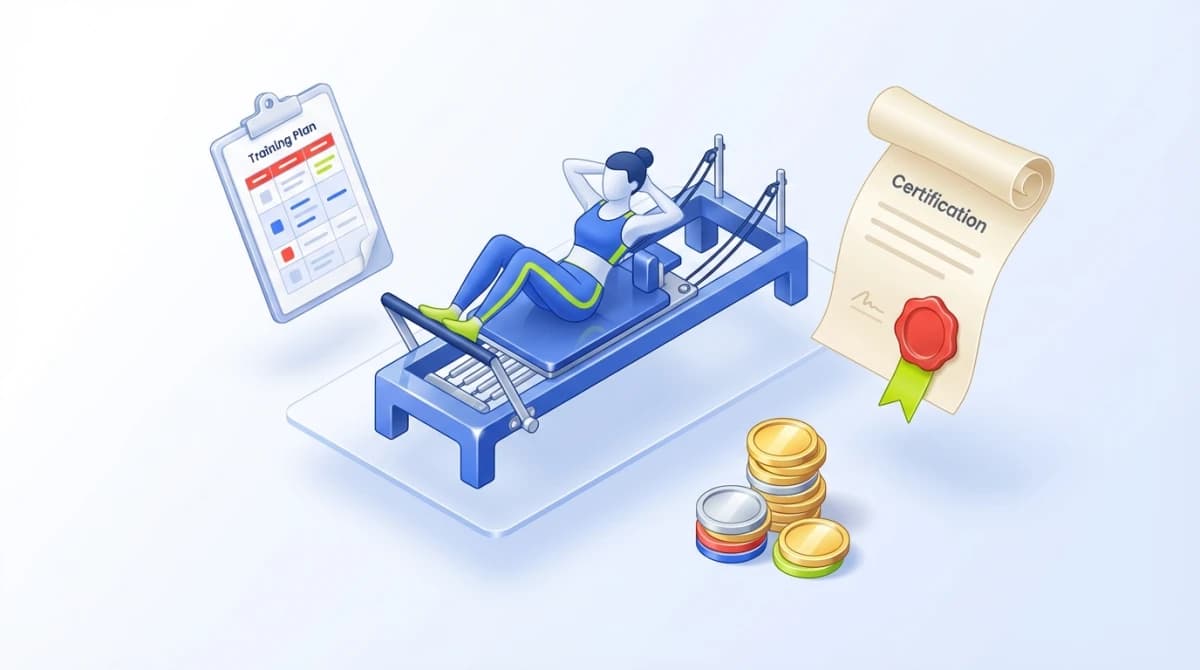
Become a Pilates Instructor – Your Path Into a Growing Profession
The demand for qualified Pilates instructors has been growing steadily for years. Whether in a fitness studio, your own facility, or as a freelance instructor – Pilates instructor training opens up diverse career paths in a booming health and wellness market.
But which training path is right for you? Options range from three-day intensive courses starting at 499 euros to comprehensive certifications spanning 500+ hours at 4,500 euros. In this guide, we compare all common training formats, show real costs and salaries, and give you a clear roadmap for your career as a Pilates instructor.
What Does a Pilates Instructor Do?
A Pilates instructor leads individual and group sessions, creates personalised training plans, and corrects participants’ posture. The work combines athletic expertise with teaching skills and a deep understanding of anatomy.
Daily Tasks
The daily work of a Pilates instructor encompasses much more than simply guiding exercises. Key responsibilities include:
- Class planning and delivery: designing varied sessions for different fitness levels
- Individual support: adapting exercises for physical limitations, pregnancy, or rehabilitation
- Posture correction: precise adjustments during sessions to prevent injuries
- Client consultation: training recommendations, nutrition tips, and motivation
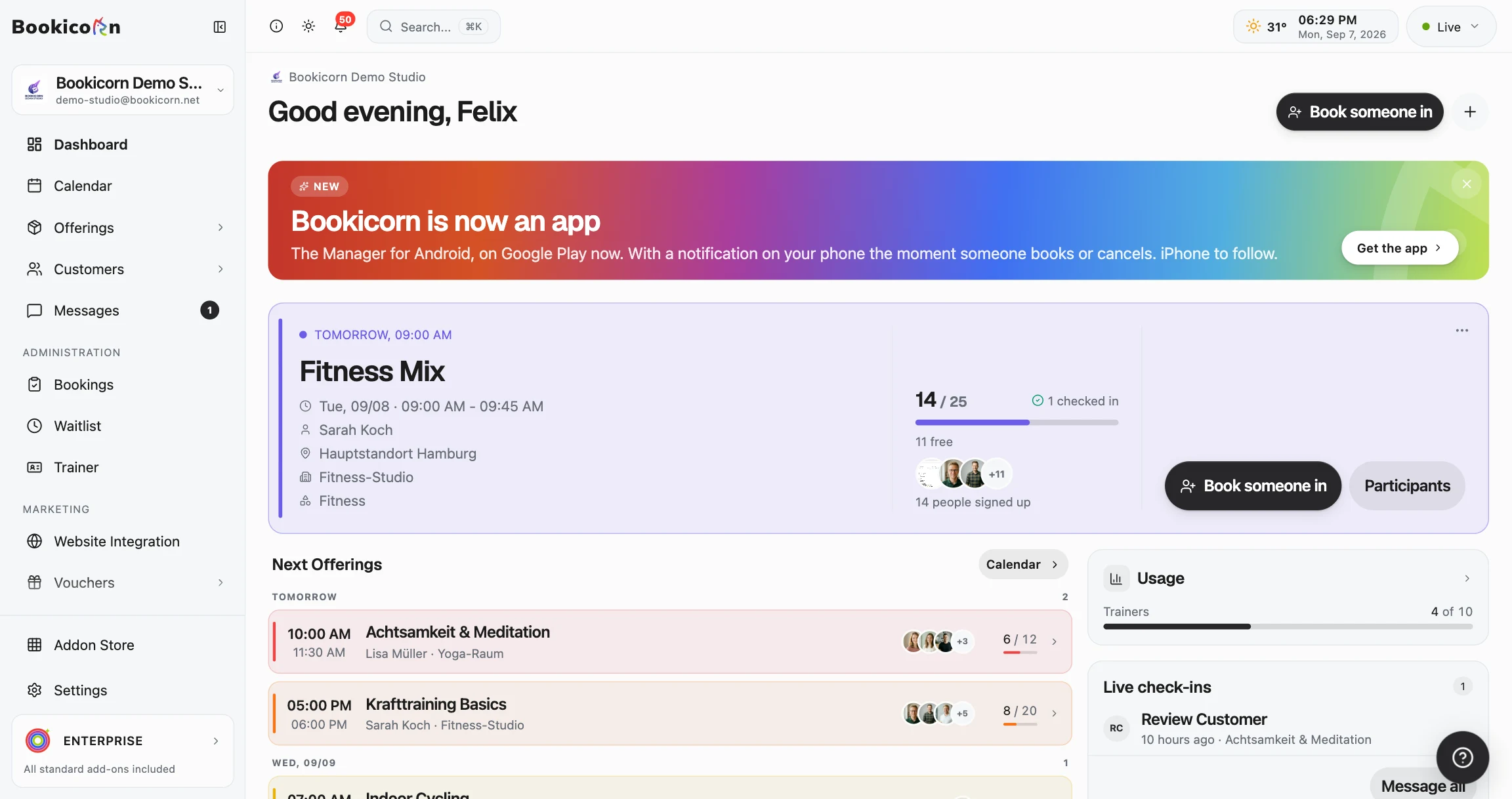
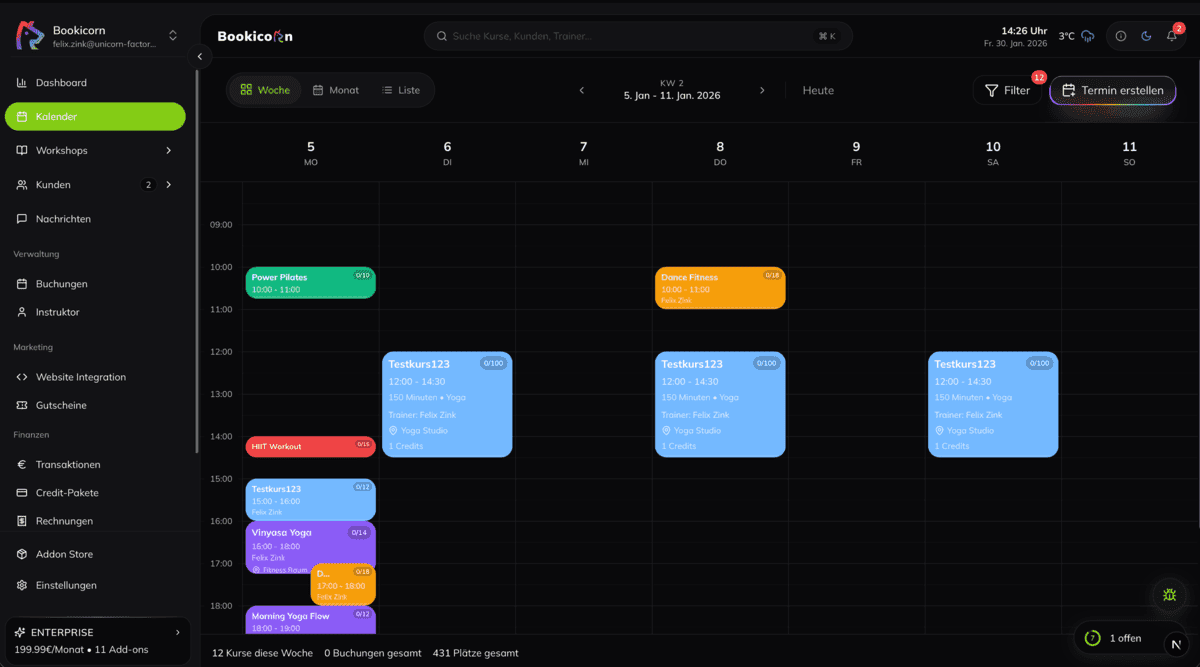
- Administration: scheduling, participant management, and billing – often supported by booking software like Bookicorn
A typical workday often starts with an early morning class at 7 or 8 AM – many professionals train before work. Midday is used for preparation and private sessions. Afternoons and evenings bring the main group classes. Self-employed instructors typically teach 20 to 25 hours per week, with the rest dedicated to acquisition, administration, and their own continuing education.
Pilates Methods: Mat vs. Reformer
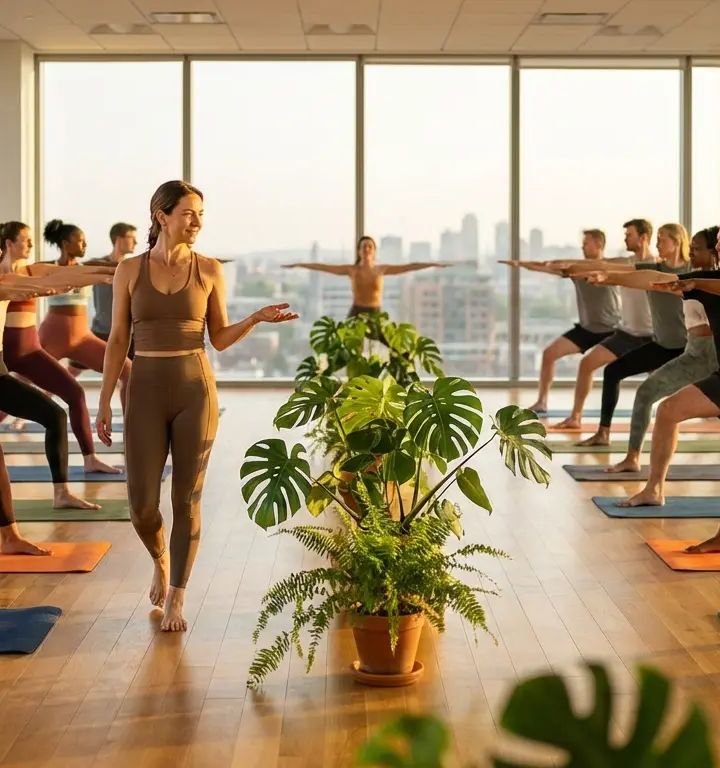
The two main directions in Pilates differ significantly. Mat Pilates works exclusively with bodyweight and is the entry-level standard in most training programmes. It is excellently suited for large groups and can be taught flexibly in any room – from the fitness studio to the living room.
Reformer Pilates uses a special apparatus with spring resistance and enables over 250 different exercises. Thanks to adjustable resistance, the training is suitable for both absolute beginners and professional athletes. Reformer training typically requires an additional qualification and comes at a higher cost. However, Reformer classes are particularly popular with clients and command higher hourly rates.
Beyond mat and Reformer, there are further apparatus such as the Cadillac (Trapeze Table), the Wunda Chair, and the Ladder Barrel. These are primarily covered in comprehensive training programmes of 300+ hours and significantly expand the training repertoire.
Work Environments and Target Groups
Pilates instructors work in a variety of settings:
- Fitness studios and health centres – permanent employment with steady income, typically 20–30 hours per week
- Own Pilates studios – highest earning potential with greater entrepreneurial risk
- Physiotherapy practices and rehab centres – collaboration with doctors and therapists, focus on therapeutic Pilates
- Corporate fitness and workplace wellness – a growing market with attractive fees and long-term contracts
- Online classes – location-independent with a scalable business model, grown significantly since the pandemic
Target groups are equally diverse: from young fitness enthusiasts and pregnant women to back pain patients and seniors wanting to maintain mobility. This variety makes the profession varied and allows you to specialise in the target group that appeals to you most.
Prerequisites for Pilates Instructor Training
The good news: there are no legally regulated entry requirements for Pilates instructor training. Pilates instructor is not a state-recognised vocational qualification. Nevertheless, you should bring certain basic prerequisites to succeed.
Personal Requirements
Beyond technical competence, soft skills are particularly important:
- Communication skills – you need to explain exercises clearly and guide motivationally
- Empathy – every participant brings different conditions and goals
- Observation skills – identifying poor posture and correcting it precisely
- Patience – progress takes time, especially with rehabilitation patients
- Self-management – as a freelancer, you need to organise yourself effectively
Formal Requirements
Formal hurdles vary by provider:
- Minimum age: 16 years (ASG) or 18 years (OTL, many other providers)
- School qualification: not strictly required, but recommended by some providers
- Prior training: BSA Academy recommends a basic fitness licence. Other providers require no prior knowledge
- First aid course: mandatory with some providers, generally recommended
Physical Fitness and Personal Experience
Personal Pilates practice is the best preparation for training. At least six months of regular Pilates training is recommended by most training institutes. You should already have internalised the core principles – breathing, centring, control, concentration, precision, and flow.
Physical limitations are not an automatic exclusion criterion. Many successful Pilates instructors have themselves overcome back problems or injuries through Pilates, bringing a particularly deep understanding for their participants.
Training Paths to Become a Pilates Instructor
The market for Pilates instructor training is diverse. From three-day intensive courses to multi-year comprehensive programmes, you will find the right option for every budget and timeframe. The following four main paths have become established.
Short Course (3–4 Days)
Providers such as the Academy for Sport and Health (ASG) or terramedus offer compact in-person courses over three to four days. You learn the fundamentals of mat Pilates, basic anatomy, and receive your licence after a practical exam.
These formats are particularly suited for fitness trainers looking to expand their class offerings, or career changers with existing movement experience. Costs range between 499 and 549 euros.
Compact Training with Distance Learning (3–6 Months)
The BSA Academy combines distance learning with a four-day in-person phase. Over six months, you work through theory independently and deepen your practice on-site. This training is state-approved and certified (ZFU) at DQR Level 4.
Cost: 898 euros as a one-time payment or 984 euros in six instalments. A key feature: the integrated ZPP certification allows you to bill preventive health courses through statutory health insurers.
Comprehensive Training (300–500+ Hours)
Renowned institutes such as Polestar Pilates, BASI Pilates, or Club Pilates offer comprehensive programmes spanning 300 to over 500 hours. These cover mat and apparatus Pilates, include extensive anatomy modules, and conclude with internationally recognised certifications.
The investment ranges from 3,000 to 6,000 euros with a training duration of six to twelve months. In return, you gain a qualification recognised worldwide that opens doors to higher-paying positions.
Online Training
Providers such as the Online Trainer Licence (OTL) enable fully digital training. You learn through video modules, online scripts, and live webinars at your own pace. Costs start from 419 euros, and the licence is ZFU-approved and TÜV-certified.
Online courses are ideal for working professionals who want to complete their further education flexibly alongside their job. However, note that practical teaching experience must be gained independently through observation hours and your own practice sessions.
How Much Does Pilates Instructor Training Cost?
The costs for Pilates instructor training vary significantly depending on scope and provider. From affordable online courses to premium certifications, there is something for every budget.
Cost Overview by Training Type
Entry level (400–600 euros): Basic mat Pilates licences from ASG, terramedus, or OTL. Ideal for getting started or as an additional qualification for existing fitness trainers.
Mid-range (800–1,500 euros): State-approved training such as at BSA Academy. Higher time commitment, but with ZPP certification and DQR classification.
Premium level (3,000–6,000 euros): Comprehensive training at Polestar, BASI, or Club Pilates. Internationally recognised, including apparatus Pilates and extensive mentoring.
Funding Options and Instalment Plans
Many training programmes can be financially supported:
- Education voucher from the Employment Agency – for ZFU-approved training (BSA, OTL)
- Education bonus – up to 500 euros subsidy for employed persons with low income
- Tax deductibility – training costs as business expenses or professional development costs
- Instalment plans – most providers offer payment plans with no or minimal surcharge
Hidden Costs to Consider
Beyond the training fees themselves, you should budget for:
- Travel and accommodation for in-person events (100–500 euros depending on location)
- Specialist literature and supplementary learning materials (50–200 euros)
- Professional liability insurance – from 60 euros per year, essential for self-employed instructors
- Continuing education – regular further training to maintain your licence with some associations
Certifications and Recognition: What to Look For
Not every Pilates licence carries the same value. The type of certification determines where and how you can work. Pay attention to the following quality indicators when choosing your training.
German Pilates Association (DPV)
The German Pilates Association (DPV) has been the professional body for certified Pilates instructors in the German-speaking region since 2006. A DPV-recognised training signals quality and professionalism. Members benefit from an instructor directory, continuing education offerings, and peer exchange.
The DPV defines quality standards for instructor training and requires regular continuing education to maintain membership.
ZPP Certification for Health Insurers
The Central Prevention Inspection Authority (ZPP) reviews preventive course concepts on behalf of statutory health insurers. With a ZPP-certified qualification, your participants can have costs partially reimbursed by their health insurer – a significant competitive advantage.
The prerequisite is typically a primary profession in sport or health (e.g., physiotherapist, sports scientist) plus a recognised Pilates additional qualification. Alternatively, the ZPP accepts certain training combinations.
State Recognition (ZFU)
The State Central Office for Distance Learning (ZFU) reviews distance learning courses for content and didactic quality. ZFU approval (as with BSA and OTL) means the training is state-approved and meets certain minimum standards. This is particularly relevant for funding eligibility through the Employment Agency.
Salary and Earning Potential as a Pilates Instructor
What does a Pilates instructor earn? The answer depends heavily on whether you work as an employee or freelancer, your qualifications, and your region.
Employed at a Fitness Studio or Health Centre
As an employed Pilates instructor in Germany, gross salary according to data from the Federal Employment Agency ranges between 2,407 and 2,991 euros monthly. Starting salary and location play a significant role: salaries in major cities like Munich, Hamburg, or Frankfurt tend to be higher, but so are living costs.
Additional qualifications such as Reformer Pilates, pre- and postnatal training, or Pilates for seniors can noticeably increase your salary.
Self-Employed as a Pilates Instructor
As a self-employed Pilates instructor, you set your own prices. The average hourly rate is around 30 euros, ranging from 15 to 50 euros per hour. Private sessions are significantly more lucrative: 60 to 120 euros per hour is realistic.
Key factors for your earnings as a freelancer:
- Location – urban areas with higher purchasing power allow higher rates
- Specialisation – niches like Reformer, rehabilitation, or pregnancy Pilates command premium prices
- Occupancy – a full teaching week of 20–25 hours is the goal
- Additional revenue streams – online classes, workshops, corporate fitness, and teacher training
Increasing Income Through Specialisation
Specialisations are the key to higher hourly rates. Particularly in demand:
- Reformer Pilates – currently the fastest-growing niche with high willingness to pay
- Pre- and postnatal Pilates – a specific target group with little competition
- Pilates for seniors – a demographic trend with increasing demand
- Clinical Pilates – in collaboration with physiotherapists and doctors, commanding the highest hourly fees
Career Paths and Specialisations
Pilates instructor training is just the beginning. Afterwards, numerous career paths open up that you can pursue depending on your interests and ambitions.
Further Training and Additional Qualifications
After basic training, targeted specialisation is recommended. Popular further training options include:
- Reformer Pilates – by far the most sought-after apparatus certification
- Pilates for special groups – pregnant women, seniors, children, back pain patients
- Fascia Pilates – combination of myofascial training and classical Pilates
- Pilates and Yoga – hybrid formats are strongly trending
- Preventive courses (ZPP) – enabling billing through health insurers
Opening Your Own Pilates Studio
The dream of many Pilates instructors: their own studio. The step into self-employment requires business know-how beyond professional qualifications. From location choice to financing and customer retention, there are numerous factors to consider.
Modern Pilates studio software supports you in scheduling classes, managing participants, and processing payments – so you can focus on what you do best: teaching.
Pilates in Corporate Wellness
A growing field for Pilates instructors is corporate health management. Companies are increasingly investing in employee health. Workplace Pilates classes are an attractive offering with predictable revenue and long-term contracts.
Tip: ZPP certification makes you particularly attractive for corporate wellness contracts, as companies can claim the costs for tax purposes.
Frequently Asked Questions About Pilates Instructor Training
The most important questions and answers about starting a career as a Pilates instructor at a glance.
Conclusion
The path to becoming a Pilates instructor is diverse and accessible to almost everyone. From affordable entry-level training starting at 419 euros to comprehensive premium certification at 4,500 euros, there is a suitable training path for every budget and career situation.
Key takeaways at a glance:
- No legal entry requirements – personal Pilates experience is the best preparation
- Training costs between 419 and 4,500+ euros depending on scope and provider
- Salary: 2,400–3,000 euros monthly (employed) or 15–50 euros/hour (freelance)
- ZPP certification enables health insurer billing – a real competitive advantage
- Reformer Pilates is the strongest growth trend with the highest hourly rates
Our tip: Start with a solid basic training and then specialise strategically. Anyone wanting long-term success in this profession should invest in a recognised certification and continue developing their skills. The Pilates market is growing – and with the right qualification, so are your career opportunities.

Written by
Felix Zink
Felix built Bookicorn from the ground up – from the booking system and credit system to trainer payouts. As a full-stack developer at Unicorn Factory Media GmbH, he builds software that makes everyday life easier for studios.
Was this article helpful?
Rate this post