






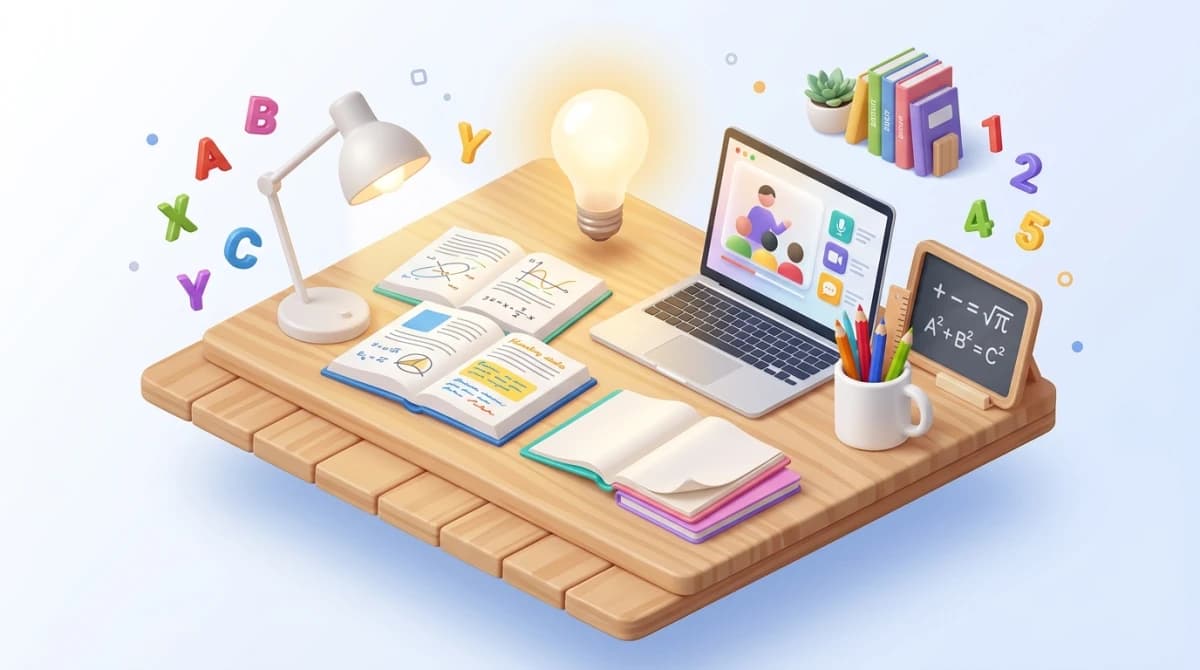
Tutoring is one of the most flexible and popular side jobs available. Whether you're a student, graduate, or career changer – you can use your knowledge in a subject to help others learn and earn good money at the same time. Thanks to digital tools and online platforms, you can reach students far beyond your own city.
But before you get started, there are several things to consider: How do you set fair prices? Where do you reliably find students? And do you need to register with the tax authorities? This guide covers everything you need to know as an aspiring tutor – from pricing and student acquisition to legal fundamentals.
Who Can Tutor?
Basically anyone can tutor who has solid knowledge in a subject and can explain it clearly. You don't need a teaching degree – what matters is subject competence, patience, and the ability to break down complex topics simply.
Tutoring as a High School Student
From upper secondary school onwards, you can help younger classmates. The advantage: you understand the challenges firsthand and can explain the material at eye level. Typical subjects are Math, English, and Science. If you're under 18, you'll need parental consent and must comply with youth employment regulations.
As a University Student
University students make up the largest group of tutors. You benefit from your current subject knowledge and can work with students from primary school through to A-levels. STEM subjects like Math, Physics, and Chemistry are in particular demand, as are languages like French and Spanish. As a student, tutoring fits perfectly around your studies thanks to flexible scheduling.
Career Changers and Professionals
Even without a formal teaching background, you can tutor as a working professional, retiree, or freelancer. Your practical knowledge is a genuine advantage – especially in subjects like Business, Computer Science, or Foreign Languages. Parents often particularly value the experience and maturity of older tutors.
Which Subjects Are in Highest Demand?
Demand varies considerably by subject. The most sought-after are:
- Math – by far the most booked tutoring subject across all grade levels
- English – consistently in demand as the most important foreign language
- German / Writing – especially grammar, spelling, and text analysis
- French, Latin, and Spanish – classic problem subjects at grammar schools
- Physics and Chemistry – particularly in upper secondary and for exam preparation
Tutoring: How Much Can You Earn?
As a tutor, your hourly rate typically ranges between £15 and £45. The exact amount depends on your qualifications, the subject, the region, and whether you teach online or in person.
Hourly Rates by Qualification
Your background largely determines what you can charge. As a rule of thumb:
- High school students: £10–18 per hour – ideal for primary school pupils and lower secondary
- University students: £18–30 per hour – the most common price range for private tutoring
- Qualified teachers and academics: £30–60 per hour – for demanding subjects and exam preparation
In major cities like London, Manchester, or Edinburgh, rates tend to be higher than in rural areas. The difference can be up to 30 percent.
Online vs. In-Person: Price Differences
Online tutoring is often cheaper than in-person lessons since there are no travel costs. At the same time, you can reach a larger market online and offer more hours. Many tutors charge around 10 to 15 percent less for online sessions than in-person – though some charge the same rate since the quality is comparable.
Finding the Right Price
Set your price to reflect your qualifications while remaining affordable for students. Research what other tutors in your area charge for your subject. It's worth starting slightly lower to build up reviews and experience, then gradually raising your rate. A good benchmark: your hourly rate should be above minimum wage but realistic for your target audience.
Finding Students: The Best Channels
You've decided on your subject and your rate – now you need students. There are several tried-and-tested channels that work well in combination.
Tutoring Platforms and Agencies
Platforms like Superprof, Tutor.com, or GoStudent connect you directly with students in your area or online. You create a profile listing your qualifications, subjects, and rates. Students or their parents can then contact you and book sessions. The big advantage: you don't have to actively hunt for students. Keep in mind, though, that some platforms charge a commission or membership fee.
Local tutoring centres also hire tutors on a regular basis. Hourly rates there are often lower than private market rates, but in return you get a steady flow of students without having to find them yourself.
Taking Initiative: Flyers, Social Media, and More
Traditional flyers on notice boards at schools, universities, libraries, or supermarkets still work surprisingly well. It also pays to create a profile in local Facebook groups, on classified-ad platforms, or on neighbourhood apps like Nextdoor. Write a short, appealing introduction listing your subjects, location, and experience.
Building Referrals and Word of Mouth
In the long run, personal recommendations are the most effective channel of all. When you do great work and students visibly improve their grades, parents will recommend you to friends and family. Actively ask satisfied families to leave a review on your platform profile or to pass your name along. This organic growth channel is free and brings you the most motivated students.
Online Tutoring or In-Person Teaching?
The choice between online and in-person tutoring depends on your subject, your target audience, and your personal preferences. Both formats have clear strengths, and many successful tutors now offer both.
Advantages of Online Tutoring
Online tutoring has fundamentally changed the way teaching works. You are location-independent, save travel time, and can reach students anywhere in the country – or even internationally. Digital teaching is especially well-suited to language subjects and theoretical topics. With screen sharing, digital whiteboards, and chat features, you can explain material clearly and interactively.
When In-Person Teaching Is Better
For younger students – especially primary school children – personal contact is often more important. They benefit from sitting together at a table, writing on paper, and receiving immediate feedback. In-person tutoring can also be the better choice for science subjects involving practical exercises, or for students who have difficulty concentrating.
Technical Setup for Online Tutoring
You don't need expensive equipment to get started with online tutoring. The most important tools are:
- Laptop or PC with a working webcam and microphone
- Stable internet connection with at least 10 Mbit/s
- Video conferencing tool such as Zoom, Google Meet, or Microsoft Teams
- Digital whiteboard such as Miro, Jamboard, or the built-in whiteboard in Zoom
- Graphics tablet (optional, but highly recommended for maths and sciences)
Legal Aspects and Taxes When Tutoring
Anyone who tutors regularly and earns money from it needs to be aware of some basic legal rules. This sounds more complicated than it is – most regulations are straightforward once you understand them.
Do you need to register a business?
The good news: for tutoring, you generally do not need to register a business. In many countries, teaching and tutoring is classified as a freelance activity. Requirements vary by country, but the key step is usually registering your income with the relevant tax authority and obtaining a tax number for your invoices.
Taxes on your tutoring income
You must declare your tutoring income in your annual tax return. Whether you actually owe taxes depends on your total annual income. Most countries have a tax-free allowance – if your income stays below this threshold, you pay no income tax. As a student tutoring on the side, you will usually stay below this threshold.
Important: Even if you stay below the threshold, you may still need to file a tax return once you have self-employed income. Keep all receipts for work materials like books, travel costs, or software – these can be deducted as business expenses.
Freelancer, mini-job, or employee?
You essentially have three options for structuring your tutoring legally:
- Freelance self-employed: The most common and flexible option. You set your own prices, organize your sessions independently, and invoice families directly.
- Mini-job / part-time employment: If you work for a tutoring centre, you may be able to earn up to a certain amount per month without paying social security contributions. Rules vary by country.
- Employment contract: Some larger institutes offer fixed contracts with social insurance. Hourly rates are often lower than on the open market, but you get more security and predictability.
Tax Registration
Once you start tutoring regularly, register with your local tax authority. In many countries, freelance teaching income must be declared. Keep records of your earnings and expenses from the start – it makes tax season much easier.
Tips for Successful Tutoring Sessions
Good tutoring is more than just explaining content. With the right preparation and methodology, you get the most out of every session – and ensure your students make real progress.
Prepare and structure your lessons well
Take a few minutes to prepare each session. Ask the student beforehand which topics are coming up or where the biggest difficulties lie. Structure the session in three parts: a brief review of the last material, introducing the new topic, and a practice phase. This gives every session a clear structure and avoids aimless repetition. Create a simple template you can adapt for each session.
Make learning progress visible
Keep a written record of progress. After each session, note what you covered and where there is still room for improvement. This allows you to show students and parents how performance has improved over the weeks. Small successes are highly motivating – always highlight what the student has already achieved before addressing weaknesses.
Master communication with parents
Especially for younger students, parents are your most important contacts. Give regular brief feedback on progress – via message or directly after the session. Be honest but constructive. If a student is struggling, name it clearly and suggest concrete next steps. Parents value transparency and will recommend you when they see you work with dedication and reliability.
With a booking tool like Bookicorn you can centrally manage your appointments, student notes, and communication – saving time and looking professional to parents.
Frequently Asked Questions About Tutoring
The most important questions and answers about tutoring at a glance.
Conclusion
Tutoring is a flexible and rewarding side job for students, graduates, and career changers alike. With the right pricing, a clear legal foundation, and genuine commitment, you can quickly build a stable base of regular students.
Whether you choose online or in-person tutoring – the demand for quality tutoring is strong and growing. Start with the tips from this guide, gain your first experiences, and develop your own teaching style. The most important step is simply getting started.

Written by
Felix Zink
Felix built Bookicorn from the ground up – from the booking system and credit system to trainer payouts. As a full-stack developer at Unicorn Factory Media GmbH, he builds software that makes everyday life easier for studios.
Was this article helpful?
Rate this post