







Organizing a workshop – it sounds straightforward at first. But anyone who has ever planned a workshop knows: there is a lot of work between a vague idea and a productive event. Topic, participants, location, methods, schedule, materials – the list grows quickly.
This guide shows you step by step how to plan, run and follow up on a workshop professionally. You will receive an interactive checklist, proven methods for more interaction and practical tips for participant management – from the invitation to the follow-up.
What Is a Workshop – and When Is It the Right Format?
A workshop is an interactive working session where a group collaborates on a topic, develops solutions or learns new skills. Unlike a lecture or seminar, the focus is not on knowledge input but on the active participation of all attendees.
How Workshops Differ from Seminars, Trainings and Lectures
While a seminar primarily conveys knowledge and a lecture delivers information one way, a workshop thrives on collaboration. Participants contribute their own experience, discuss and develop concrete results. A training, in turn, aims at building specific competencies – often following a set curriculum.
When Is a Workshop the Right Format?
Workshops are particularly suitable when you want to:
- Develop creative ideas or solutions collaboratively
- Actively involve participants and leverage their perspectives
- Focus on hands-on exercises and group work
- Work out decisions or strategies as a team
Typical use cases include team building, product development, strategic planning, professional development and creative processes like Design Thinking.
Planning a Workshop: Step by Step to Success
Structured planning is the foundation of every successful workshop. The more thoroughly you prepare, the smoother the execution. The following three steps form the backbone of your workshop planning.
Define Goals and Expectations
Before you start organizing, ask yourself one key question: What concrete outcome should the workshop produce? Formulate measurable goals. Instead of “Participants should learn something about project management” try: “Each team has developed a project plan with milestones.”
Use the SMART method (specific, measurable, attractive, realistic, time-bound) to sharpen your workshop goals. Also clarify in advance what expectations the sponsors and participants have – and where there might be discrepancies.
Determine Target Audience and Group Size
The composition of the group significantly determines methodology and level. Ask yourself:
- What prior knowledge do the participants bring?
- How diverse is the group (department, hierarchy, experience)?
- How many people will participate?
For creative workshops, 8 to 15 participants are recommended. Larger groups (20+) require breakout sessions and additional facilitators. With smaller groups (under 6), the dynamics are often limited.
Develop Topic, Format and Agenda
Based on the goals and target audience, determine the format: half-day or full-day workshop? In-person or online? One-time or as a series? Then create a detailed agenda with the following elements:
- Opening and introductions (15–20 minutes)
- Content impulse or problem statement (20–30 minutes)
- Working phase with methods (60–90 minutes)
- Break (15–20 minutes)
- Presentation and discussion of results (30–45 minutes)
- Summary and next steps (15 minutes)
Always plan a time buffer of 10–15 percent. Discussions almost always take longer than expected.
Choosing the Right Venue and Equipment
The room significantly shapes a workshop’s atmosphere. A well-chosen venue supports productive work, while an unsuitable environment can slow down even the best methods.
Room Size and Setup Options
Plan for at least 3 to 4 square meters per participant. The room should be flexibly furnished: round table groups work well for group phases, a U-shape for presentations and open standing areas for creative sessions. Ensure adequate daylight and good ventilation.
Also reserve breakout rooms for small group sessions if needed.
Technical Equipment and Materials
The basic equipment includes:
- Projector or large screen for presentations
- Flipchart, whiteboard and moderation kit
- Stable WiFi connection (especially for hybrid workshops)
- Sufficient power outlets and extension cords
- Post-its, markers, index cards and dot stickers for facilitation
Test the technology at least one day in advance. Nothing slows down a workshop more than a malfunctioning projector or missing WiFi.
Online Workshops: Tools and Specifics
For virtual workshops, you need a reliable video platform (Zoom, Microsoft Teams, Google Meet) and a digital whiteboard like Miro, Mural or FigJam. Key rules for online workshops:
- Plan shorter sessions (maximum 3 hours with breaks)
- Ask participants to keep cameras on – this increases engagement
- Include interactive elements every 15 to 20 minutes
- Communicate clear ground rules in advance (microphone etiquette, chat usage)
Proven Workshop Methods for More Interaction
Choosing the right methods determines whether your workshop becomes lively and productive or sinks into boredom. Deliberately alternate between individual, group and plenary work.
World Café and Open Space
In a World Café, participants rotate in small groups between different tables, each discussing a specific topic. A host stays at the table and summarizes previous findings for each new group. This method is excellent for collecting many perspectives in a short time.
In Open Space, participants determine the topics and agenda themselves. This format works especially well with large groups (20+ people) and fosters personal responsibility and creative thinking.
Brainstorming Variations
Classic brainstorming has its limits – a few voices often dominate. Try these variations instead:
- 6-3-5 method: 6 participants each write 3 ideas in 5 minutes, then rotate. 108 ideas emerge in 30 minutes.
- Reverse brainstorming: Deliberately flip the question. Instead of “How do we increase customer satisfaction?” ask “How do we guarantee driving customers away?” Reversing the answers produces surprisingly good solutions.
- Brainwriting: Everyone writes ideas silently on cards. Anonymity encourages quieter participants.
Group Work and Feedback Rounds
Break complex questions into sub-tasks for small groups. Each group works on one aspect and presents results to the plenary. Use structured formats for feedback rounds:
- Dot voting for quick prioritization
- Lightning round: Each participant summarizes their key takeaway in one sentence
- Fishbowl discussion: An inner circle discusses while the outer circle listens and can swap in
Participant Management: From Invitation to Follow-up
Professional participant management is the invisible engine behind every successful workshop. It begins long before the actual date and doesn’t end until weeks later.
Invitations and Registration Management
Send your invitations at least three weeks before the workshop. The invitation should include: topic and goals, date and time, location (with directions), preparatory tasks if needed, and a clear registration link.
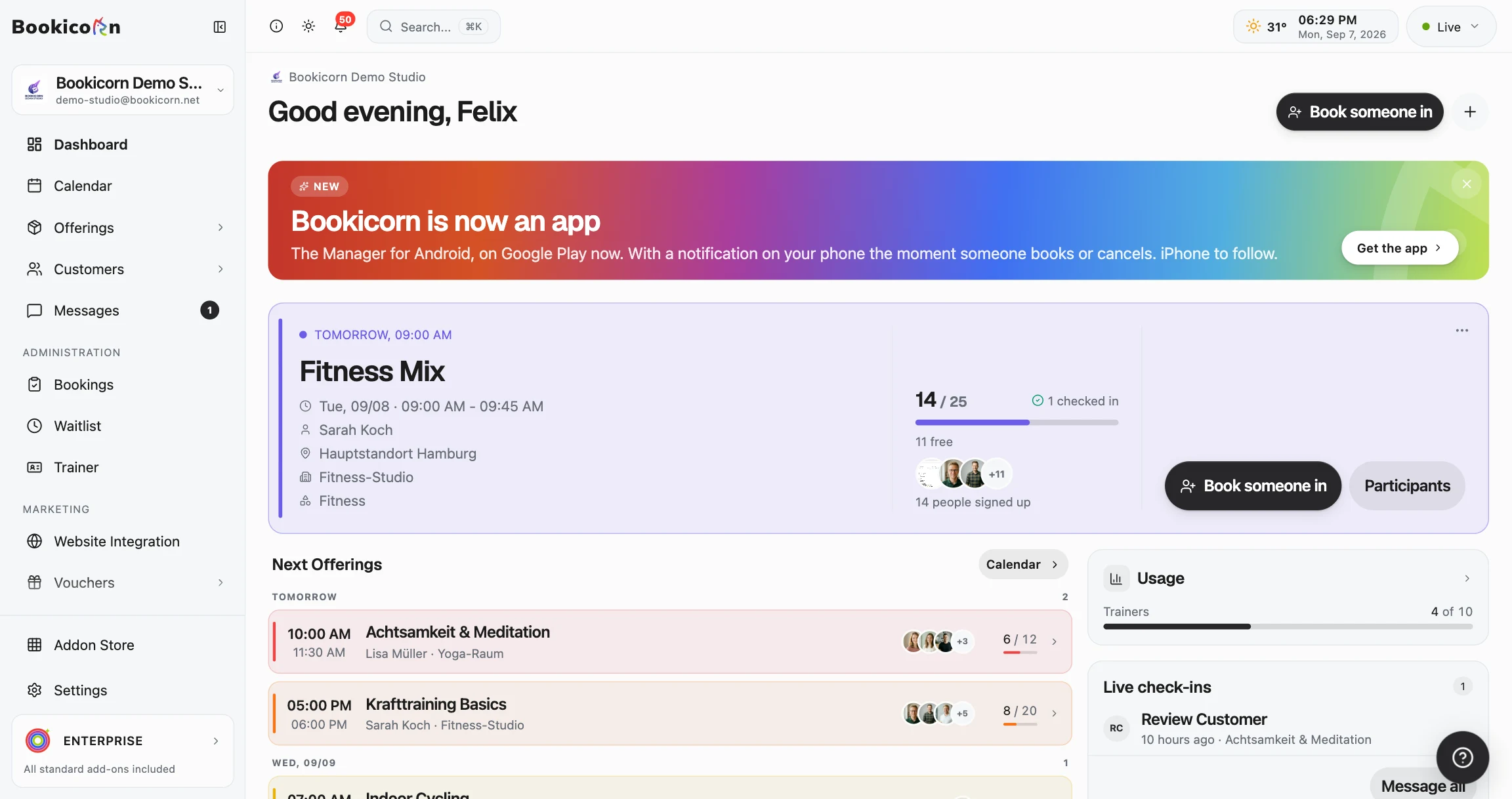
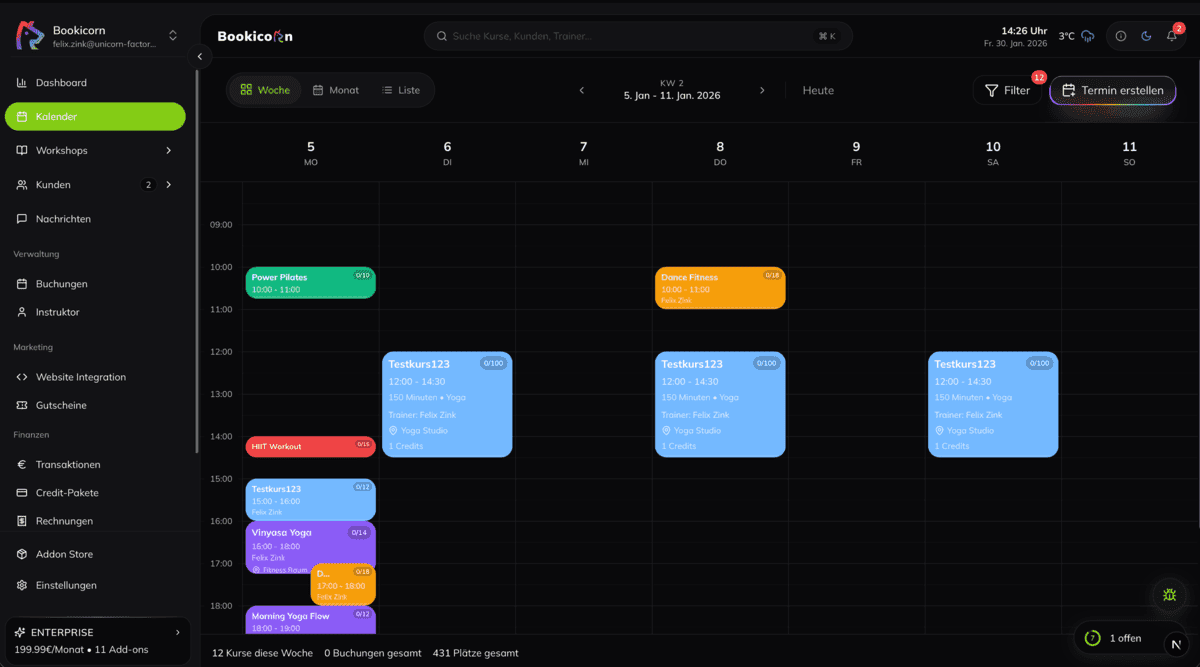
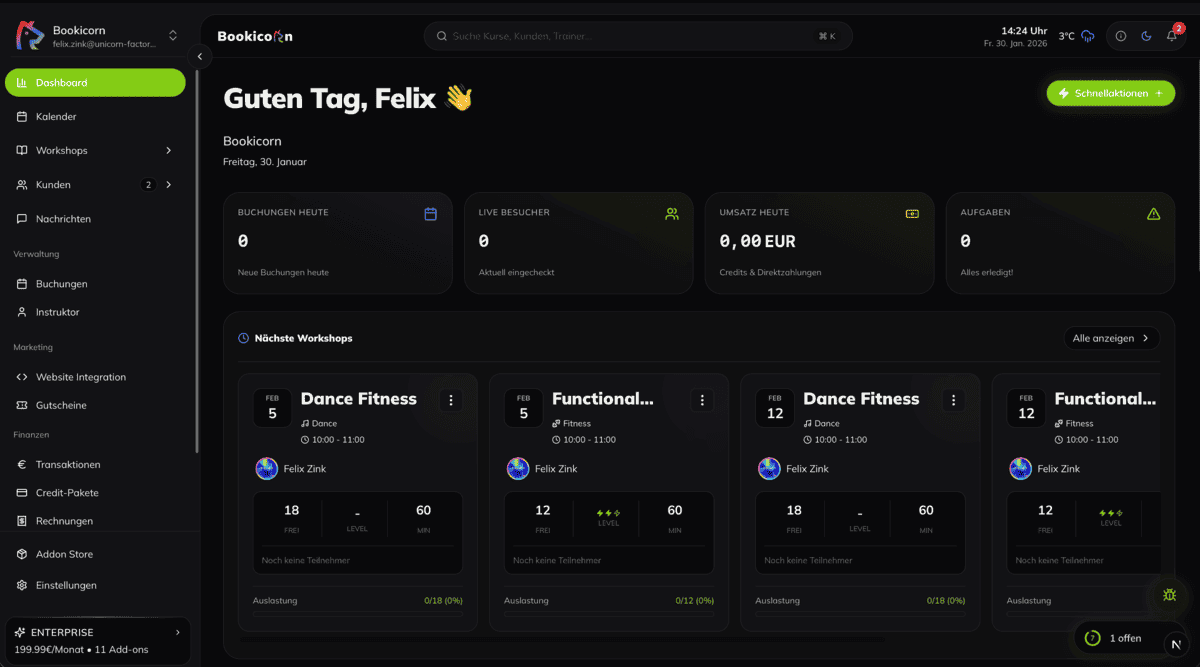
For managing registrations, digital solutions are ideal. Instead of manual Excel lists, a workshop software with integrated booking system can automate the entire process: from online registration to automatic confirmations and waitlists for fully booked workshops.
Communication Before and During the Workshop
Send a reminder one week before the date with all relevant details. The day before, a brief “We look forward to seeing you” including final notes (parking, contact person, dress code). During the workshop:
- Prepare name tags (essential for more than 10 participants)
- Have a participant list ready for check-in
- Define a latecomers policy in advance
- Take photos and documentation only with consent
Follow-up, Feedback and Next Steps
The follow-up determines the long-term success of a workshop. Within 48 hours, you should:
- Send a summary of results (photos, minutes, next steps)
- Distribute a feedback questionnaire (maximum 5 to 8 questions)
- Assign responsibilities and deadlines for agreed actions
- Schedule a follow-up meeting in 4 to 6 weeks
Store participant data in compliance with privacy regulations. Actively ask whether participants wish to be informed about future workshops.
Workshop Facilitation: Tips for Confident Leadership
Facilitation is the heart of every workshop. A good facilitator creates the framework for productive collaboration – without being the center of attention.
The Facilitator’s Role
As a facilitator, you are a process designer, not a content provider. Your job is to create structures, maintain time limits and ensure all voices are heard. Avoid putting your own opinion in the foreground – your neutrality is your greatest asset.
Prepare with a facilitation guide: Note the planned method, required time and expected outcome for each agenda item. This helps you keep the thread even during lively discussions.
Handling Difficult Situations
Every workshop has moments that require finesse:
- Politely rein in dominant speakers: “Thank you for that contribution. Let’s hear other perspectives too.”
- Engage quiet participants: Ask targeted questions or use brainwriting, which introverts prefer
- Defuse conflicts: Emphasize the factual level, acknowledge both sides and remind everyone of the shared goal
- Manage time pressure: Better to go deep on one point than skim all of them. Name untreated topics openly and schedule them for follow-up
Energy Management in Workshops
Energy levels in the room fluctuate throughout the day. After lunch, attention drops noticeably – plan your most interactive methods for exactly that time. Start the afternoon with a short energizer: a simple movement exercise or a surprise question is enough to get everyone back into work mode.
Pay attention to break design: Provide beverages and healthy snacks. Short 10-minute breaks every 90 minutes are more effective than fewer long breaks. Allow movement – a walk in fresh air works wonders for concentration.
Common Mistakes in Workshop Organization
Even experienced organizers keep falling into the same traps. These typical mistakes cost time, money and above all your participants’ motivation.
Too Much Content, Too Little Time
The most common mistake: an overloaded agenda. Plan fewer topics in depth rather than many points superficially. A rule of thumb: halve the number of agenda items you originally planned – and still include buffer time. Three thoroughly worked topics are more valuable than six that are only touched upon.
Missing Goal Definition
Without clear goals, a workshop becomes a pleasant chat. Define measurable outcomes in advance: What exactly should exist at the end? A prototype? An action plan? A decision? Communicate these goals in the invitation so participants can prepare.
Forgetting the Follow-up
Many workshops produce impressive results on post-its and flipcharts – that then disappear into a drawer. Plan the follow-up as an integral part: Who documents? Who sends the summary? By when will the agreed actions be implemented? Without concrete responsibilities, an entire workshop day’s work evaporates.
No Variety in Methods
Four hours of frontal presentation is not a workshop. Change the working format every 20 to 30 minutes: from plenary to small group, from discussion to silent individual work, from sitting to standing. This method variation keeps energy high and addresses different learning styles.
Frequently Asked Questions About Organizing Workshops
The most important questions and answers about workshop planning at a glance.
Conclusion: Structure Creates Successful Workshops
Organizing a workshop is not rocket science – but neither is it a task you handle on the side. The key lies in thorough preparation: clear goals, a well-thought-out agenda, the right methods and professional participant management.
Use the interactive checklist above to ensure you don’t miss any step. Invest especially in the follow-up – it determines whether your workshop results take root in daily practice or are forgotten.
And remember: a great workshop doesn’t thrive on perfection but on genuine interaction. Create the framework – your participants will do the rest.

Written by
Felix Zink
Felix built Bookicorn from the ground up – from the booking system and credit system to trainer payouts. As a full-stack developer at Unicorn Factory Media GmbH, he builds software that makes everyday life easier for studios.
Was this article helpful?
Rate this post